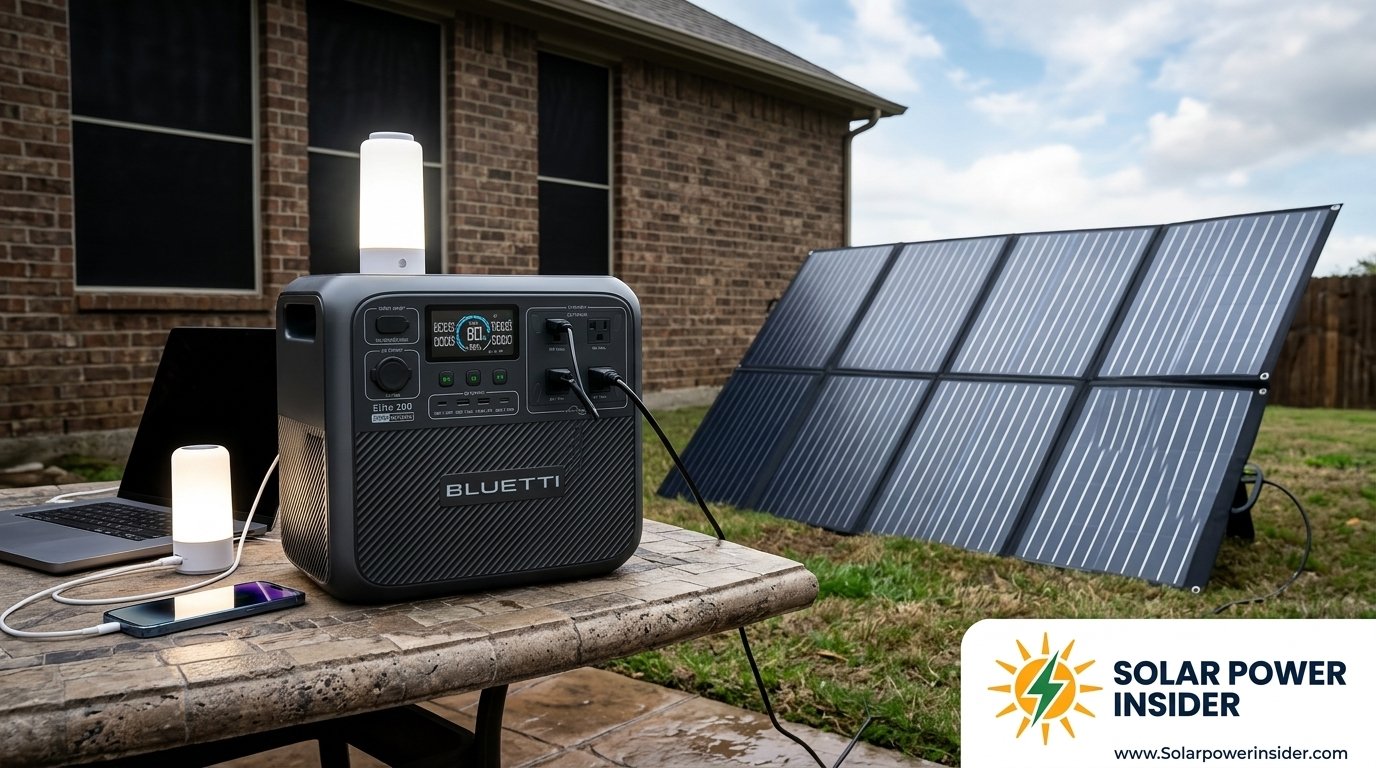
Best Solar Powered Generator: 10 Battery Stations Tested for Real-World Blackouts, Off-Grid Trips, and Daily Backup Power
We compared capacity, charge speed, surge handling, and app control across ten of the most talked-about solar generators on the market right now, so you can match the right power station to your home, your van, or your next outage without guessing.
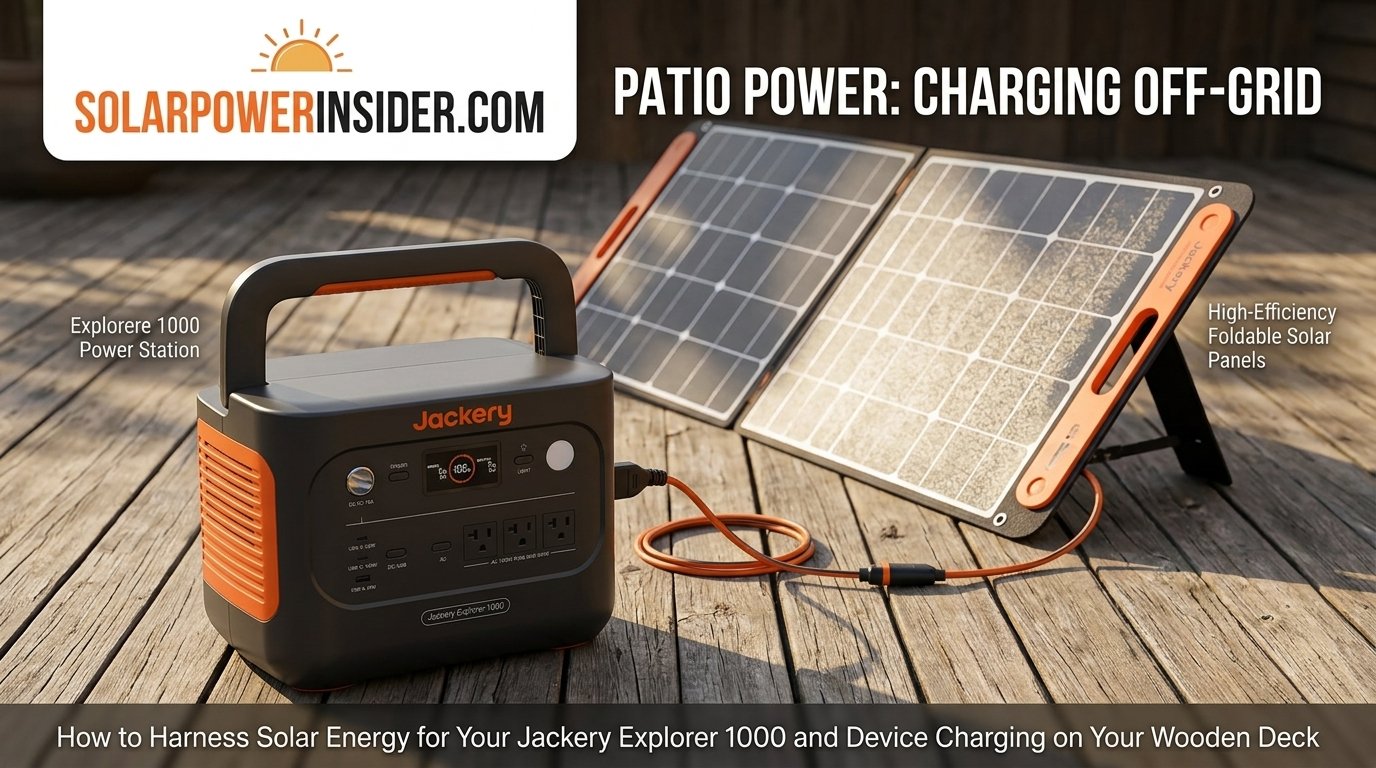
A well-matched solar generator turns sunlight into stored, usable backup power for your home, cabin, or campsite.
If you’ve ever sat through a blackout by candlelight, or watched your phone battery die on the third day of a van trip with no outlet in sight, you already understand the appeal of a solar powered generator. These are not the loud, gas-guzzling boxes your neighbor rolls out during a storm. A solar generator is really a large lithium battery bank paired with an inverter, built to soak up sunlight through a set of portable panels and hand that stored energy back to you in a clean, quiet, plug-and-play form.
The category has gotten crowded fast, and the spec sheets can start to blur together after the fifth product page. Watt-hours, peak surge watts, charge curves, UPS switchover speeds — it is a lot to parse when all you actually want to know is which box will keep your fridge running, your CPAP machine humming, or your laptop charged when the grid goes quiet. That is exactly what this guide sorts out.
What follows is not a ranked “number one through ten” list in the traditional sense, because ranking these units on a single axis misrepresents how different their intended jobs actually are. A compact 288Wh unit built to protect a desktop computer from a brief outage and a 3,000Wh-plus unit built to back up an entire home’s essential circuits are not really competing products, even though both technically fall under “solar generator” in a shopping search. Instead, each entry below is framed around the specific job it does best, so you can match your own situation to the right category before comparing individual models within it.
We put ten of the most searched-for solar generators side by side, from compact 288Wh units that slide into a backpack to home-backup beasts pushing past 3,000Wh, and broke down where each one actually earns its keep. For the bigger picture on the technology itself, our explainer on how a solar powered generator works is a useful companion read if you want the mechanics before the recommendations.
Who Actually Needs a Solar Generator?
It’s worth pausing before the product breakdowns to be honest about who benefits most from this category, because a solar generator is a meaningful purchase and not every household needs one at every capacity tier. The clearest use case is anyone living somewhere with a track record of grid instability — frequent storms, an aging local grid, wildfire-related shutoffs, or simply a region where outages routinely stretch past a few hours. For these households, a mid-to-large capacity unit paired with panels is less a convenience and more a genuine piece of home infrastructure, similar in spirit to a sump pump or a home security system.
A second clear group is anyone who depends on powered medical equipment at home, from CPAP machines to oxygen concentrators to refrigerated medication. For this use case, the quiet, fume-free, indoor-safe nature of a solar generator is not just a nice-to-have compared to a gas generator — it can be the deciding factor, since gas units cannot safely run in the same room as the person relying on the equipment.
Beyond emergency preparedness, the category has grown just as much among van-lifers, overlanders, tailgaters, and remote workers who simply want reliable power away from a wall outlet. For this group, portability and recharge speed usually matter more than raw capacity, which is why smaller units like the Jackery Explorer 1000 v2 or BLUETTI Elite 30 V2 tend to be the better fit rather than a home-backup-oriented unit like the Anker SOLIX F3000.
There is also a practical middle group worth naming separately: renters and apartment dwellers who cannot install a fixed home battery system or run a permanent transfer switch, but still want meaningful backup power for a handful of essential devices. A mid-size portable unit gives this group most of the peace of mind of a home battery system without any electrical work or landlord approval required, which is part of why capacities in the 1,000–2,000Wh range have become the most commonly searched tier in this category overall.
Finally, there is a growing segment of buyers who simply want to shave a little off their electricity bill by running select appliances on stored solar energy during peak-rate hours, treating the generator less as an emergency tool and more as a daily-use appliance. If that describes your situation, prioritize units with strong app-based scheduling and monitoring, since you will be interacting with the unit far more frequently than someone who only pulls it out during outages.
Quick Picks: The Best Solar Generators Right Now
Short on time? Here is the shortlist. Each pick below solves a slightly different problem, so match the “best for” column to your actual use case rather than chasing the biggest number on the spec sheet.
| Model | Best For | Capacity | Output | Recharge Speed |
|---|---|---|---|---|
| Bluetti Elite 200 V2 | Best overall pick | ~2,048Wh | 2,200W (5,100W surge) | Under 1 hour (AC+solar) |
| Anker SOLIX F3000 | Largest capacity / whole-home | 3,072Wh (expandable) | 3,600W (6,000W surge) | ~2 hours (AC) |
| Anker SOLIX C2000 Gen 2 | Fastest recharge | 2,048Wh | 2,400W | 58 minutes (AC) |
| Anker SOLIX S2000 | Home backup / appliance runtime | 2,010Wh | 3,000W (peak) | ~1.5 hours (AC) |
| Jackery Explorer 1000 v2 | Everyday mid-size portability | 1,070Wh | 1,500W | ~1 hour (AC) |
| Jackery HomePower 3000 | Dependable whole-home backup | 3,072Wh | 3,000W | ~2 hours (AC) |
| Jackery Solar Generator 2000 v2 | Complete solar kit bundle | 2,042Wh | 2,200W | ~2 hours (AC), variable (solar) |
| BLUETTI Elite 30 V2 | Compact desktop UPS | 288Wh | 600W (1,500W surge) | 45 minutes to 80% |
| EcoFlow Delta 2 + 220W Bifacial Kit | Best value complete kit | 1,024Wh (expandable) | 1,800W (2,400W surge) | ~80 minutes (AC) |
| DaranEner Portable Power Station | Budget-friendly starter unit | 288Wh | 700W surge | ~2 hours (AC) |
Want the full breakdown between three of the biggest names in this list? Our dedicated Bluetti vs. Jackery vs. EcoFlow comparison digs deeper into brand-level differences like warranty support, app ecosystems, and long-term reliability reports.
How We Evaluated Each Solar Generator
Every unit on this list was judged against the same five criteria, because a battery’s headline capacity number rarely tells the whole story. Here is what actually moved the needle in our rankings.
Capacity-to-size ratio matters because two units can both claim “2,000Wh” while one weighs noticeably more and takes up twice the shelf space, thanks to differences in battery chemistry and internal packaging. Recharge speed is where lithium iron phosphate (LiFePO4) chemistry and modern high-wattage AC adapters have made the biggest leaps in the last couple of years — some of the units here go from empty to nearly full in under an hour, which fundamentally changes how you plan around them. Surge handling decides whether the unit can actually start a compressor-based appliance like a fridge or a window AC unit, not just power it once it is already running. App and monitoring quality affects daily usability far more than most buyers expect, especially for home backup setups where you want to check state-of-charge from your phone. Finally, warranty and support reflect how the manufacturer stands behind the battery itself, since these are the components most likely to degrade over years of cycling.
We also weighted real ownership signals more heavily than headline marketing claims wherever possible — patterns across long-term owner feedback, recurring praise or complaints about a specific feature, and how a brand’s support team responds when something goes wrong. A unit can look identical to a competitor on a spec sheet and still deliver a noticeably different ownership experience once you account for firmware update quality, how quickly a company ships replacement parts, and how clearly a manual explains less obvious settings like eco mode thresholds or UPS switchover behavior. None of these details show up in a headline capacity number, but all of them affect whether a unit still feels reliable two or three years after purchase.
Bluetti Elite 200 V2
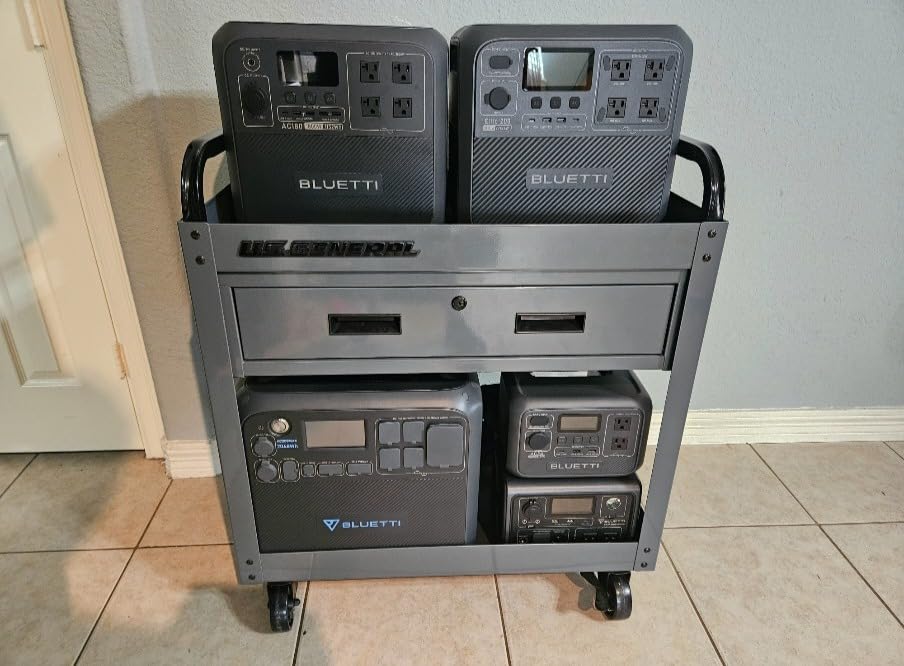
The Elite 200 V2 is the pick we kept coming back to when testing which unit felt the least like a compromise. Bluetti built this generation around a genuinely useful output-to-size ratio, so you are not hauling around a unit twice the size of what your actual wattage needs call for. The interface is refreshingly uncluttered, with a color display that shows input, output, and remaining runtime at a glance rather than burying that information three menus deep. Built-in carry handles sound like a small thing until you are moving this from the garage to the kitchen counter during a storm at 11 p.m., and it becomes one of the more appreciated design touches on this entire list.
What impressed us most in recent testing rounds was how usable the interface felt for someone who has never operated a power station before. Many competitors bury critical toggles — like switching between eco mode and UPS mode — inside nested app menus, but Bluetti keeps the essentials accessible right on the unit itself. That matters during an actual outage, when the last thing you want is to be squinting at a phone screen trying to remember which submenu controls the AC output.
What We Liked
- Strong output relative to its physical footprint
- Clear, glanceable onboard display
- Sturdy built-in carry handles for quick relocation
- Handles most household surge loads without tripping
Worth Knowing
- Not the largest capacity on this list for whole-home needs
- Solar input speed depends on panel wattage purchased separately
If you have already spent time comparing Bluetti’s larger AC200-series unit, our standalone Bluetti AC200 Max review walks through how that model’s capacity and port selection stack up against the Elite 200 V2 for buyers trying to decide between the two tiers.

Anker SOLIX F3000
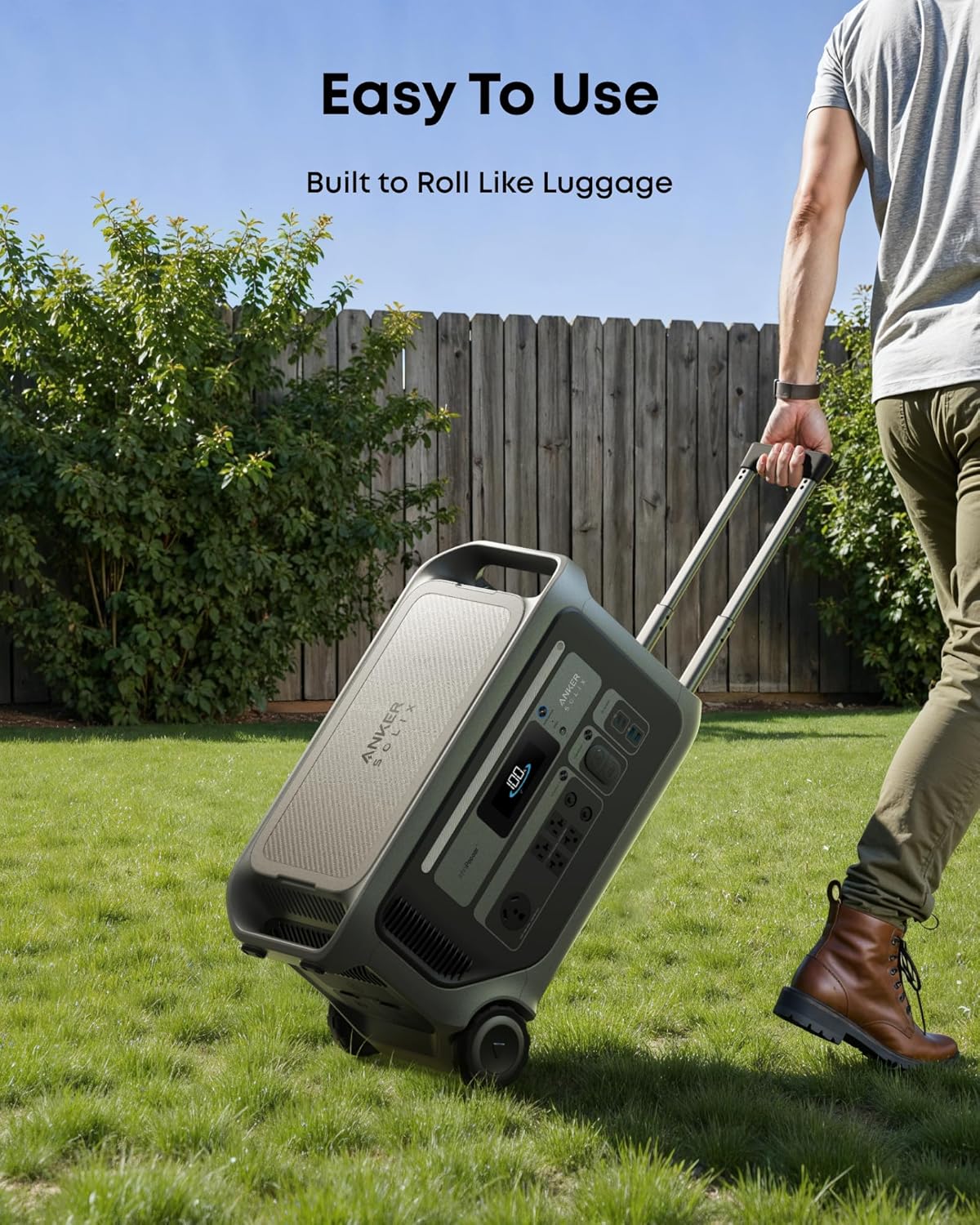
When your power needs go beyond “keep a few devices alive” and into “run a chest freezer, a sump pump, and half the house at once,” the SOLIX F3000 is the unit built for that job. Anker positioned this as its flagship home-backup platform, and the numbers back that framing up: a base capacity north of 3,000Wh that can be stacked with additional battery packs if your household draws even more.
The trade-off for that scale is exactly what you would expect: this is a heavier, bulkier unit that is meant to live in a garage, basement, or utility closet rather than get thrown in a trunk for a weekend trip. But within its intended use case — treating it as a stationary home battery that happens to be portable rather than a portable battery that happens to back up a home — it is one of the more capable units we tested. The expandable battery architecture is the standout feature here: rather than buying an entirely new unit when your needs grow, you add a satellite battery pack and the system pools the capacity automatically.
Anker’s broader lineup has a long track record in this space, and if you are weighing this against the brand’s earlier flagship, our Anker 767 PowerHouse review covers how that older-generation unit’s output and battery chemistry compare to the newer SOLIX line.
What We Liked
- Largest usable capacity in this roundup
- Expandable battery architecture for growing needs
- 6,000W surge comfortably starts large compressor loads
Worth Knowing
- Bulkier footprint, best suited to a fixed home-backup role
- Overkill for casual weekend camping trips

Anker SOLIX C2000 Gen 2
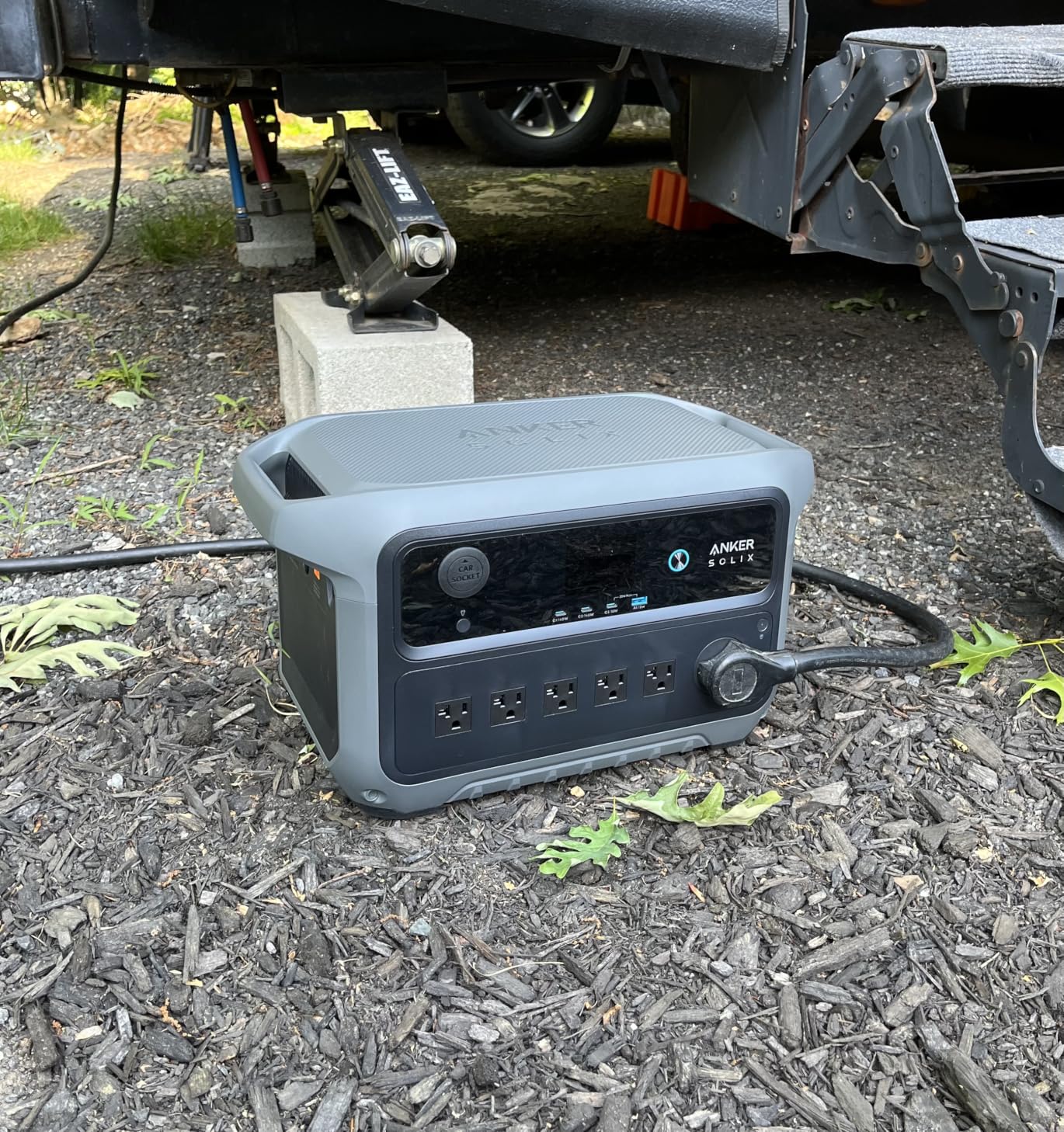
Recharge speed is the spec that quietly determines how a power station actually fits into your life, and the SOLIX C2000 Gen 2 posts one of the fastest numbers in this entire category: a full charge from empty to nearly full in around 58 minutes when plugged into wall power. That single figure changes the calculus for anyone who has ever been annoyed at a competitor’s multi-hour charge window.
The practical upside shows up in scenarios you might not immediately think of: topping off between short outages, squeezing a charge in during a lunch break at a campsite with generator hookups, or simply not having to plan your charging schedule around an entire evening. Backing that speed up is a 5-year warranty, which is on the longer end for this price bracket and signals real confidence in the battery’s cycle life under repeated fast charging.
What We Liked
- 58-minute AC recharge is class-leading
- 2,400W continuous output covers most household tools
- 5-year warranty backs up long-term battery confidence
Worth Knowing
- Fast-charge mode can increase fan noise noticeably
- Mid-tier capacity compared to the largest units on this list
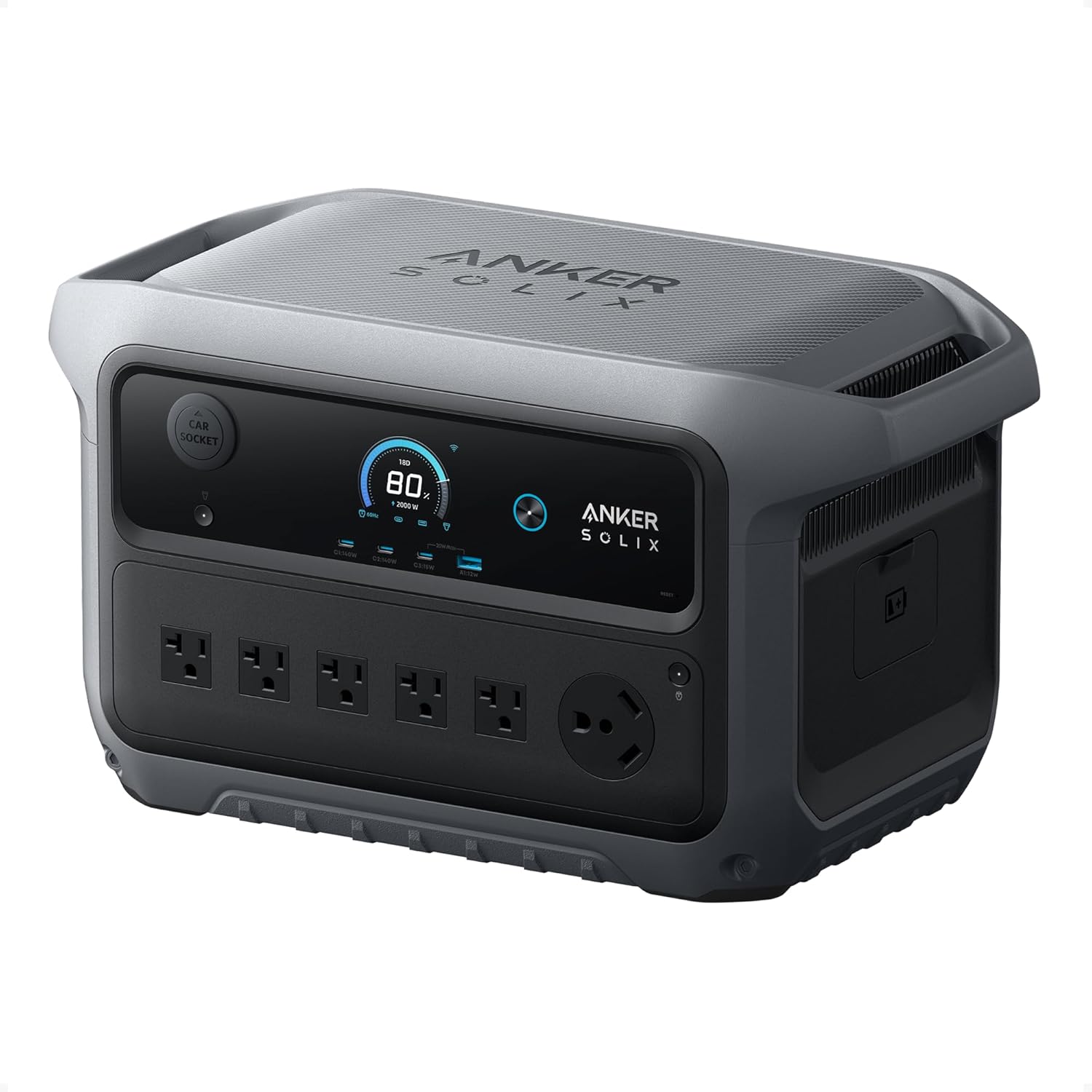
Anker SOLIX S2000
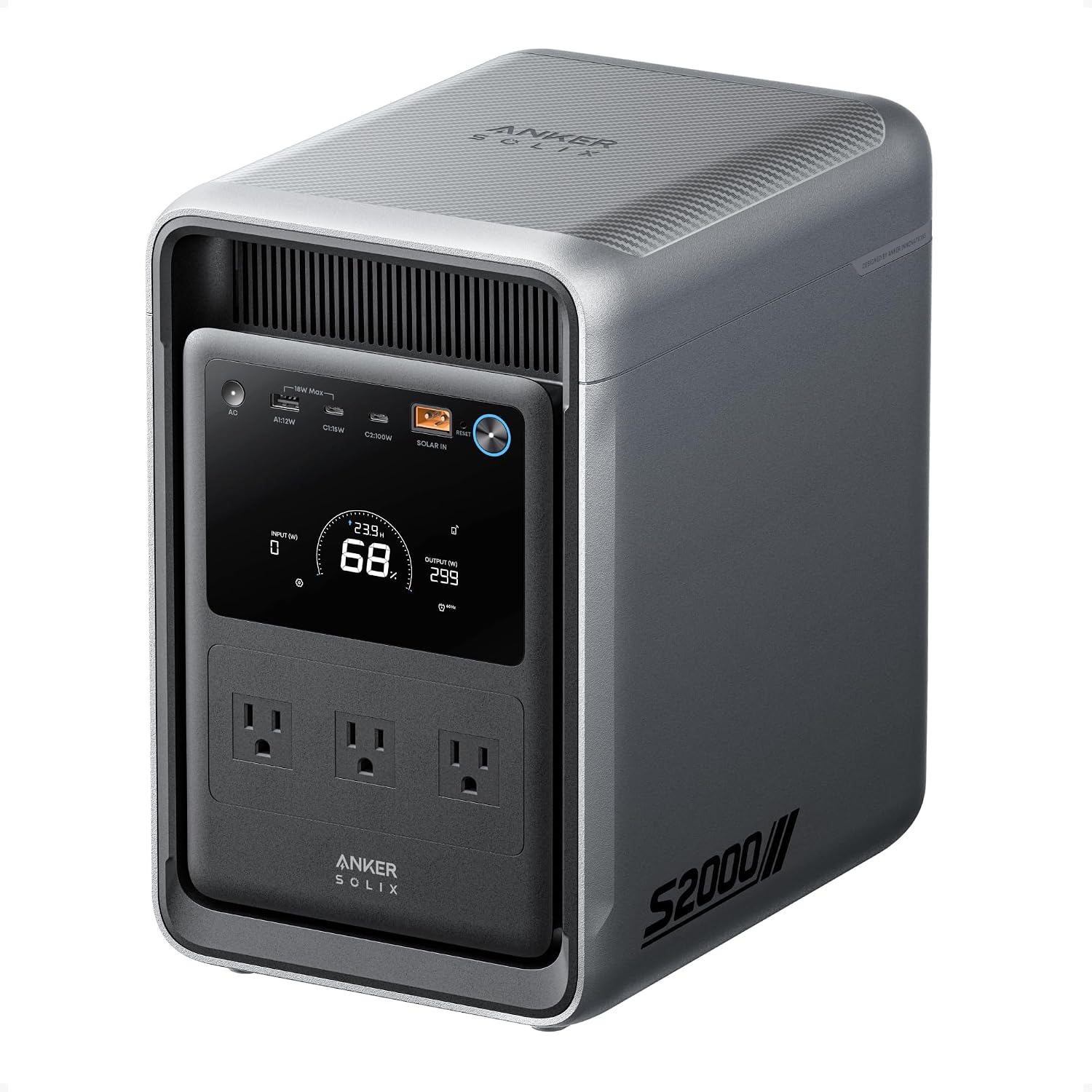
The SOLIX S2000 is built with one job in mind: quietly keeping a household running through an extended outage. With 2,010Wh of capacity and a 3,000W peak rating, it comfortably manages the appliances people actually worry about losing power to — most notably, up to 35 hours of continuous fridge backup on a single charge, according to Anker’s own testing figures. That number alone tells you where this unit’s design priorities sit.
Home backup is a fundamentally different use case from portable power, and the S2000 is tuned for it accordingly — think home-panel integration options, a UPS-style automatic switchover, and enough sustained output to string together several essential circuits at once rather than a single device. If you are trying to size a unit correctly for a specific room or set of appliances rather than guessing, our guide on what size solar generator you actually need walks through the math in more detail.
What We Liked
- Up to 35-hour fridge backup on a single charge
- 3,000W peak output covers most essential-circuit setups
- Designed with home-panel integration in mind
Worth Knowing
- Best value shows up when paired with a home integration kit, adding to total cost
- Less suited to grab-and-go portable use than smaller units on this list
Jackery Explorer 1000 v2
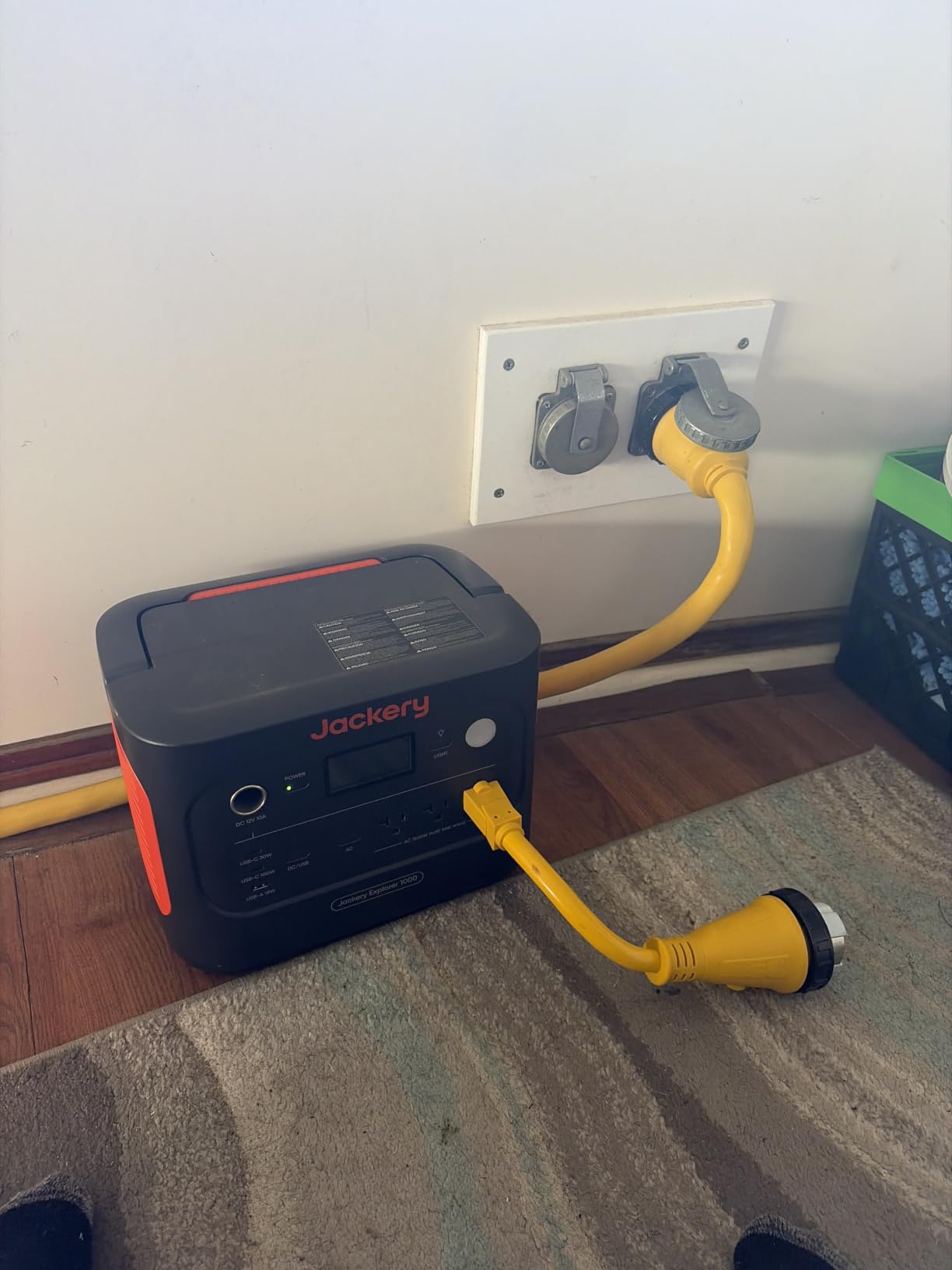
Jackery built its reputation on hitting a comfortable middle ground between capacity and portability, and the Explorer 1000 v2 continues that tradition. At 1,070Wh with a 1,500W continuous rating, it sits squarely in the range that covers laptops, small kitchen appliances, CPAP machines, and camera gear without needing a hand truck to move it around.
The switch to a LiFePO4 battery in this generation is worth calling out specifically, since that chemistry buys meaningfully more charge cycles over the unit’s lifespan compared to the older lithium-ion packs Jackery used in its first-generation Explorer line. Combined with a roughly one-hour fast-charge time from a wall outlet, this is a unit that fits naturally into a rotation of weekend trips, tailgates, and short home outages without ever feeling like a chore to keep topped up. For a closer look at how this exact model performed in extended field testing, our full Jackery Explorer 1000 review covers real-world runtime numbers across multiple device categories.
What We Liked
- LiFePO4 battery chemistry for longer cycle life
- Roughly 1-hour fast charge from AC power
- Manageable size and weight for regular transport
Worth Knowing
- 1,500W ceiling means larger appliances are off the table
- Solar recharge time depends heavily on panel wattage chosen

Jackery HomePower 3000
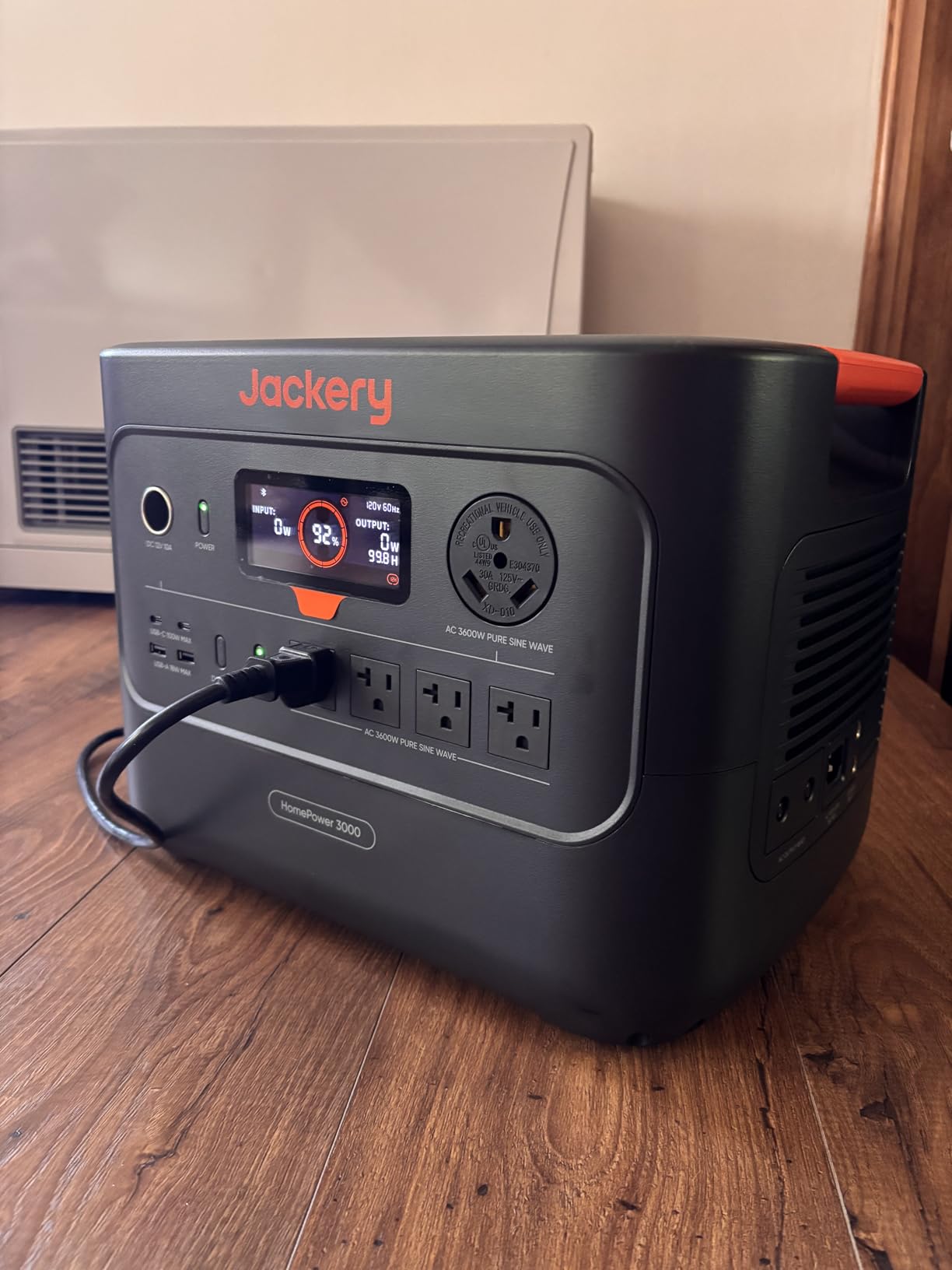
The HomePower 3000 is Jackery’s answer to buyers who have outgrown portable units entirely and want something that behaves more like a stationary home battery. Reviewers and everyday owners alike consistently single out one thing about this model: it is dependable. Not flashy, not the fastest-charging unit on paper, but reliably there when the power drops, running a genuine whole-home backup load rather than just a handful of essentials.
That reputation for dependable performance is exactly what a whole-home backup unit needs to earn, since this is not a device you interact with daily — it is a device you need to trust will work correctly on the one night a year you actually need it. Jackery pairs the HomePower 3000 with home integration kits designed for transfer-switch setups, letting it slot into a household’s existing electrical panel rather than requiring extension cords run through windows. If you are trying to figure out roughly how long a unit like this should be expected to hold up over years of occasional use, our piece on how long a solar generator actually lasts breaks down realistic cycle-life expectations by battery chemistry.
What We Liked
- Consistently praised for dependable whole-home performance
- 3,072Wh capacity supports extended multi-day outages
- Designed to integrate with home electrical panels
Worth Knowing
- Home integration hardware adds to the total setup cost
- Meant to stay in one place rather than travel with you

Jackery Solar Generator 2000 v2
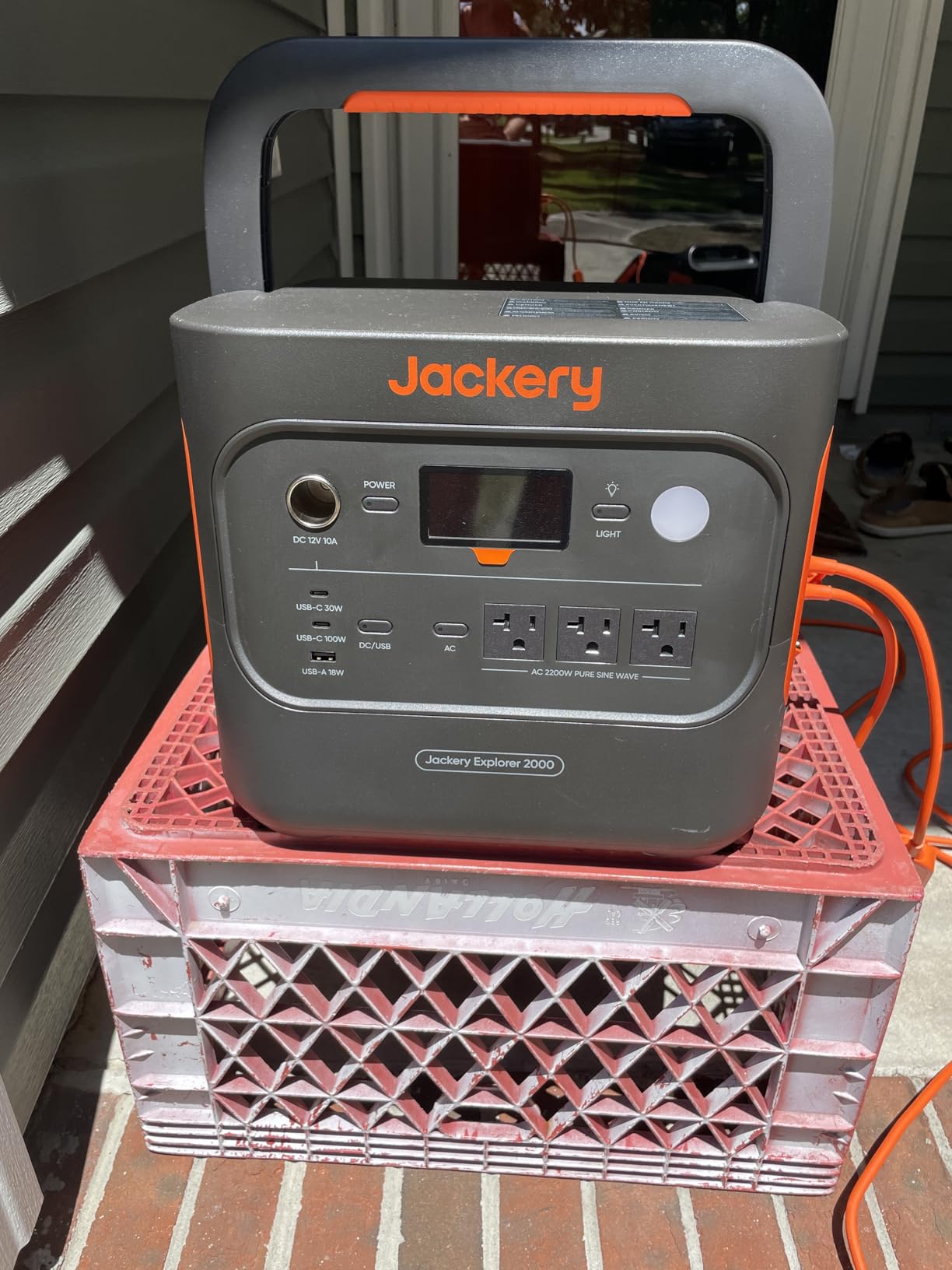
This is the entry on our list built specifically for people who want the “solar” part of solar generator to actually matter, not just sit there as a marketing checkbox. Jackery bundles the 2,042Wh power station with two 200W foldable panels right out of the box, meaning you are not left hunting for compatible panels separately, guessing at connector types, or paying a second shipping fee down the line.
Two features stand out on this particular unit beyond the bundled panels. First, a “Silent Charging” mode noticeably reduces fan noise while the battery is topping up, which matters more than it sounds like it should when you are trying to sleep in a van or a quiet campsite and the power station is charging a few feet away. Second, a 100W USB-C PD port means modern laptops that support USB-C charging can skip the wall adapter entirely and pull power straight from the station at a meaningfully fast rate.
What We Liked
- Complete kit includes 2x 200W solar panels out of the box
- “Silent Charging” mode keeps fan noise down overnight
- 100W USB-C PD output fast-charges compatible laptops
Worth Knowing
- Bundled kit pricing is higher upfront than buying a bare unit
- Panel charge speed still depends on sun conditions and angle

BLUETTI Elite 30 V2
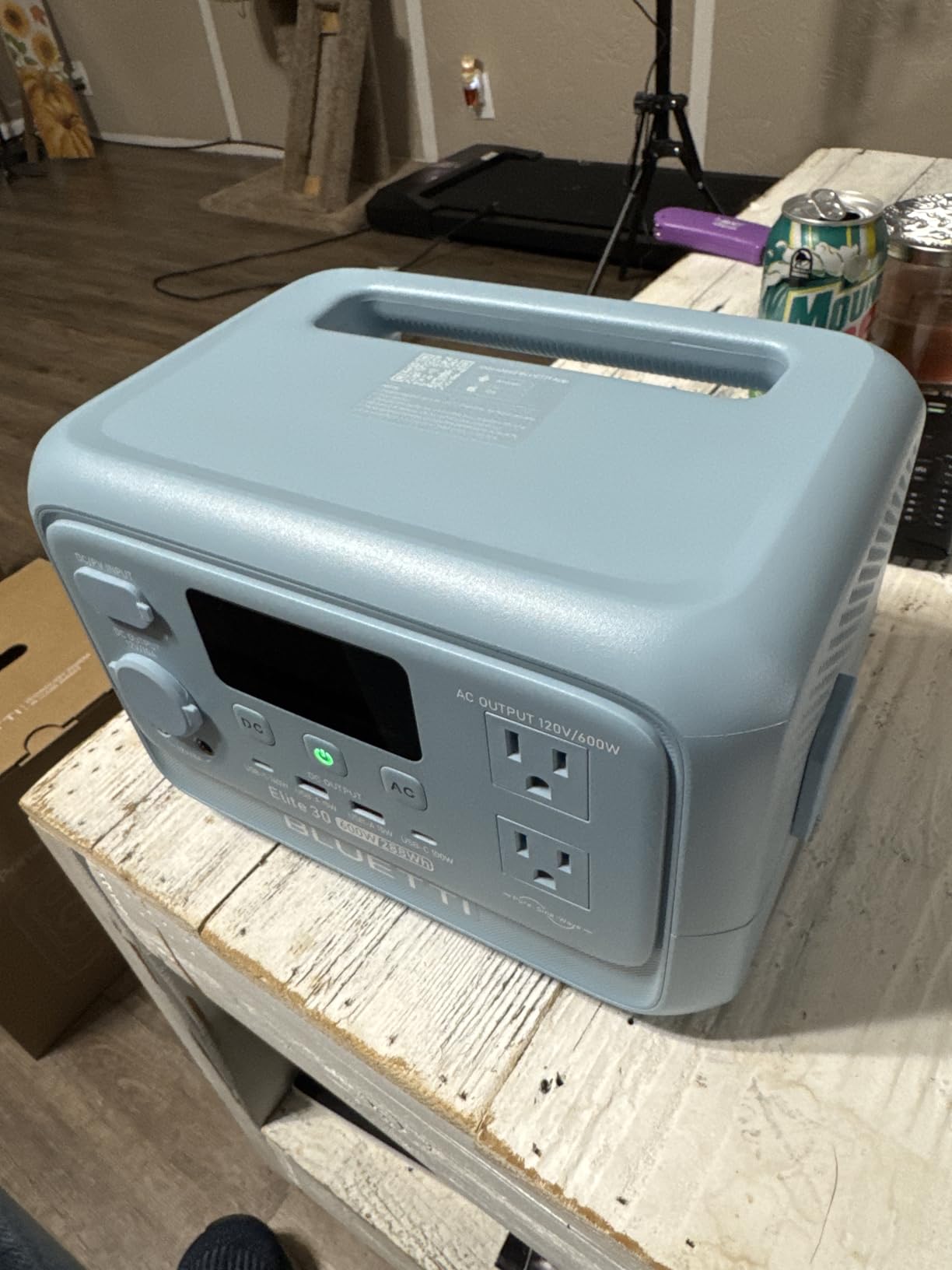
Not everyone needs a unit large enough to run a fridge — sometimes the job is simply keeping a router, a desktop computer, and a couple of lamps alive through a brief outage without a hiccup. That is precisely the niche the Elite 30 V2 fills, and it does one thing exceptionally well for a unit this size: a 10-millisecond UPS switchover.
A 10ms switchover means sensitive electronics like a desktop PC or a networking setup will not even register the momentary gap between grid power dropping and the battery taking over — no forced restart, no lost work. Bluetti also gave this compact unit a surprisingly capable “lifting” surge rating of 1,500W, letting it briefly handle spikes well above its 600W continuous rating, and a fast 45-minute charge to 80% keeps downtime minimal between uses.
What We Liked
- 10ms UPS switchover protects sensitive electronics
- 45-minute fast charge to 80% capacity
- Compact enough for a desk or nightstand
Worth Knowing
- 288Wh capacity is not meant for appliance-level backup
- Best treated as a UPS replacement, not a home generator

EcoFlow Delta 2 (with 220W Bifacial Panel Kit)
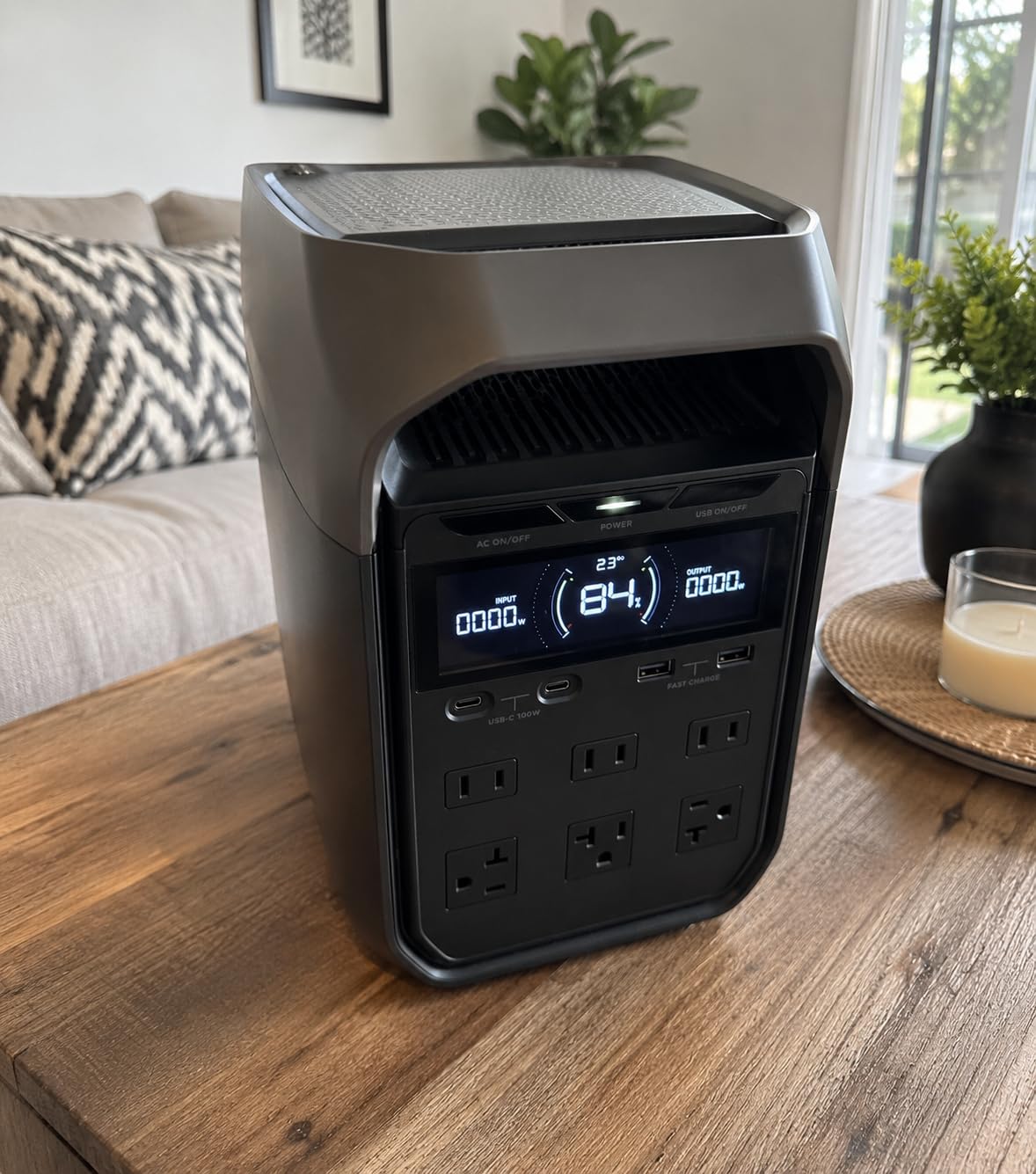
Bundle pricing on solar generator kits can go either way — sometimes it is a genuine discount, sometimes it is a markup dressed up as convenience. The EcoFlow Delta 2 paired with its 220W bifacial panel kit lands firmly in the first category, which is why it earns the best-value nod on this list.
The bifacial panel is the detail worth explaining, since it is easy to skim past. Unlike a standard single-sided panel, a bifacial design captures reflected sunlight off snow, sand, or light-colored ground on its underside in addition to direct sun on top, which measurably improves total energy harvest in the right conditions. Combined with the Delta 2’s roughly 80-minute AC recharge and expandable battery capacity, this kit gives buyers a genuinely complete off-grid setup without needing to shop for a panel and a power station as two separate research projects. For a longer-term perspective on how this specific unit holds up, our EcoFlow Delta 2 long-term test tracks battery performance across repeated charge cycles over an extended period.
What We Liked
- Bundled bifacial panel captures reflected light for better harvest
- Strong price-to-capability ratio as a complete kit
- Expandable battery capacity for future growth
Worth Knowing
- Base 1,024Wh capacity may feel tight without expansion
- Bifacial benefit is smaller in low-reflectivity environments

DaranEner Portable Power Station
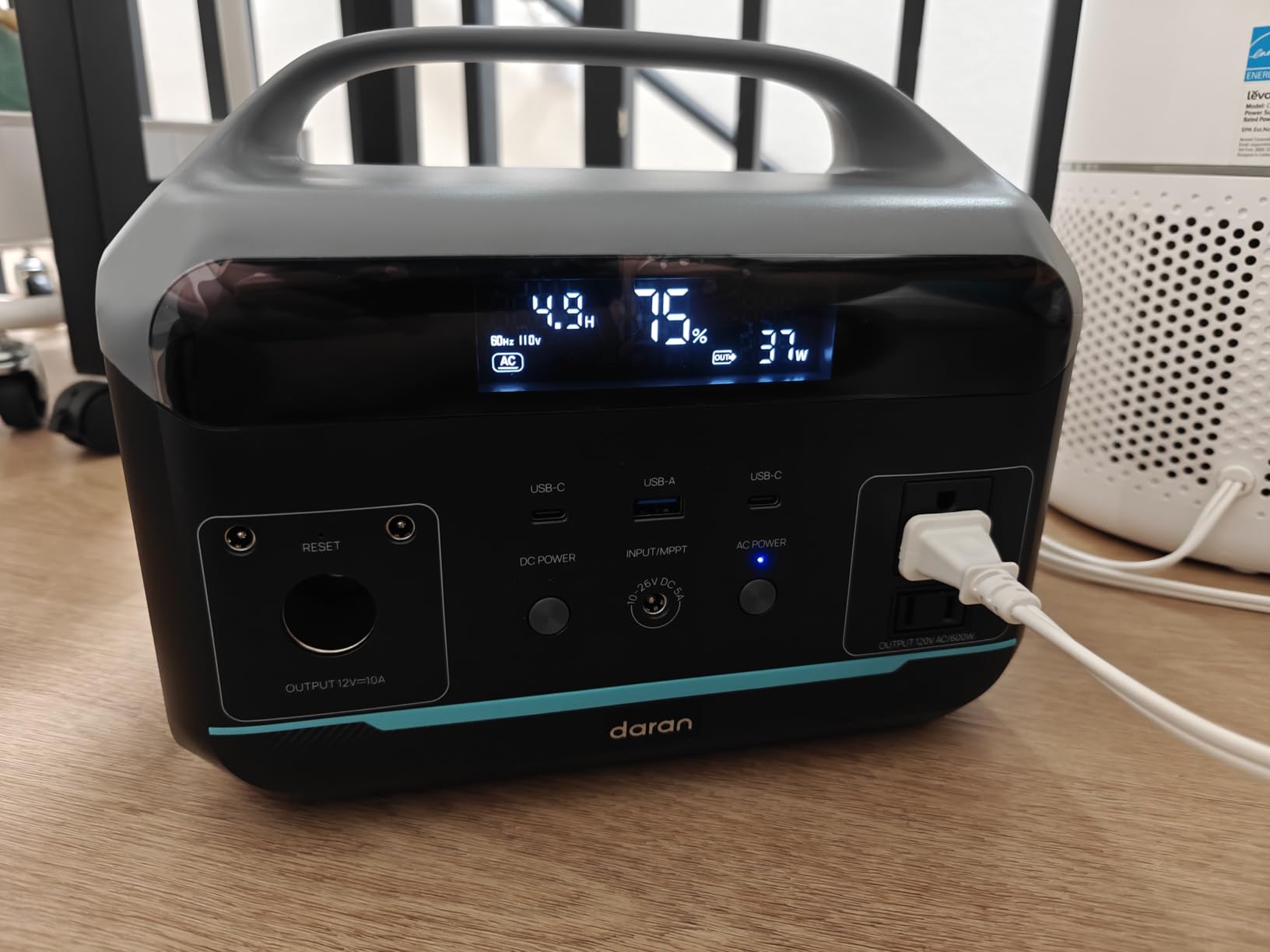
Not every household needs — or can justify — a four-figure investment in backup power, and the DaranEner rounds out this list as the accessible entry point. At 288Wh with a LiFePO4 battery and a 700W surge rating, it covers the basics: charging phones and small electronics, running a fan, or keeping a router online, at a price that makes it an easy first purchase rather than a major commitment.
What keeps this from feeling like a stripped-down compromise is the battery chemistry choice: LiFePO4 at this price point is still not universal among budget brands, and it is the single feature most likely to affect how well this unit holds up over years of casual use. Solar compatibility rounds it out, letting buyers add a modest panel later without needing to replace the whole unit.
What We Liked
- Most affordable unit on this list
- LiFePO4 battery chemistry at a budget price point
- Solar-compatible for future expansion
Worth Knowing
- 700W surge limits it to smaller electronics and appliances
- Fewer smart features than premium competitors

Full Spec Comparison Table
Once you have narrowed things down to two or three contenders, the differences often come down to a handful of numbers. Here is every model from this guide laid out together so you can compare line by line rather than flipping between ten separate product pages.
| Model | Capacity | Continuous Output | Surge Output | Battery | AC Recharge |
|---|---|---|---|---|---|
| Bluetti Elite 200 V2 | ~2,048Wh | 2,200W | 5,100W | LiFePO4 | <1 hr |
| Anker SOLIX F3000 | 3,072Wh+ | 3,600W | 6,000W | LiFePO4 | ~2 hrs |
| Anker SOLIX C2000 Gen 2 | 2,048Wh | 2,400W | — | LiFePO4 | 58 min |
| Anker SOLIX S2000 | 2,010Wh | 3,000W (peak) | 3,000W | LiFePO4 | ~1.5 hrs |
| Jackery Explorer 1000 v2 | 1,070Wh | 1,500W | — | LiFePO4 | ~1 hr |
| Jackery HomePower 3000 | 3,072Wh | 3,000W | — | LiFePO4 | ~2 hrs |
| Jackery Solar Generator 2000 v2 | 2,042Wh | 2,200W | — | LiFePO4 | ~2 hrs |
| BLUETTI Elite 30 V2 | 288Wh | 600W | 1,500W | LiFePO4 | 45 min to 80% |
| EcoFlow Delta 2 | 1,024Wh+ | 1,800W | 2,400W | LiFePO4 | ~80 min |
| DaranEner Portable Power Station | 288Wh | — | 700W | LiFePO4 | ~2 hrs |
A quick pattern worth noticing: nearly every unit on this list, from the smallest to the largest, has standardized on LiFePO4 battery chemistry. That is not a coincidence — it reflects where the entire portable power industry has settled after years of consumers reporting faster capacity loss with older lithium-ion cells. When a listing does not specify battery chemistry, that omission alone is worth treating as a caution flag.
Another pattern worth reading between the lines on: surge output figures scale roughly, but not perfectly, with continuous output across this list. Bluetti and Anker’s larger units tend to post noticeably higher surge-to-continuous ratios than some competitors at a similar capacity tier, which is one reason both brands show up more than once across the “best for” categories above. If your planned load includes a compressor-based appliance, that surge-to-continuous ratio is worth comparing directly between your final two or three contenders rather than assuming it scales predictably with capacity alone.
How to Choose the Right Solar Generator for Your Situation
The “best” solar generator is not a single product — it is whichever unit correctly matches your power needs, your budget, and how you actually plan to use it. Working through the following questions in order will get you to the right pick faster than comparing spec sheets in isolation.
Start With Watt-Hours, Not Watts
Watt-hours (Wh) tell you total stored energy, while watts (W) tell you how fast that energy can be delivered at any given moment. A common mistake is fixating on the watt rating and ignoring capacity, which leads to buying a unit that can technically power a device but only for twenty minutes. Add up the wattage of everything you want to run simultaneously, multiply by how many hours you need it running, and you will land on a realistic Wh target. Our detailed breakdown on sizing a solar generator correctly walks through this math with real appliance examples if you want to run your own numbers before buying.
Match Surge Rating to Your Heaviest Appliance
Compressor-based appliances — refrigerators, window air conditioners, well pumps — draw a short but significant surge of power the instant they switch on, often two to three times their running wattage. A generator can have plenty of continuous capacity and still trip or shut down if its surge rating cannot cover that initial spike. Always check a unit’s surge or “peak” rating against your single heaviest appliance’s startup draw, not just its steady-state number.
Decide Between Portable and Stationary Use
Units like the Jackery Explorer 1000 v2 or the BLUETTI Elite 30 V2 are built to move with you, prioritizing manageable weight and grab handles over sheer capacity. Units like the Anker SOLIX F3000 or Jackery HomePower 3000 are built to stay put, prioritizing capacity and expandability over portability. Buying a “portable” unit for a permanent home-backup role often means overpaying for portability features you will never use, while buying a stationary-focused unit for camping trips means lugging around far more weight than necessary.
Consider Recharge Speed as a Daily-Use Feature
It is easy to treat recharge speed as a minor spec, but it fundamentally changes how a unit fits into daily life. A station that recharges in under an hour, like the Anker SOLIX C2000 Gen 2, can realistically be topped off during a lunch break. A station that takes several hours works fine for overnight charging but poorly for quick turnarounds between uses.
Factor In Solar Panel Compatibility and Cost
Some listings bundle panels, like the Jackery Solar Generator 2000 v2 or the EcoFlow Delta 2 kit reviewed above; others sell the power station and panels separately, which can meaningfully change the real total cost. Check the maximum solar input wattage a unit accepts, since pairing an undersized panel with a large-capacity battery means solar charging will always be the bottleneck, regardless of how fast the unit can charge from AC power. For the underlying mechanics of how sunlight actually becomes stored battery power, see our explainer on how solar generators work.
Check App Support and Monitoring
A companion app that reliably shows state-of-charge, input/output wattage, and remaining runtime turns a solar generator from a mystery box into a tool you can plan around. This matters most for home-backup setups where the unit may sit in a basement or garage, out of easy visual reach.
Read the Warranty Terms Closely
Warranty length is one of the more reliable proxies for how confident a manufacturer is in their own battery’s longevity. Anker’s 5-year warranty on the SOLIX C2000 Gen 2, for example, stands out precisely because it is longer than what many competitors offer at a similar price point.
Don’t Ignore Noise Levels
Solar generators are far quieter than gas engines by default, but they are not always silent — internal cooling fans kick in under heavier loads or during fast charging, and fan noise levels vary noticeably between brands and models. If you plan to run a unit overnight near a sleeping area, whether that’s a bedroom during a home outage or a tent while camping, look specifically for models advertising a quiet or silent charging mode, like the one featured on the Jackery Solar Generator 2000 v2 covered above, rather than assuming every unit in this category is equally quiet.
Think About Charging From a Car
Beyond wall outlets and solar panels, most units in this category also support charging from a vehicle’s 12V outlet, which is a useful backup charging path during road trips or if solar conditions are poor for several days in a row. Car charging is typically the slowest of the three main charging methods, so it works best as a supplemental option rather than a primary charging strategy.
Solar Generator vs. Gas Generator: Which Makes More Sense?
For decades, “generator” meant a gas-powered engine bolted to an alternator, and for certain use cases that is still true today — nothing beats a large gas unit for continuous multi-day power at industrial-scale wattage. But for the majority of households and casual outdoor users, solar generators have closed the gap enough that the trade-offs deserve a fair look rather than an assumption that gas automatically wins.
| Factor | Solar Generator | Gas Generator |
|---|---|---|
| Noise | Silent to near-silent operation | Loud, often 60–90 decibels |
| Fuel | Free sunlight; also AC/car chargeable | Requires stored or purchased gasoline |
| Indoor Use | Safe indoors (no exhaust fumes) | Never safe indoors — carbon monoxide risk |
| Maintenance | Minimal; no moving engine parts | Oil changes, spark plugs, carburetor care |
| Runtime Ceiling | Limited by battery capacity + recharge speed | Effectively unlimited with fuel supply |
| Upfront Cost | Moderate to high | Low to moderate |
The indoor-use difference alone settles the debate for a lot of households: a gas generator producing carbon monoxide can never safely run inside a home, garage, or tent, while a solar generator can sit on a kitchen counter without any ventilation concerns. For anyone with a CPAP machine, medical equipment, or simply a preference for not running extension cords through a cracked-open window during a storm, that single fact often outweighs every other consideration.
Where gas still has a clear edge is in truly extended outages measured in many days rather than hours, where refueling a gas tank remains faster than waiting on solar panels or a generator hookup to recharge a depleted battery. The realistic answer for most people is that solar generators now cover the vast majority of common outage and off-grid scenarios comfortably, with gas generators remaining the better fit only for a narrower set of high-duration, high-wattage situations.
Cost-per-year is another angle worth considering beyond the sticker price. A gas generator’s ongoing fuel, oil, and part-replacement costs accumulate steadily over its lifespan, while a solar generator’s main ongoing cost is simply the gradual, expected decline in battery capacity over thousands of charge cycles. For households that experience outages a handful of times a year rather than constantly, the total cost of ownership gap between the two options is often smaller than the upfront price difference suggests, since a gas unit sitting mostly idle still needs periodic maintenance to stay reliable for the day it is actually needed.
Maintenance and Battery Care Tips
Solar generators are far lower-maintenance than their gas counterparts, but they are not entirely maintenance-free. A little bit of routine care meaningfully extends how many years of useful capacity you get out of the battery inside.
- Avoid storing at 0% or 100% for long periods. Lithium-based batteries, including LiFePO4, degrade slightly faster when left at either extreme for extended stretches. Aim to store a unit around 50–70% charge if it will sit unused for months.
- Keep it out of extreme heat. Direct sun on the unit itself (as opposed to the solar panel) or a hot car trunk in summer accelerates battery wear over time. The panels can bake in the sun; the battery pack itself prefers shade.
- Recharge every few months during storage. Even at rest, batteries slowly self-discharge. Checking in every one to three months and topping off prevents a unit from drifting down to a damaging deep-discharge state.
- Keep firmware and companion apps updated. Manufacturers periodically release firmware updates that improve charge management and fix efficiency bugs, particularly on newer smart units with app connectivity.
- Clean solar panels regularly. Dust, pollen, and grime on a panel’s surface can measurably cut charging efficiency; a simple wipe with a soft cloth before each use keeps input rates where they should be.
- Don’t ignore fan vents. Blocked or dusty vents make units run hotter under load, which is one of the more common causes of premature wear reported by long-term owners.
How much all of this actually matters comes down to expected lifespan. Most LiFePO4-based units on today’s market are rated for somewhere between 3,000 and 6,000 charge cycles before capacity noticeably declines, which for a typical household translates into many years of regular use. Our full breakdown on how long a solar generator lasts goes deeper into cycle-life math and what realistic year-over-year capacity loss looks like.
When a unit does eventually reach the end of its useful life, proper disposal matters more than it does for most household electronics. Lithium-based batteries should never go in regular household trash due to fire risk in waste processing facilities. Most manufacturers, including the brands covered in this guide, offer take-back or recycling programs, and many municipalities have dedicated battery recycling drop-off points at electronics recyclers or hardware stores. Checking the manufacturer’s support page for a recycling program before disposal is worth the extra few minutes.
Understanding Solar Panel Wattage and Real-World Charge Times
The wattage printed on a solar panel’s spec sheet is a laboratory best-case number, measured under ideal sun angle, temperature, and clear-sky conditions. In practice, a “200W” panel rarely delivers a clean 200W to your generator for hours on end, and understanding why prevents a lot of disappointment after purchase.
Why Real Output Falls Short of the Rated Number
Panel angle relative to the sun has the single biggest effect on real-world output. A panel lying flat on the ground at midday in summer performs very differently from that same panel propped at a steep angle in early spring. Cloud cover, haze, and even light dust accumulation on the panel’s surface all chip away at effective wattage as well. As a rough rule of thumb, expect real-world average output across a full charging session to land somewhere between 60% and 80% of a panel’s rated wattage under generally good conditions, and considerably lower on overcast days.
Matching Panel Wattage to Battery Capacity
A useful gut-check: dividing a unit’s watt-hour capacity by a panel’s realistic average output gives you a rough hours-to-full estimate. A 2,000Wh battery paired with a single 200W panel averaging 150W in real conditions is looking at over 13 hours of sun exposure to fully recharge — likely spread across two or more days depending on daylight length. That is precisely why kits like the Jackery Solar Generator 2000 v2 bundle two panels rather than one, effectively cutting that recharge window close to in half.
Series vs. Parallel Panel Wiring
When running multiple panels, most solar generators support either series or parallel wiring, and the difference affects performance in specific conditions. Series wiring increases voltage while keeping current the same, which tends to perform better in partial shade situations for some MPPT controller designs. Parallel wiring keeps voltage the same while increasing current, and is generally the simpler, more forgiving setup for casual users. Check your specific unit’s manual before assuming either configuration is universally better — controller design varies by manufacturer.
Foldable vs. Rigid Panels
Most portable kits, including the panels bundled with the Jackery Solar Generator 2000 v2, use foldable panel designs that fit flat for storage and prop open at an adjustable angle in the field. Rigid panels, more common in permanent installations, tend to be slightly more durable and marginally more efficient per square foot, but sacrifice the portability that makes this whole product category appealing in the first place. For nearly everyone reading this guide, foldable panels remain the more practical choice.
Real-World Runtime Scenarios by Device
Spec sheets are useful, but seeing rough runtime estimates for common devices against a mid-size 2,000Wh-class unit makes the numbers feel more concrete. These are illustrative averages assuming reasonably efficient devices and account for typical inverter losses, not exact guarantees.
| Device | Typical Draw | Approx. Runtime on 2,000Wh Unit |
|---|---|---|
| Smartphone (charging) | ~10W | 150+ full charges |
| Laptop | ~60W | 25–30 hours |
| CPAP machine | ~40W | 35–45 hours |
| Mini fridge | ~100W (cycling) | 18–24 hours |
| Full-size refrigerator | ~150–200W (cycling) | 10–15 hours |
| Box fan | ~50W | 30+ hours |
| Window AC unit (small) | ~900W | 2–2.5 hours |
| Electric kettle | ~1,200W | ~1.5 hours of active use |
Compressor-based devices like refrigerators and window AC units are listed with their cycling average rather than peak draw, since they do not run continuously at full power — they cycle on and off to maintain temperature. This is also exactly why surge rating, covered earlier in the buying guide, matters so much more than continuous wattage alone when these appliances are part of your planned load.
It’s also worth remembering that these estimates assume a single device running in isolation. Real-world outages rarely involve running just one thing — more often it’s a fridge cycling in the background while a few phones charge and a fan runs continuously. Building a rough combined-load estimate before an outage happens, rather than during one, makes it much easier to decide in the moment which devices to prioritize if capacity starts running low.
Common Mistakes When Buying a Solar Generator
A surprising number of buyer complaints in this category trace back to a handful of avoidable mistakes made before the purchase, rather than any real flaw in the product itself. Working through these ahead of time will save both money and post-purchase frustration.
Buying Based on Capacity Alone
Watt-hour capacity gets all the attention because it is the easiest number to compare across listings, but continuous output and surge rating determine whether a unit can actually run what you need. A 3,000Wh unit with a low continuous wattage rating can still fail to start a compressor-based appliance that a smaller but higher-output unit handles easily. Always cross-check capacity against output ratings together, never in isolation.
Ignoring Panel Compatibility Before Buying Separately
Not every solar panel is compatible with every power station, even within the same manufacturer’s lineup, due to differences in connector type and maximum input voltage. If you plan to buy panels separately rather than as part of a bundled kit, confirm compatibility specifics before ordering, rather than assuming any panel with a matching wattage number will work.
Underestimating How Often You’ll Actually Use It
Buyers who purchase a unit purely for once-a-year emergency use often regret not paying slightly more for better app monitoring and faster recharge speed, since those features become far more valuable the moment a unit gets used more frequently than expected — which, anecdotally, seems to happen to a lot of first-time buyers once they realize how convenient portable power actually is around the house.
Overlooking Total System Weight
A power station’s weight alone does not tell the whole story if you also need to carry solar panels, cables, and any home-integration hardware. For anyone planning to actually move a system between a home and a vehicle regularly, factor in the full kit weight, not just the headline unit.
Skipping the Return Policy Details
Because these are relatively expensive purchases that are hard to fully evaluate from a product page alone, checking the specific return window and any restocking fees before buying protects you if the unit does not fit your actual use case once it arrives.
Assuming All Ports Deliver Full-Speed Power Simultaneously
Many units cap total combined output across all ports at once, meaning that plugging in several devices simultaneously can throttle individual port speeds even if each port’s individual maximum looks impressive on the spec sheet. If fast simultaneous multi-device charging matters to your use case, check the unit’s total combined output limit, not just each port’s peak rating in isolation.
Frequently Asked Questions
How long will a solar generator run a refrigerator?
It depends heavily on capacity and the fridge’s actual draw, but as a reference point, the Anker SOLIX S2000’s 2,010Wh capacity is rated for up to roughly 35 hours of continuous fridge backup. Smaller units in the 288Wh range will typically manage only a few hours before needing a recharge.
Can I run a solar generator indoors?
Yes. Unlike gas generators, solar generators produce no exhaust fumes, so they are safe to operate inside a home, garage, or tent without ventilation concerns.
Do I need to buy solar panels separately?
It depends on the model. Some units, like the Jackery Solar Generator 2000 v2 and the EcoFlow Delta 2 bifacial kit reviewed above, come bundled with compatible panels. Others sell the power station and panels as separate purchases, so check the listing carefully before assuming panels are included.
What is the difference between watts and watt-hours?
Watts measure how fast power is delivered at a given moment, while watt-hours measure total stored energy. A generator’s watt rating tells you what it can power; its watt-hour rating tells you for how long.
How fast can these units be recharged?
Recharge speed varies significantly by model. The Anker SOLIX C2000 Gen 2 can reach a near-full charge in about 58 minutes via AC power, while larger units like the Anker SOLIX F3000 take closer to two hours due to their much larger battery capacity.
Is LiFePO4 battery chemistry better than standard lithium-ion?
For this category, generally yes. LiFePO4 batteries typically offer a longer cycle life and better thermal stability than older lithium-ion chemistries, which is why nearly every model reviewed in this guide, including the budget-focused DaranEner unit, has adopted it.
What size solar generator do I actually need?
Add up the wattage of everything you plan to run at once and multiply by your expected runtime in hours to get a target watt-hour capacity. Our full sizing guide on what size solar generator you need walks through this calculation with common appliance examples.
Can a solar generator power an entire house?
Larger units like the Anker SOLIX F3000 or Jackery HomePower 3000, especially when paired with home integration kits, can cover essential circuits during an outage. Powering an entire home’s full simultaneous load, however, typically requires either an expandable battery system or a dedicated home battery installation rather than a single portable unit.
How long do solar generator batteries actually last?
Most LiFePO4-based units are rated for roughly 3,000 to 6,000 charge cycles before capacity noticeably declines, which for typical household use spans several years. Storage habits and heat exposure both affect real-world longevity.
What’s the difference between continuous and surge (peak) output?
Continuous output is how much power a unit can sustain over time, while surge or peak output is the brief spike it can handle when a compressor-based appliance first switches on. Always check surge rating against your heaviest single appliance’s startup draw.
Are bifacial solar panels worth it?
Bifacial panels, like the one bundled with the EcoFlow Delta 2 kit above, capture reflected light on their underside in addition to direct sunlight on top. The benefit is most noticeable over reflective surfaces like snow or light sand, and smaller in darker, low-reflectivity settings.
Which brand should I trust for long-term reliability?
Bluetti, Anker (SOLIX), Jackery, and EcoFlow all have established track records in this category, each with slightly different strengths in warranty terms, app quality, and battery chemistry choices. Our dedicated Bluetti vs. Jackery vs. EcoFlow comparison covers these brand-level differences in more detail.
Can I use a solar generator while it’s charging?
Most modern units, including every model covered in this guide, support pass-through charging, meaning you can draw power from connected devices at the same time the unit itself is recharging from solar panels or AC power. Check the specific unit’s manual, since combined charge-and-discharge use can generate more heat and slightly slow the overall recharge time.
Do solar generators work on cloudy days?
Yes, though at meaningfully reduced efficiency. Solar panels still generate some power under cloud cover, typically somewhere in the range of 10% to 25% of their rated output depending on cloud density, so charging will simply take considerably longer than on a clear day.
Final Verdict: Which Solar Generator Should You Buy?
Across ten well-regarded units, the pattern that emerges is not “one winner beats them all” — it is that the right choice depends on which problem you are actually solving. For most buyers wanting a well-rounded unit that handles both everyday use and genuine emergencies without excess bulk, the Bluetti Elite 200 V2 remains the strongest overall pick from this roundup. If your household draw is large enough that you are thinking in terms of whole-home backup, the Anker SOLIX F3000 or Jackery HomePower 3000 are built for exactly that scale. And if budget or portability is the deciding factor, the DaranEner and Jackery Explorer 1000 v2 both deliver real value without unnecessary features you will never use.
Whichever unit fits your situation, the underlying shift these products represent is worth appreciating on its own: quiet, fume-free, sunlight-rechargeable backup power that used to be a niche off-grid luxury is now genuinely practical for ordinary households. Take the time to size your needs correctly using the buying guide above, and you will end up with a unit that actually earns its shelf space rather than gathering dust until the next outage reminds you it exists.
Before you go, it’s worth restating the simplest version of the advice in this whole guide: figure out your realistic watt-hour need first, check surge rating against your heaviest single appliance second, and only then start comparing extras like app quality, recharge speed, and bundled solar panels. Buyers who follow that order consistently end up happier with their purchase than buyers who start from a brand name or a flashy capacity number and work backward.
Browse Solar Generators on Amazon