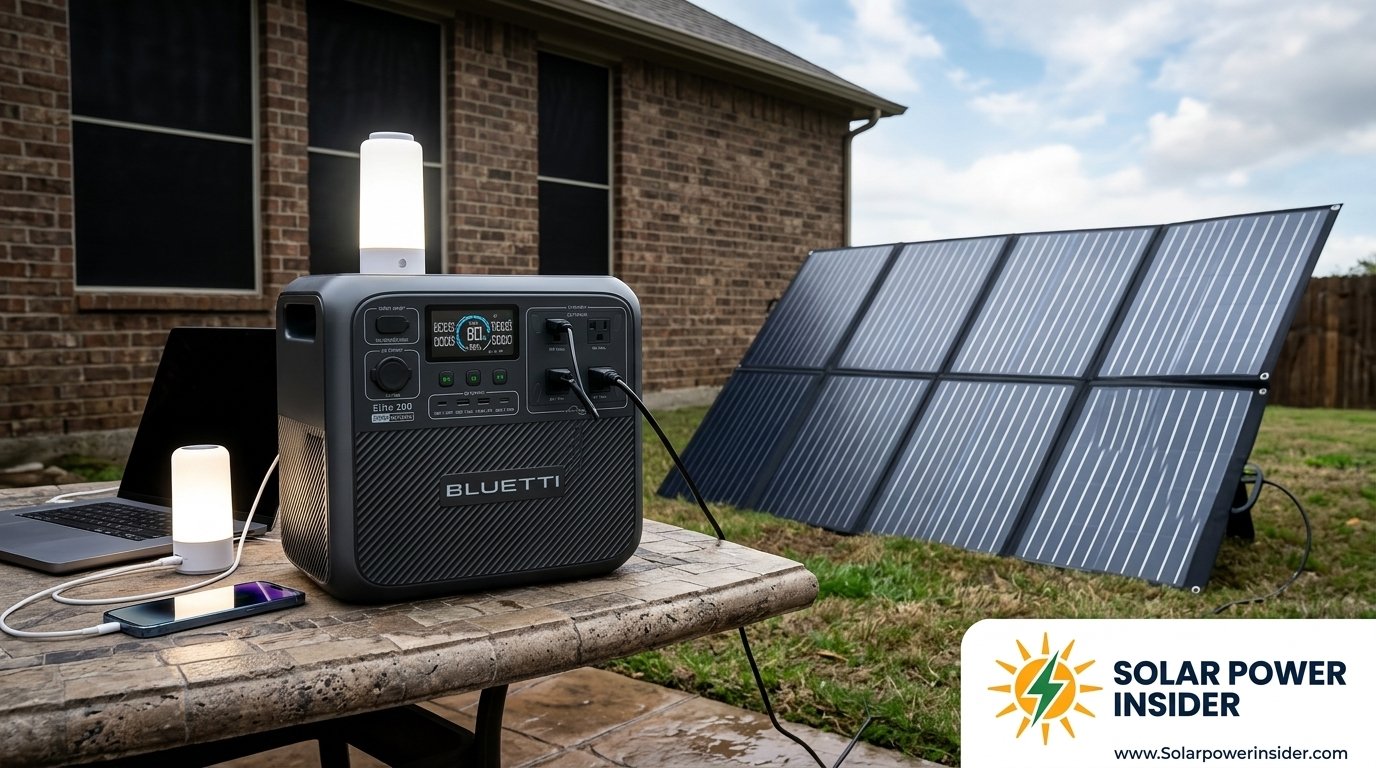
How Does a Solar Powered Generator Work? A Complete Plain-English Guide
Solar generators look simple from the outside — a box with buttons and outlets — but inside them is a small, elegant power system doing several jobs at once. Here’s exactly what happens between sunlight hitting a panel and a laptop charging in your living room.
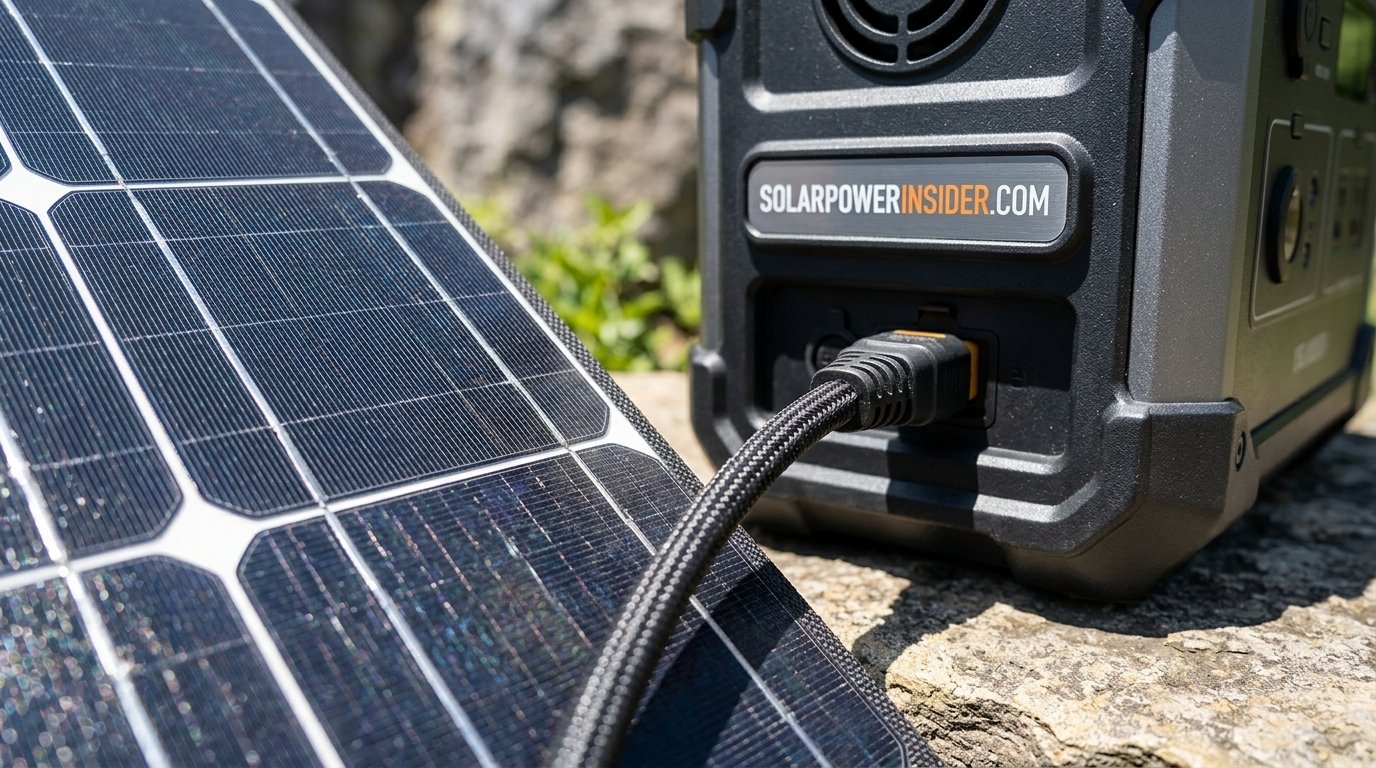
What Is a Solar Powered Generator, Really?
A solar powered generator — more accurately called a “solar generator” or portable power station — is a battery-based system that stores electricity generated by solar panels and releases it later, on demand, in a form your everyday devices can use. Unlike a traditional gas generator, there’s no engine, no fuel tank, and no exhaust. It’s essentially a rechargeable battery pack with intelligent electronics wrapped around it.
If you’ve been comparing options, it helps to first look at the best solar powered generators on the market to get a feel for the range of capacities and prices before diving into how the technology itself works.
At its core, a solar generator does four things in sequence: it captures sunlight, converts that light into usable electricity, stores the electricity in a battery, and then converts the stored power back into a form your appliances can use. Each of those four stages relies on a distinct component, and understanding each one is the key to understanding the whole system.
A Short History of Portable Solar Power
The idea of storing solar energy in a portable box is newer than most people assume. Photovoltaic cells themselves date back to the 1950s, when they were prohibitively expensive and mostly reserved for satellites and space exploration, where cost was a secondary concern to reliability and weight. For decades, solar power stayed largely fixed in place — rooftop arrays, ground-mounted farms, and off-grid cabins with heavy lead-acid battery banks bolted to a wall.
What changed the game was the maturing of lithium-ion battery technology, originally driven by the smartphone and laptop industries. As lithium cells became cheaper, lighter, and safer through the 2010s, manufacturers realized they could pair a lithium battery pack with a built-in inverter and a set of standard AC outlets, creating a genuinely portable, plug-and-play power source. Early units were clunky, expensive, and limited to a few hundred watt-hours. Today’s units pack several times that capacity into a similar footprint, often with smartphone app control, expandable battery packs, and fast-charging solar inputs that weren’t imaginable a decade ago.
This evolution matters because it explains why solar generators feel like a relatively modern convenience rather than a niche off-grid tool — the underlying physics (the photovoltaic effect) hasn’t changed, but the packaging, battery density, and intelligence around it have advanced dramatically.
The Core Components Explained
Every solar generator, regardless of brand or size, is built around the same four essential parts working together.
Capture sunlight and convert it into raw DC electricity.
Regulates voltage and current flowing into the battery.
Stores the electricity for later use.
Converts stored DC power into AC power for household devices.
Wrapped around these four components is a battery management system (BMS) that quietly monitors temperature, voltage, and current thousands of times per second to keep everything safe and efficient. Think of it as the nervous system of the unit — it’s not doing the heavy lifting, but nothing else works safely without it.

See real-world capacity in action
Curious how these components perform outside a lab? Our long-term test breaks down real output numbers.
Check Current Price on AmazonStep-by-Step: How the Power Actually Flows
It’s easiest to understand a solar generator by following a single “packet” of energy from the moment sunlight hits the panel to the moment it powers your phone charger.
| Stage | What Happens | Form of Energy |
|---|---|---|
| 1. Sunlight hits the panel | Photons strike silicon photovoltaic cells | Light energy |
| 2. Photovoltaic effect | Electrons are knocked loose, creating a flow of current | Raw DC electricity |
| 3. Charge controller | Regulates voltage/current so the battery isn’t overcharged | Regulated DC |
| 4. Battery storage | Chemical reaction stores the electricity for later use | Stored chemical energy |
| 5. Inverter conversion | DC power is converted into AC power | Household AC electricity |
| 6. Output to device | Power flows out through AC outlets, USB ports, or DC ports | Usable electricity |
The entire process, from sunlight to socket, happens continuously and automatically. The unit doesn’t need you to flip a switch at each stage — the internal electronics handle the transitions instantly, which is part of what makes these systems so convenient for camping, RV trips, or backup power at home.
How the Solar Panels Generate Electricity
Solar panels rely on something called the photovoltaic effect. Each panel is made up of many small silicon cells, and each cell contains two layers of silicon treated with different chemical properties, creating an electric field across the boundary between them.
When sunlight (specifically, photons) hits the silicon, it knocks electrons loose from their atoms. The electric field built into the cell pushes these freed electrons in one direction, creating a flow of electric current — direct current, or DC. Wires embedded in the panel collect this current and route it out through the panel’s connector.
Panel Types That Perform Well
- Monocrystalline — highest efficiency, best in limited space
- Polycrystalline — slightly less efficient, lower cost
- Foldable/portable panels — designed for travel and camping
Factors That Reduce Output
- Cloud cover and shade
- Dust or dirt buildup on the panel surface
- Poor panel angle relative to the sun
- High panel temperature (efficiency drops as panels heat up)
A single panel typically produces somewhere between 100 and 400 watts under ideal sunlight, depending on its size and technology. Multiple panels can usually be connected together to increase total charging speed, which matters a lot if you’re trying to recharge quickly on a cloudy day.
Panel Technology Deep Dive
Not all solar cells are built the same way, and the underlying cell technology has a real effect on how a panel performs in the field — not just its efficiency rating on paper. Understanding the differences helps explain why two panels with similar wattage ratings can behave very differently when it’s overcast or when the panel is bent slightly to fit a car dashboard.
Monocrystalline Cells
Monocrystalline panels are cut from a single, continuous crystal of silicon, which gives the electrons a more uniform path to travel and results in the highest efficiency ratings on the market, typically in the 20–23% range. Because they perform well even in imperfect light, monocrystalline panels have become the default choice for premium portable panels where physical space is limited but performance still matters.
Polycrystalline Cells
Polycrystalline panels are made from multiple silicon fragments melted together, which is cheaper to manufacture but leaves more boundaries between crystal structures for electrons to navigate. This results in slightly lower efficiency, usually in the 15–17% range, and a distinctive blue, speckled appearance rather than the uniform black of monocrystalline cells.
Thin-Film and Flexible Panels
Thin-film panels use a different manufacturing process entirely, depositing a photovoltaic layer onto a flexible backing instead of using rigid silicon wafers. They’re lighter and can bend to curved surfaces, which is why you’ll see them on the roofs of vans and RVs, but they typically top out around 10–13% efficiency, meaning you need considerably more surface area to generate the same wattage as a monocrystalline panel.
The Role of the Charge Controller
Raw electricity coming straight off a solar panel is unpredictable — its voltage and current shift constantly as sunlight intensity changes throughout the day. If that raw current were sent directly into a battery, it would shorten the battery’s lifespan and could even damage it.
The charge controller sits between the panel and the battery and does two critical jobs: it prevents overcharging, and in higher-end units, it uses Maximum Power Point Tracking (MPPT) to squeeze the most possible wattage out of the panels at any given moment. MPPT controllers are meaningfully more efficient than the older PWM (Pulse Width Modulation) style, often improving charging efficiency by 20–30%.
MPPT vs PWM in Detail
Because the charge controller has such an outsized effect on real-world charging speed, it’s worth understanding exactly how the two dominant technologies differ, rather than just knowing that “MPPT is better.”
A PWM (Pulse Width Modulation) controller works by directly connecting the panel to the battery and rapidly switching that connection on and off to taper the charging current as the battery fills up. It’s simple, reliable, and inexpensive, but it forces the solar panel’s output voltage to match the battery’s voltage exactly, which wastes a portion of the panel’s potential output — especially early in the morning or late in the afternoon when panel voltage is naturally higher than the battery needs.
An MPPT (Maximum Power Point Tracking) controller instead uses a small onboard computer to constantly sample panel voltage and current, calculating the exact combination that yields the highest wattage at that moment, then uses a DC-to-DC converter to transform that power into whatever voltage the battery needs. This active tracking is what allows MPPT controllers to extract meaningfully more energy from the same panels, particularly in variable light such as partial cloud cover or a slightly misaligned panel angle.
| Factor | PWM | MPPT |
|---|---|---|
| Typical efficiency | 65–75% | 90–98% |
| Cost | Lower | Higher |
| Best for | Small, budget setups | Larger or premium setups |
| Performance in partial shade | Poor | Noticeably better |
Battery Storage Explained
Once the charge controller has cleaned up and regulated the incoming power, it’s sent to the battery pack, where a chemical reaction stores the electrical energy for later use. This is the heart of the entire system, and it’s why the total stored capacity is usually described in watt-hours (Wh) — a measurement of how much energy the battery can hold and release over time.
Inside the battery pack sits the battery management system (BMS), a small circuit board that continuously tracks individual cell voltages, overall pack temperature, and charge/discharge rates. If anything drifts outside safe limits, the BMS cuts power flow to protect the battery from damage, overheating, or in worst-case scenarios, thermal runaway.
Inside the Battery Management System
The battery management system deserves closer attention because it’s arguably the single most important safety component in the entire unit, even though most owners never think about it. A lithium battery pack is made up of dozens or even hundreds of individual cells wired together in series and parallel groups, and no two cells are perfectly identical — tiny manufacturing variances mean some cells naturally charge slightly faster or hold slightly more capacity than others.
Left unmanaged, these small differences compound over hundreds of charge cycles, eventually leading to some cells being overcharged while others lag behind, which shortens overall pack life and creates safety risk. The BMS solves this through a process called cell balancing, where it selectively directs a small amount of current to or from individual cells to keep the entire pack in sync.
Beyond balancing, the BMS also handles several other jobs simultaneously: it monitors pack temperature at multiple points and throttles or halts charging if things run too hot or too cold, it tracks state of charge to give you an accurate percentage reading, it enforces low-voltage and high-voltage cutoffs to prevent damage from complete discharge or overcharge, and it manages short-circuit and overcurrent protection to instantly disconnect the pack if something goes wrong downstream. All of this happens silently, dozens of times per second, which is why well-built solar generators feel so effortlessly reliable in daily use.
The Inverter: Converting DC to AC
Batteries store and release direct current (DC), but most household appliances — laptops, lamps, coffee makers, TVs — are built to run on alternating current (AC), the type of electricity that comes out of a standard wall outlet. This is where the inverter comes in.
The inverter rapidly switches the direction of the DC current back and forth, creating a waveform that mimics grid electricity. Better solar generators use “pure sine wave” inverters, which produce a smooth, clean waveform nearly identical to utility power. Cheaper “modified sine wave” inverters produce a rougher, stepped waveform that can cause sensitive electronics to run hot, buzz, or malfunction.
Pure Sine Wave Inverter
- Safe for laptops, medical devices, and sensitive electronics
- Quieter operation, less heat buildup in devices
- Standard on nearly all reputable solar generators
Modified Sine Wave Inverter
- Can cause buzzing or reduced lifespan in some electronics
- Not recommended for CPAP machines or medical equipment
- Mostly found in older or budget units
Inverter Specs That Actually Matter
When comparing solar generators on spec sheets, two inverter numbers show up constantly, and confusing them is one of the most common shopping mistakes. Understanding the difference can save you from buying a unit that technically has “enough watts” but still can’t run what you need.
Continuous (Rated) Wattage
This is the amount of power the inverter can sustain indefinitely without overheating or shutting down. If a unit lists 1,000W continuous, that’s the ceiling for the combined wattage of everything you’re running at once, on an ongoing basis.
Surge (Peak) Wattage
This is a much higher number, usually 1.5 to 2 times the continuous rating, representing a brief spike the inverter can handle for a fraction of a second. This matters because motors — in refrigerators, power tools, air compressors, and well pumps — draw a short burst of extra current the moment they switch on, before settling down to their normal running wattage.
Other Inverter Specs Worth Checking
- Total harmonic distortion (THD): Lower is better; under 3% is considered clean power safe for sensitive electronics.
- Number and type of AC outlets: Some units split output across multiple circuits rather than one shared inverter bus.
- UPS/pass-through mode: Determines how fast the unit switches to battery power during a grid outage — critical for protecting computers and networking gear.
Other Ways to Charge a Solar Generator
While the “solar” part of the name suggests panels are the only charging option, most modern units are actually multi-source. This flexibility is a big part of why they’ve become popular for both off-grid use and home backup power.
| Charging Method | Typical Speed | Best For |
|---|---|---|
| Solar panels | Slowest, weather-dependent | Off-grid, extended trips |
| Wall outlet (AC) | Fast, often 1–2 hours | Pre-trip charging, home backup |
| Car charger (12V) | Moderate | Road trips, RV travel |
| Generator input | Fast | Emergency top-ups |
For a deeper look at how these input methods affect long-term durability, our guide on how long a solar generator lasts breaks down real-world battery degradation data.
Understanding Solar Input Specs
Every solar generator has a maximum solar input rating, usually expressed in watts, and it’s easy to assume that simply matching your panel wattage to that number guarantees full-speed charging. In practice, three additional specs determine how much of your panels’ potential you actually capture.
- Voltage range (Voc): Each unit has a minimum and maximum open-circuit voltage it accepts from panels wired in series. Exceeding the max can trigger a safety shutdown; falling below the minimum means the controller can’t engage at all.
- Amperage limit: Even if voltage is compatible, the controller caps how many amps it will draw, which places a hard ceiling on total charging wattage regardless of how many panels you connect.
- Series vs parallel wiring: Wiring panels in series increases voltage while keeping amperage the same; wiring in parallel does the opposite. Getting this wrong is a common reason people report “my panels aren’t charging as fast as advertised.”
Most manufacturers publish a compatible panel voltage window directly in the manual or on the unit’s charging port — it’s worth checking before buying third-party panels to pair with an existing power station.

Want a deep dive on a specific model?
Our long-term test of a top-rated unit shows real charge times and output performance.
View on AmazonPowering Your Devices: The Output Side
Once electricity has been converted to AC by the inverter, it’s routed to the unit’s various output ports — typically a mix of AC wall-style outlets, USB-A and USB-C ports (some with fast-charging PD support), a 12V DC car-style port, and sometimes a wireless charging pad on top of the unit.
The unit’s internal circuitry constantly monitors total output load to make sure it doesn’t exceed the inverter’s rated wattage. If you try to draw more power than the inverter can handle, most units will automatically shut off the output to protect the internal components — this is a safety feature, not a malfunction.
App Control and Smart Monitoring
Most current-generation solar generators pair with a smartphone app over Bluetooth or Wi-Fi, and while this can feel like a gimmick at first glance, it changes how you actually use the system day to day. Instead of walking over to check a small LCD screen, you can glance at battery percentage, input wattage from your panels, and output wattage to your devices from across the room — or across town if the unit supports remote Wi-Fi monitoring.
Beyond simple monitoring, apps typically let you adjust charging speed (useful for extending overall battery lifespan by charging more gently), set the AC output to turn off automatically below a certain battery percentage, schedule charging windows to take advantage of off-peak electricity rates, and receive firmware updates that can improve efficiency or add new features long after purchase. For anyone using a unit as part of a home backup strategy, the ability to get a push notification the moment the grid drops and the unit switches to battery power is a genuinely useful, non-gimmicky feature.
Efficiency and Energy Loss Along the Way
No energy conversion system is perfectly efficient, and solar generators lose a bit of power at almost every stage. Understanding where those losses happen helps set realistic expectations about real-world performance versus the specs on the box.
| Stage | Typical Energy Loss |
|---|---|
| Panel conversion (sunlight to DC) | 15–22% (panel efficiency rating) |
| Charge controller regulation | 2–5% |
| Battery charge/discharge cycle | 5–10% |
| Inverter conversion (DC to AC) | 10–15% |
Add it up, and it’s common for a solar generator to deliver somewhere around 75–85% of its rated capacity as usable AC power. This isn’t a defect — it’s simply the nature of converting energy between different forms, and it’s roughly in line with what you’d see in home solar installations too.
Battery Chemistry Compared: LiFePO4 vs Li-ion
The type of battery cell inside a solar generator has a huge impact on lifespan, safety, and weight. Today, nearly all quality units use one of two chemistries.
| Feature | LiFePO4 (Lithium Iron Phosphate) | NMC / Li-ion |
|---|---|---|
| Cycle life | 2,000–3,500+ cycles | 500–1,000 cycles |
| Thermal stability | Very high | Moderate |
| Weight | Slightly heavier | Lighter |
| Cost | Higher upfront | Lower upfront |
Most newer flagship models have shifted to LiFePO4 because the dramatically longer cycle life ends up being cheaper over the life of the product, even though the sticker price is higher. If longevity matters to you, this single spec is often more important than peak wattage.
Expandable and Modular Battery Systems
One of the more significant shifts in recent solar generator design is the move toward modular battery systems, where the main unit acts as a hub and additional battery packs can be daisy-chained to increase total capacity without buying an entirely new system. This matters because sizing a solar generator is genuinely difficult to get right on the first try — needs change as you add appliances, extend trip length, or start using the unit for home backup rather than just camping.
With an expandable system, you might start with a base unit and a single 2,000Wh battery, then add a second or third pack later as your needs grow, often without needing to replace the inverter or control electronics at all. This approach also has an advantage during maintenance or failure: if one battery module develops a fault, it can typically be diagnosed and swapped independently, rather than taking the entire power station out of service.
Why This Matters for Home Backup
Homeowners increasingly use expandable solar generator systems as an entry point into whole-home backup, starting small and scaling the battery bank over a few years as budget allows, rather than committing to a large, expensive fixed-capacity system up front.
How Much Power Do You Actually Need?
Understanding how the system works internally is only half the puzzle — the other half is matching a unit’s capacity to your actual power needs. Sizing mistakes are one of the most common regrets people have after buying.
A good starting point is to add up the wattage of everything you plan to run simultaneously, then check that number against the unit’s continuous output rating (not just its peak/surge rating). For a full breakdown with real appliance wattage examples, see our guide on what size solar generator you actually need.
Real-World Use Case Scenarios
Specs and diagrams only tell part of the story — seeing how the system behaves in specific real-world situations makes the whole picture click into place.
Weekend Camping Trip
A mid-size unit paired with a single 100W foldable panel comfortably runs a phone, headlamp, small cooler, and camera batteries across a two- or three-day trip, recharging fully during a single sunny afternoon at camp.
Multi-Day Power Outage
A larger unit with an expandable battery pack can keep a refrigerator, Wi-Fi router, a few lamps, and phone charging running continuously, with solar panels topping up the battery each day to extend runtime well beyond what the battery alone could sustain.
Remote Work From an RV
A unit with a pure sine wave inverter and steady solar input keeps a laptop, monitor, and mobile hotspot running throughout a workday, with roof-mounted panels providing a continuous trickle of power that offsets most of the daytime draw.
Job Site Power Tools
A high-surge-wattage unit can run corded drills, saws, and small compressors intermittently throughout the day, particularly useful on sites without easy grid access where running a fuel generator isn’t practical or allowed.
Solar Generator vs Traditional Gas Generator
Solar Generator Advantages
- Silent operation
- No fuel, no fumes, safe indoors
- Minimal maintenance
- Free ongoing “fuel” from sunlight
Gas Generator Advantages
- Higher sustained wattage for heavy loads
- Faster refueling than solar recharging
- Lower upfront cost per watt
For most households, the two aren’t really direct competitors — solar generators shine for quiet, everyday backup and portable use, while gas units still make sense for running high-draw appliances like well pumps or central AC during extended outages. If you’re weighing specific models, our Bluetti vs Jackery vs EcoFlow comparison is a useful next read.
Solar Generator vs Whole-Home Battery Backup
It’s worth distinguishing portable solar generators from permanently installed whole-home battery systems, since the two are often lumped together in casual conversation but work quite differently under the hood. A whole-home battery system is hardwired into your electrical panel by a licensed electrician, automatically switches the entire house (or select circuits) to battery power within milliseconds of a grid outage, and is typically charged by a rooftop solar array that’s permanently mounted and professionally installed.
A portable solar generator, by contrast, is designed to be moved, doesn’t require electrical panel work, and powers individual devices plugged directly into it rather than your home’s wiring. The tradeoff is flexibility versus scale: portable units are dramatically cheaper, require no installation, and can travel with you, but they can’t power your entire home’s circuits simultaneously the way a whole-home system can. Many households actually use both — a whole-home system for baseline resilience, and a portable unit for camping, job sites, or as a backup to the backup.
Environmental and Cost Considerations
Because solar generators run on sunlight rather than fuel, the ongoing cost of using one is close to zero once you’ve made the initial purchase — there’s no gasoline to buy, no oil changes, and no engine maintenance. Over several years of regular use, this can meaningfully offset the higher upfront price compared to a similarly capable gas generator, particularly for anyone who uses backup power frequently rather than as a rare emergency measure.
From an environmental standpoint, solar generators produce zero emissions during operation, which also makes them one of the only generator types safe to run indoors or in enclosed spaces like a tent vestibule, where a combustion engine would pose a serious carbon monoxide risk. The environmental cost is shifted upstream, to the manufacturing of the lithium battery and solar panels themselves, but for households already invested in reducing their environmental footprint, the tradeoff is generally seen as favorable, especially with the extended, multi-year usable lifespan of quality LiFePO4 battery packs.
Safety Features Explained
Modern solar generators pack a surprising number of protective systems into a relatively small enclosure, most of which operate invisibly until something goes wrong. Understanding what’s actually protecting you helps explain why quality units, despite storing a meaningful amount of energy, have an excellent safety record.
- Overcharge protection: Automatically halts charging once the battery reaches full capacity, regardless of charging source.
- Over-discharge protection: Cuts output before the battery drops to a damagingly low voltage.
- Short-circuit protection: Instantly disconnects the circuit if a short is detected downstream.
- Thermal protection: Throttles or halts charging and discharging if internal temperature exceeds safe limits.
- Overload protection: Shuts off AC output if connected devices draw more than the inverter’s rated wattage.
Together, these systems mean the unit is designed to fail safely — cutting power rather than allowing a dangerous condition to develop — which is a large part of why LiFePO4-based solar generators have become trusted enough for indoor and even bedroom use during outages.
Performance in Extreme Weather
Temperature has a bigger effect on solar generator performance than most owners expect, on both ends of the spectrum. In very cold conditions, lithium battery chemistry slows down, temporarily reducing both available capacity and the maximum safe charging rate — most units include internal heating elements or simply refuse to charge below a certain temperature threshold to protect the cells. In very hot conditions, both solar panel efficiency and battery lifespan suffer, since excess heat is one of the primary accelerants of long-term battery degradation.
Humidity and rain matter too, though less than people assume: most portable power stations themselves are not rated for exposure to rain and should be kept dry, while the solar panels connected to them are usually IP65 or IP67 rated and can handle direct exposure to rain during charging. The practical takeaway is to keep the battery unit itself sheltered — inside a tent, vehicle, or covered porch — while running panel cables out to direct sunlight, rather than exposing the entire system to the elements.
Maintenance and Lifespan
Solar generators are largely maintenance-free compared to combustion engines, but a few habits meaningfully extend their working life: storing the unit at a partial charge (around 50–70%) rather than fully empty or fully full during long storage periods, keeping panels clean and free of dust, and avoiding extreme heat exposure, which accelerates battery degradation faster than almost any other factor.
Troubleshooting Common Issues
Most solar generator problems trace back to one of a handful of root causes, and being able to recognize the pattern saves a lot of frustration.
Panels Aren’t Charging the Unit
Check that panel connectors are fully seated, confirm the panel’s voltage output falls within the unit’s accepted input range, and verify the panels are receiving direct, unshaded sunlight — even a small shadow across part of a panel can disproportionately reduce output on some panel designs.
Battery Draining Faster Than Expected
Confirm no devices are left connected in standby mode drawing “phantom” power, check whether the unit’s display or Wi-Fi/Bluetooth radio has been left on continuously, and consider ambient temperature, since cold conditions can make a battery appear to drain faster than it actually is.
Unit Won’t Power a Specific Appliance
This is almost always a surge wattage issue rather than a continuous wattage issue — check the appliance’s startup wattage, not just its running wattage, against the inverter’s peak rating.
App Won’t Connect or Stay Connected
Restart Bluetooth or Wi-Fi on your phone, confirm the unit’s firmware is up to date, and move closer to the unit, since Bluetooth range can be more limited than expected through walls or metal enclosures like an RV.
Common Mistakes to Avoid
Buying based on price rather than actual wattage needs.
Motors and compressors need a brief power spike to start.
Flat panels lose significant output versus angled ones.
Leaving the battery empty for months shortens its life.
Buying Checklist Before You Purchase
With the internal workings covered, here’s a practical checklist to run through before committing to a specific model, pulling together everything discussed above into a few decisive questions.
- Does the continuous wattage cover everything you’d run at once, and does the surge wattage cover your highest-draw appliance’s startup spike?
- Is the battery chemistry LiFePO4, and does the advertised cycle life match how often you expect to use and recharge the unit?
- Does the unit use a pure sine wave inverter, especially important if you plan to run medical equipment or sensitive electronics?
- Is the solar charging input MPPT-based, and does the max solar wattage rating comfortably exceed the panels you plan to pair with it?
- Is the battery capacity expandable if your needs grow, or are you locked into a fixed size?
- Does the app offer the monitoring and scheduling features that matter to your use case?
Running through this list against a shortlist of models is a far more reliable way to choose than comparing price or watt-hour capacity alone — our Bluetti vs Jackery vs EcoFlow comparison applies this exact framework across three of the most popular brands.
Glossary of Key Terms
- Watt-hour (Wh)
- A unit measuring total stored energy — how much power a battery can deliver over time.
- Watt (W)
- A unit measuring the rate of power draw or output at a given moment.
- MPPT
- Maximum Power Point Tracking; a charge controller technology that maximizes energy harvested from solar panels.
- Pure sine wave
- A smooth AC waveform closely matching utility grid power, safe for sensitive electronics.
- Surge wattage
- The brief peak power an inverter can supply to cover a motor’s startup spike.
- LiFePO4
- Lithium Iron Phosphate; a battery chemistry known for long cycle life and thermal stability.
- BMS
- Battery Management System; the circuitry that monitors and protects battery cells.
- Voc
- Open-circuit voltage; the voltage a solar panel produces with no load connected.
Frequently Asked Questions
Do solar generators work on cloudy days?
Yes, but at reduced output — typically 10–25% of rated panel wattage, since diffused light still contains usable photons, just fewer of them.
Can a solar generator power a whole house?
Smaller units can’t, but larger home-backup systems with multiple panels and expandable batteries can cover essential circuits like a fridge, lights, and a router for extended periods.
How long does it take to fully charge a solar generator from panels?
Depending on panel wattage and sunlight quality, most units take 4–10 hours of direct sun to charge fully.
Is it safe to leave a solar generator charging overnight?
Yes — the built-in battery management system automatically stops charging once the battery reaches full capacity.
Can I use any solar panel with any solar generator?
Not always. Voltage and connector type need to be compatible; most brands recommend their own panels or clearly spec compatible voltage ranges.
What’s the difference between watts and watt-hours?
Watts measure how much power something draws or produces at a given moment; watt-hours measure total stored energy capacity over time.
Do solar generators lose charge when not in use?
Yes, through a natural process called self-discharge, typically losing a small percentage of charge per month even when idle.
Are solar generators loud?
No — since there’s no combustion engine, they run essentially silently, with only a faint cooling fan noise under heavy load.
Can solar generators run refrigerators?
Mid-to-large units can, though refrigerators have a startup surge that requires checking the generator’s peak wattage rating, not just continuous wattage.
How long do solar generator batteries last overall?
LiFePO4 batteries typically last 2,000–3,500+ charge cycles, which can translate to 8–10+ years of regular use.
Can solar generators be used indoors?
Yes — unlike fuel-powered generators, solar generators produce no emissions or exhaust, making them safe for indoor use, including bedrooms during an outage.
Do I need an electrician to set up a solar generator?
No — portable solar generators are plug-and-play, requiring no wiring or professional installation, unlike whole-home battery backup systems.
Final Thoughts
A solar powered generator is really a four-stage relay race: solar panels capture sunlight, a charge controller regulates and cleans the power, a battery stores it, and an inverter transforms it back into a form your devices can use. Once you understand that chain, spec sheets and marketing claims become far easier to evaluate. If you’re ready to compare real units side by side, our best solar powered generators guide is the natural next stop.

Ready to go solar?
Browse current best-selling solar generators and portable power stations.
Shop Solar Generators on Amazon