Is a Solar Generator Worth It? An Honest, No-Hype Breakdown
Solar generators promise quiet, fume-free backup power — but they also carry a price tag that can make anyone pause. Here’s a clear-eyed look at what you actually get for the money, who benefits most, and when a gas generator (or nothing at all) is still the smarter call.
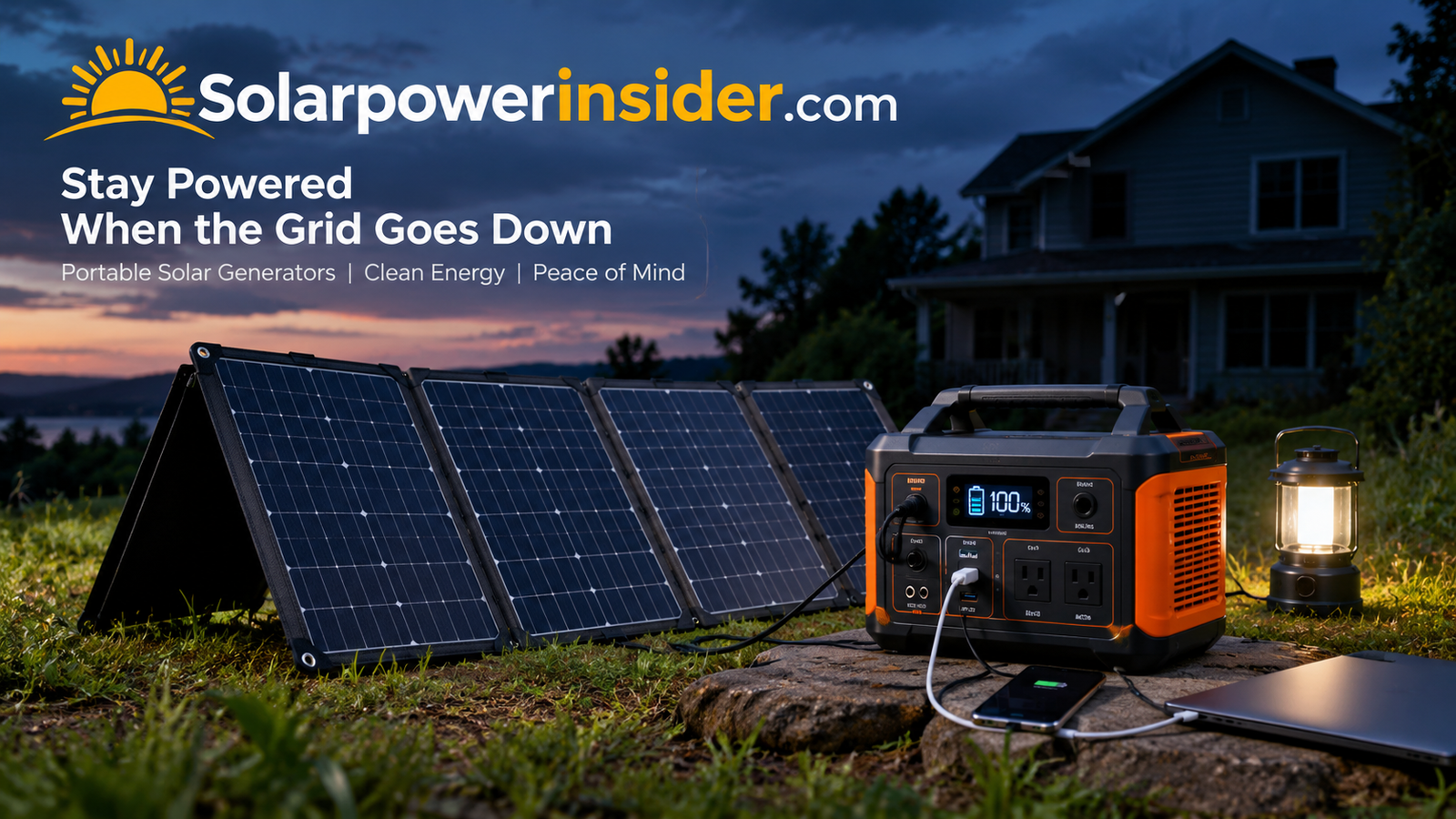
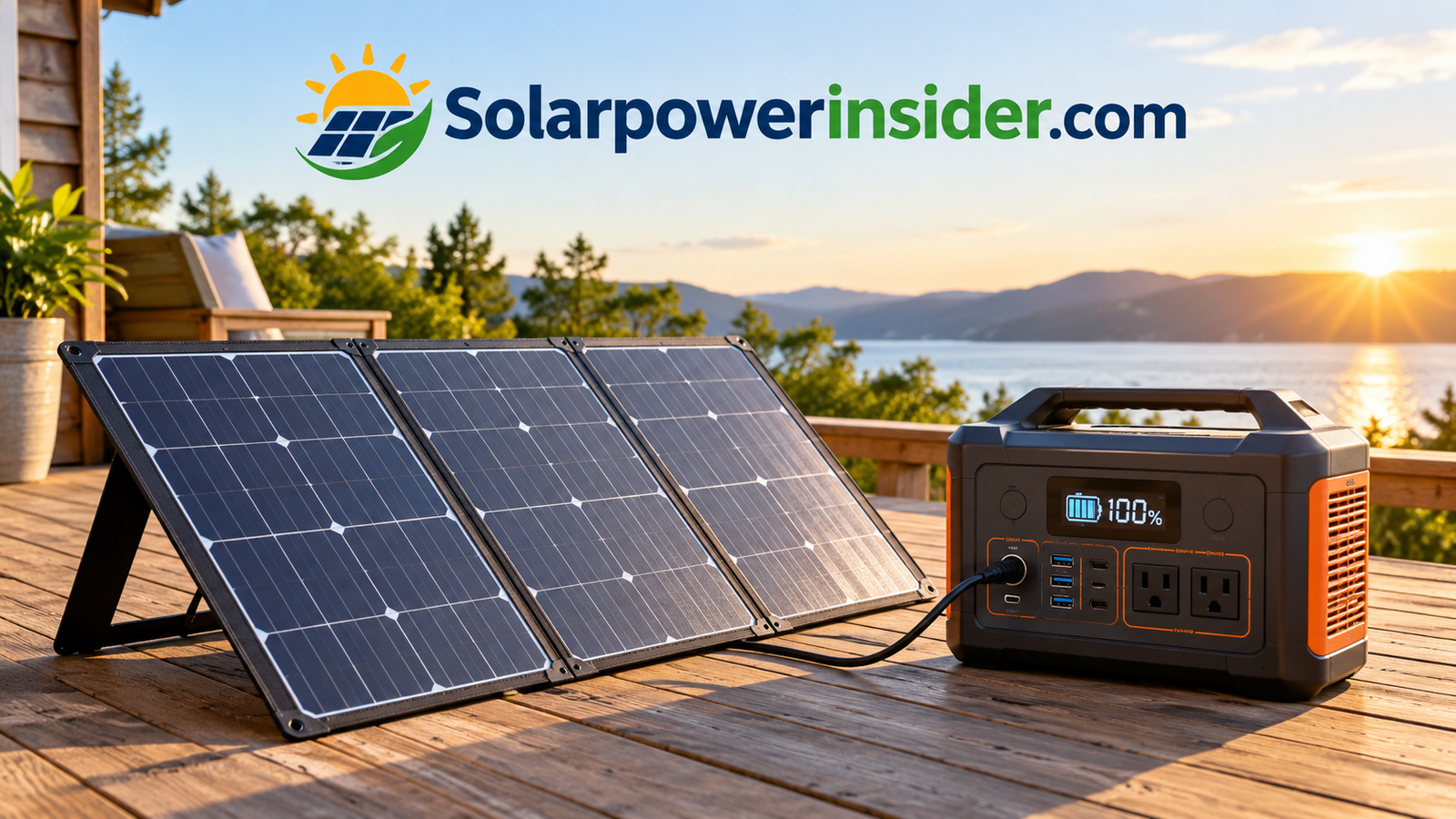
A typical home setup: a battery power station charging from a portable solar array.
Somewhere between the Instagram ads promising “never lose power again” and the forum comments calling solar generators “an overpriced battery with a marketing budget,” there’s a real, useful answer to whether one is worth buying. It depends — but not in the vague, non-committal way that phrase usually implies. It depends on specific, answerable things: how often your power actually goes out, what you’d want to keep running when it does, whether you camp or overland or work from a van, and how much you value quiet, fume-free, maintenance-free power over the raw watt-per-dollar efficiency of a gas engine.
This guide walks through that decision in full, without skipping the unflattering parts. Solar generators are not magic. They are lithium battery packs with an inverter and a charge controller built in, wrapped in a case with a handle. Once you understand exactly what that buys you, the “worth it” question becomes much easier to answer for your own situation. If you want the short version first, our best solar powered generator picks are a good place to see what the top of the category looks like before you dig into the reasoning below.
What follows isn’t a sales pitch for the category as a whole. It’s a breakdown built the way an engineer or a genuinely skeptical shopper would approach it: start with what the hardware physically does, be honest about the price and the tradeoffs, and only then talk about who should actually buy one. Along the way we’ll compare solar generators directly against gas generators and whole-home battery systems, walk through real sizing math instead of marketing shorthand, and end with a straightforward checklist you can hold your own situation up against. By the end, “is it worth it” should feel like a question with a specific, personal answer rather than a coin flip.
1. What a Solar Generator Actually Is
The term “solar generator” is a little misleading, and clearing that up is the first step to evaluating whether one makes sense for you. It doesn’t generate anything on its own. It’s a portable power station — a sealed box containing a rechargeable battery, an inverter that converts stored DC power into usable AC power, a charge controller, and a set of output ports — that can optionally be recharged by a solar panel instead of (or in addition to) a wall outlet or a car’s 12V socket. Call it a battery generator, and the category makes a lot more sense.
That distinction matters because it reframes the purchase. You are not buying a machine that manufactures electricity the way a gas or propane generator does. You’re buying storage — a finite reservoir of power that you fill up ahead of time and then draw down when you need it. The “solar” part is really just one of several ways to refill that reservoir, alongside AC wall charging, car charging, and in some models, a generator-charging port for hybrid setups.
The Core Components
- Battery cell: Almost every modern unit worth buying uses lithium iron phosphate (LiFePO4) cells rather than older nickel-manganese-cobalt (NMC) lithium chemistry, because LiFePO4 tolerates thousands more charge cycles and is significantly more thermally stable.
- Inverter: Converts the battery’s stored DC electricity into the 120V AC power that runs household devices. Pure sine wave inverters (standard on nearly all reputable models now) produce clean power safe for sensitive electronics.
- Charge controller: Regulates how much current flows in from solar panels so the battery charges efficiently without being damaged by voltage spikes.
- Output ports: AC outlets, USB-A/USB-C (often with fast-charging PD support), a car-style 12V port, and on larger units, a higher-current AC output for tools or appliances.
Understanding this internal architecture is what separates an informed purchase from an impulse one, and it’s also the foundation for the sizing and spec discussions later in this guide. For a deeper technical walkthrough, our explainer on how a solar powered generator actually works goes component-by-component in more detail than we have room for here.
“Solar Generator” vs. “Portable Power Station”
You’ll see both terms used interchangeably by manufacturers, and there’s a reason for that: they describe the same physical product. “Portable power station” is the more technically accurate name and the one you’ll see on most product packaging and spec sheets, while “solar generator” is the more search-friendly, consumer-facing term that emphasizes the solar-charging use case. When a listing calls something a “solar generator,” check whether solar panels are actually included in the box or sold separately — this single detail changes the effective price by several hundred dollars and is one of the more common points of confusion for first-time buyers.
Foldable vs. Rigid Solar Panels
The panels themselves come in two broad styles. Foldable panels use a fabric-backed, briefcase-style design that packs down small and sets up in seconds, making them the default choice for portable, on-the-go use. Rigid panels, more common in semi-permanent installations like a van roof or a cabin, are more durable and slightly more efficient per square foot but far less convenient to move around. For the emergency-preparedness and camping use cases this guide focuses on, foldable panels are almost always the right call, and they’re what ships as the “matching panel” bundle with most consumer power stations.
2. How Solar Generators Work Day-to-Day
On paper, the workflow is simple: unfold the panel, point it at the sun, plug it into the power station, and let the battery fill up. In practice, the day-to-day experience has a few more variables worth understanding before you rely on one during an actual outage or trip.
Solar recharging speed depends on panel wattage, sunlight intensity, angle, and temperature — not just the “up to X watts” number printed on the box. A 200-watt panel rated for full sun at a perfect 90-degree angle in cool conditions will rarely deliver its full rated output in real-world use. Realistically, expect 60-80% of the rated wattage under good conditions, and considerably less on hazy days or with imperfect panel angles. That means recharging a mid-size 1,000Wh unit from a single 100W panel in full sun can take most of a day, not the two or three hours a spec sheet might imply if you do the naive math.
This is where the “hybrid” nature of most units becomes important. Nearly every solar generator on the market today can also recharge from a standard wall outlet, typically much faster than solar — many mid-size units can go from empty to full via AC wall charging in one to two hours. The practical pattern most owners fall into is: keep the unit topped off from the wall during normal life, and use solar charging only when grid power isn’t an option, such as during a multi-day outage or an extended camping trip.
A Typical Outage Scenario
Picture a unit sitting fully charged in a closet when the power goes out. You roll it into the kitchen, plug in the refrigerator (or a chest freezer, a CPAP machine, a few lamps, and a phone charger), and it runs everything off stored power for anywhere from several hours to a couple of days depending on capacity and load. If the outage stretches past that window and grid power still isn’t back, that’s when the solar panel comes out — set up in a window or yard to slowly claw back capacity while the unit continues to power essentials.
This two-phase pattern — battery reserve first, solar top-up second — is the realistic way most households actually use these devices, and it’s very different from the “endless free power” framing solar generator marketing sometimes implies. To understand what that reserve can actually run, our piece on whether a solar generator can run a refrigerator breaks down real wattage draws for common appliances.
MPPT vs. PWM Charge Controllers
Most mid-range and higher-end units use an MPPT (Maximum Power Point Tracking) charge controller rather than the older, cheaper PWM (Pulse Width Modulation) type. MPPT controllers continuously adjust to draw the most usable power from a panel as sunlight conditions shift throughout the day, typically delivering 20-30% more effective charging than a PWM controller would from the same panel. This is one of those specs buried in the fine print that has an outsized real-world impact — two units with identical panel wattage can charge at meaningfully different speeds purely because of controller type.
What Actually Slows Down Solar Charging
Beyond cloud cover, a handful of less-obvious factors quietly cut into real-world charging speed: panel angle relative to the sun (a flat panel loses significant efficiency versus one angled toward direct sunlight), shading from trees or buildings even on part of the panel, panel temperature (hot panels are measurably less efficient than cool ones, somewhat counterintuitively), and simple cable length or connector quality on cheaper third-party panels. None of these are dealbreakers, but they explain the gap between the “up to 200W” number on the box and what a panel actually delivers on an average afternoon.
3. The Real Costs: Upfront Price vs. Long-Term Value
This is where the “worth it” question gets concrete, and where most of the internet debate about solar generators actually lives. The upfront price is the easy part to see and the hard part to swallow: a genuinely capable 1,000-1,500Wh unit with a matching solar panel typically runs somewhere in the $800-$1,600 range, and larger 2,000Wh-plus systems built for home backup can climb well past $2,000-$3,000 once you add enough panel wattage to make solar recharging practical.
Compare that to a mid-range dual-fuel gas generator, which can deliver several times the continuous wattage for a few hundred dollars. On sticker price alone, gas wins decisively. The “worth it” calculation only starts to favor a solar generator once you price in the things a spec sheet doesn’t show.
Costs Gas Generators Carry That Solar Doesn’t
- Fuel: Gasoline degrades in storage within months unless treated, and running a generator for days during an extended outage can burn through $20-$60+ per day in fuel, depending on load and generator efficiency.
- Maintenance: Oil changes, spark plugs, carburetor cleaning, and the very real risk of a generator that won’t start after sitting unused for a year — a common complaint that solar units simply don’t have, since there’s no combustion engine to seize or gum up.
- Storage and fire risk: Storing gasoline safely, especially in an attached garage, carries real risk and often local restrictions on quantity.
- Noise and exhaust: Beyond comfort, running a gas generator indoors or in an enclosed space is a carbon monoxide hazard — a real and recurring cause of injury during storm-related outages.
Costs Solar Generators Carry That Gas Doesn’t
- Battery degradation: Even a well-built LiFePO4 cell loses some capacity over thousands of cycles, meaning the unit you buy today will hold slightly less charge five years from now.
- Recharge time limits: Without sun or a wall outlet, you’re working with a fixed, non-renewable reserve of power for the duration of an outage.
- Panel cost and setup: A power station alone without matching solar panels is really just a battery — the panels are what make it “solar,” and they’re a separate, often significant, line item.
Run the numbers over a 5-8 year ownership window and the picture shifts. A household that experiences even two or three multi-day outages a year, or that camps and road-trips regularly, tends to make back the price gap in avoided fuel costs, avoided generator maintenance, and simple day-to-day convenience — plugging in a laptop at a campsite without hauling a fuel can. A household that rarely loses power and never camps will likely find the math never quite closes, and a gas generator (or nothing) remains the more rational purchase.
A Rough 5-Year Cost Comparison
Numbers vary a lot by region, brand, and how hard each unit is used, but a simplified side-by-side helps make the abstract math concrete. Treat this as illustrative rather than a precise quote for your own situation.
| Cost Category | Mid-Size Solar Generator | Comparable Gas Generator |
|---|---|---|
| Upfront purchase | ~$1,000-$1,400 (with panel) | ~$500-$800 |
| Annual fuel/electricity | Near $0 (sun) to a few dollars (grid top-ups) | $50-$300+ depending on outage frequency and load |
| Annual maintenance | $0 | $50-$150 (oil, plugs, tune-ups) |
| 5-year total (rough) | ~$1,000-$1,500 | ~$1,000-$2,900 |
Hidden Costs Worth Budgeting For
A few line items rarely show up in the headline price of either option but affect the real cost of ownership: replacement or expansion batteries for solar units that support modular capacity, extra or replacement solar panels if the included one is lost or damaged, a proper carrying case or cover for outdoor storage, and for gas generators, a transfer switch if you want to safely tie into household circuits rather than running extension cords through a window or door. None of these are dramatic costs individually, but they’re worth factoring into a true apples-to-apples comparison rather than comparing sticker prices alone.
4. Who Actually Benefits Most
The “worth it” answer changes dramatically depending on which of these groups you fall into. Being honest about your own category before buying will save more money and disappointment than any spec comparison.
Frequent Outage Areas
If you live somewhere with regular storm-related outages, wildfire-related public safety power shutoffs, or an aging grid that blinks out a few times a year, a solar generator earns its keep quickly. The value isn’t abstract — it’s a working refrigerator, charged phones for emergency communication, a CPAP machine that keeps running through the night, and light in the house without running an extension cord to a noisy, fume-producing engine outside a window.
Campers, Overlanders, and Van Lifers
This is arguably where solar generators make the most uncomplicated sense, because there’s no gas-generator alternative that’s remotely comparable in a tent, rooftop tent, or small van — you simply can’t run a combustion engine inside living space. For this group, the panel isn’t a backup plan for an emergency; it’s the primary charging method, topping the battery up during the day while hiking or driving so there’s power for lights, a fridge, and devices at night.
Preppers and Self-Sufficiency-Minded Households
For anyone building out a broader emergency preparedness plan, a solar generator fills a specific gap that stored fuel and manual tools don’t: sustainable, renewable power that doesn’t run out as long as there’s daylight, with no supply chain dependency during a regional crisis when gas stations may be inaccessible or out of fuel entirely. It’s rarely the only piece of a serious preparedness setup, but it’s frequently one of the first purchases made precisely because it doesn’t degrade sitting in storage the way stored fuel does.
Small Businesses and Mobile Vendors
Food trucks, market vendors, photographers doing outdoor shoots, and small contractors running power tools at job sites without hookups all represent a commercial version of the same case made above for campers — quiet, exhaust-free power in settings where a loud gas generator is either impractical or actively against venue rules. The return on investment here is often measured directly in avoided lost business rather than abstract convenience.
Elderly or Fixed-Income Households in Outage-Prone Areas
This group deserves particular mention because the upfront cost is genuinely a bigger obstacle, but the safety case can be just as strong as the medical-device case above — refrigerated medication, mobility equipment, and simple peace of mind during storm season. For this group, right-sizing the purchase (see the sizing section below) rather than over-buying a larger, pricier unit than necessary is especially important to keeping the investment proportionate.
Remote Workers and Digital Nomads
Fewer laptops die and fewer video calls get cut short when there’s a dedicated battery reserve that doesn’t depend on finding an outlet. For anyone working from unpredictable locations — a cabin, a job site trailer, a boat — a solar generator functions less like emergency gear and more like everyday infrastructure.
Medical-Need Households
Anyone relying on powered medical equipment, from CPAP machines to nebulizers to refrigerated medication, has a genuinely different risk calculus than a typical homeowner. Here, “worth it” isn’t really a financial question — it’s about having a silent, reliable backup that doesn’t depend on a fuel supply chain holding up during a regional emergency.
Who Should Probably Skip It
Apartment dwellers with reliable grid power, people who never camp or travel off-grid, and anyone whose primary goal is running heavy loads like a whole-home HVAC system or well pump for days at a time are generally better served by either doing nothing extra or investing in a properly sized standby generator or whole-home battery system instead — which we cover directly in the next section.
5. Solar Generator vs. Gas Generator
This is the comparison almost everyone runs through before buying, and it deserves a direct, feature-by-feature look rather than a vague “it depends.”
| Factor | Solar Generator | Gas Generator |
|---|---|---|
| Upfront cost | Higher for equivalent runtime | Lower per watt of output |
| Ongoing fuel cost | Free (sun) or grid electricity | Ongoing gasoline/propane expense |
| Noise | Silent | 60-80+ decibels running |
| Indoor-safe use | Yes | No — carbon monoxide risk |
| Maintenance | Minimal (no moving engine parts) | Oil, spark plugs, carburetor care |
| Max continuous output | Typically 1,000-3,600W | Often 3,000-10,000W+ |
| Refuel/recharge speed | Hours (wall) to a full day (solar) | Minutes (refuel and restart) |
| Runtime on full “tank” | Fixed until recharged | Extendable indefinitely with more fuel |
| Best for | Electronics, medical devices, camping, moderate home loads | Whole-home backup, high-draw tools, extended off-grid work |
The honest summary: gas generators still win on raw power-per-dollar and on the ability to “refuel and keep going” indefinitely, which matters enormously for extended, high-load situations. Solar generators win on quiet operation, indoor safety, zero ongoing fuel cost, and near-zero maintenance — which matters enormously for lighter, more frequent, everyday use. Many well-prepared households end up owning both: a gas generator for extended high-draw emergencies, and a solar unit for daily convenience, quiet nighttime power, and situations where noise or exhaust rule out gas entirely.
The “Own Both” Strategy in Practice
Households that go this route typically use the solar unit as the default, everyday tool — quiet nighttime power, medical devices, laptops, the refrigerator during a shorter outage — and reserve the gas generator for the specific moments when raw output matters more than convenience: running a well pump, a sump pump during a storm, or heavy power tools during a longer recovery effort. Framed this way, the two aren’t really competing purchases; they’re covering different ends of the same emergency-preparedness spectrum, and owning only one usually means accepting a specific, known gap in coverage.
6. Solar Generator vs. Whole-Home Battery Backup
A separate, often confused comparison is between portable solar generators and permanently installed whole-home battery systems (the kind wired directly into a home’s electrical panel, often paired with rooftop solar). These occupy very different price and capability tiers, and understanding the gap matters for anyone tempted to think of a portable unit as a scaled-down version of a home battery wall.
Whole-home battery systems are typically installed by licensed electricians, integrate with the home’s main panel through a transfer switch, and can power an entire house — including HVAC, well pumps, and large appliances — automatically and seamlessly when the grid goes down. The tradeoff is cost: a properly sized whole-home system, including installation, commonly runs into the five-figure range, often with financing or incentive programs involved.
Portable solar generators are, by comparison, a fraction of the cost and require zero installation — but they also power only what you plug directly into them, manually, and typically only a handful of circuits’ worth of load rather than a whole house. Thinking of a portable unit as “a cheap version of a home battery wall” sets the wrong expectations; it’s better understood as a large, rechargeable power strip with a battery attached; effective for targeted, essential loads, not a whole-house solution.
For most households, the decision isn’t really “portable vs. whole-home” — it’s whether whole-home backup is financially justified at all. For anyone not ready for a five-figure electrical project, a well-sized portable solar generator is a genuinely useful middle step that covers the loads that matter most (refrigeration, medical devices, lighting, communication) at a small fraction of the cost.
Expandable Portable Systems: A Middle Ground
A newer category worth knowing about sits between these two extremes: larger portable power stations that support add-on expansion batteries, letting an owner start with a base unit and grow total capacity over time rather than committing to whole-home installation costs upfront. These systems still don’t wire into a home’s main panel and still require manually plugging in what you want powered, but for households that want more headroom than a single portable unit provides without jumping to a five-figure installed system, they’re a reasonable middle step worth researching by name and model rather than assuming every portable unit tops out at a fixed capacity.
7. Sizing: How Much Power Do You Actually Need
More than any other factor, wrong sizing is what makes people feel a solar generator “wasn’t worth it.” Buying too small a unit for the loads you actually want to run is the single most common and most avoidable mistake in this category.
The Two Numbers That Matter
Every solar generator has two separate specs that get confused constantly: capacity (measured in watt-hours, Wh — how much total energy it stores) and output (measured in watts, W — how much power it can deliver at once). A device can have plenty of stored capacity but still fail to run something if its continuous output rating is too low, and vice versa — it can handle a high-wattage device for a moment but drain quickly if that device runs continuously.
| Device | Typical Running Watts | Rough Hours per 1,000Wh |
|---|---|---|
| Smartphone charging | 10-20W | 50-100 charges |
| Laptop | 30-65W | 15-30 |
| LED lighting (a few bulbs) | 20-40W | 25-50 |
| Wi-Fi router/modem | 10-20W | 50-100 |
| CPAP machine | 30-60W | 16-33 |
| Mini fridge | 60-100W (cycling) | 10-16 |
| Full-size refrigerator | 150-400W (cycling) | 2.5-6 |
| Microwave | 800-1200W | ~1 (short bursts) |
| Window AC unit | 500-1200W | ~1-2 |
Once you list out the two or three devices you actually want covered — not a fantasy whole-house list — the sizing conversation becomes concrete rather than aspirational. A 300-500Wh unit is fine for phones, a light, and a router. A 1,000-1,500Wh unit comfortably covers a CPAP, a laptop, lighting, and short refrigerator cycling. Anything approaching whole-kitchen or multi-day refrigerator coverage generally pushes toward 2,000Wh and up, ideally paired with enough solar wattage to realistically recharge that capacity in a single day. Our detailed breakdown on what size solar generator you actually need walks through this math room by room.
Two Worked Examples
The weekend camper: A couple heading out for two- or three-night trips wants to run a string of LED lights, charge two phones and a camera, and occasionally run a small 12V cooler. That’s a light, intermittent load well under 300W at any given moment, and total daily consumption rarely exceeding 400-600Wh — comfortably handled by a compact 300-500Wh unit paired with a single 60-100W foldable panel for daytime top-ups.
The family emergency kit: A family of four wants to keep a full-size refrigerator running through outage cycles, power a CPAP machine overnight, keep phones and a laptop charged, and run a few lamps in the evening. Adding those loads together points toward a 1,500-2,000Wh unit with a continuous output rating of at least 1,000-1,500W to comfortably handle the refrigerator’s startup surge alongside everything else running simultaneously — and ideally 200W or more of solar input capability so a multi-day outage remains manageable without a wall outlet.
Working through a scenario like one of these two — rather than shopping by advertised “great for emergencies!” copy — is the difference between a unit that actually meets your needs when it matters and one that quietly falls short three hours into the first real outage.
8. The Specs That Actually Matter
Spec sheets for these devices are dense, and manufacturers know that most shoppers skim rather than dig in — which is exactly why it’s worth knowing which numbers genuinely predict how a unit performs versus which ones are mostly marketing noise.
Battery Chemistry
LiFePO4 (lithium iron phosphate) is the chemistry to look for in nearly every case. It typically supports 2,500-4,000+ full charge cycles before dropping to 80% of original capacity, versus roughly 500-1,000 cycles for older NMC lithium chemistry. In practical terms, that’s the difference between a battery that’s still healthy after a decade of regular use and one that’s noticeably weaker after two or three years.
Inverter Type
Pure sine wave output is essentially a requirement at this point, not a premium feature — it’s what allows safe, clean power for sensitive electronics like laptops, medical devices, and anything with a motor. Modified sine wave units still exist at the very low end of the market and are worth avoiding.
Continuous vs. Surge Watts
The continuous watt rating is what a unit can sustain indefinitely; the surge rating is a brief spike it can handle for starting motors (refrigerators, power tools) that draw significantly more power for a second or two at startup than during normal running. Both numbers matter — a unit can have plenty of surge capacity but still trip or shut down if continuous load exceeds its sustained rating.
Charging Speed and Input Flexibility
Look specifically at maximum solar input wattage (not just “solar compatible”) and AC wall-charging speed. A unit that can only accept 100W of solar input will recharge painfully slowly from a 200W panel, wasting half the panel’s potential. Similarly, fast AC recharge (1-2 hours to full versus 4-6) matters enormously for anyone using the unit as daily backup rather than pure off-grid power.
Port Selection
USB-C with Power Delivery (PD) for fast-charging laptops and phones, enough AC outlets to avoid daisy-chaining power strips, and a 12V car-style port for camping accessories are the practical, everyday differentiators between a unit that’s pleasant to live with and one that constantly feels one port short.
9. Ranked: The Best Use Cases
Not every use case delivers equal value for the money. Ranked roughly by how strongly the case for ownership holds up:
1. Medical Device Backup
The strongest, least debatable case. Silent, reliable, indoor-safe power for a CPAP or similar device during an outage is close to non-negotiable for anyone who depends on it, and the cost argument becomes secondary to the safety one.
2. Camping, Overlanding, and Van Life
Near-daily, practical use with no realistic combustion-engine alternative for enclosed spaces. High utilization tends to justify the cost quickly for anyone who’s out regularly rather than once a summer.
3. Storm-Prone Home Backup
Strong case for households with two or more outages a year, especially for refrigeration, lighting, and communications during multi-day events.
4. Remote Work and Job Sites
Solid, if less emotionally urgent, case — mostly about convenience and avoiding downtime rather than safety or necessity.
5. Occasional Outdoor Events and Tailgating
Fun, genuinely useful, but the weakest financial case of the group — this is the use case most likely to leave a unit sitting unused most of the year, which is worth being honest with yourself about before buying primarily for a few weekends a year.
For a side-by-side look at how three of the most popular brands stack up across these use cases, see our Bluetti vs. Jackery vs. EcoFlow comparison.
10. Maintenance, Lifespan, and Depreciation
One of the quieter advantages of solar generators — and a real factor in the long-term “worth it” math — is how little ongoing attention they need compared to almost any other backup power option.
There’s no oil to change, no spark plug to replace, no carburetor to gum up from sitting unused. The main maintenance task is simply keeping the battery from sitting fully drained for long stretches and giving it a top-up charge every few months if it’s in storage, which most units also handle automatically through built-in battery management systems that prevent damaging over-discharge.
Realistic Lifespan
A quality LiFePO4-based unit, used moderately (charged and discharged a few times a month rather than daily), can reasonably be expected to remain useful for 8-10+ years, with capacity gradually declining rather than failing outright. Heavy daily use will shorten that timeline somewhat, though still far beyond the couple of years often associated with cheaper lithium alternatives. Our dedicated piece on how long a solar generator actually lasts covers cycle counts and degradation curves in more depth.
Depreciation and Resale
Unlike gas generators, which hold decent resale value largely because the technology changes slowly, solar generators depreciate more like consumer electronics — newer models with better charging speeds and battery chemistry arrive regularly, which can make a three-year-old unit worth noticeably less on the resale market even if it still functions well. This is worth factoring in if resale value is part of your cost calculation, though for most buyers the unit is purchased to use for its full working life rather than resell.
11. Common Myths, Debunked
“It Will Power My Whole House”
Even large portable units rarely match the continuous output of a mid-size gas generator, let alone the near-unlimited runtime one provides with a fuel can. Portable solar generators are built for targeted, essential loads — not whole-home coverage — unless paired into a much larger, professionally installed system.
“Solar Charging Alone Is Fast Enough for Daily Use”
In most real-world conditions, solar charging a mid-size unit from empty takes the better part of a day, not the couple of hours implied by simple spec-sheet math. Wall charging remains the practical, everyday recharge method for most owners; solar is the extended-outage or off-grid backup.
“They’re Basically Disposable After a Couple of Years”
This was truer of early NMC-chemistry units. Modern LiFePO4-based generators are built for thousands of cycles and commonly remain useful for the better part of a decade with moderate use.
“Bigger Capacity Is Always Better”
Bigger capacity means more weight, more cost, and — critically — longer recharge times, both from the wall and from solar. Oversizing “just in case” often means owning a unit that’s genuinely harder to fully recharge during an actual extended outage.
“Any Solar Panel Will Work”
Mismatched voltage or wattage between a panel and a power station’s solar input can mean charging far below the panel’s potential, or in rare cases, compatibility issues altogether. Panels sold as a matched set with a specific power station generally avoid this problem entirely.
12. The Final Verdict: Is It Worth It?
Reduced to its simplest form, the case for a solar generator comes down to a short checklist. The more of these that apply to you, the stronger the “yes” answer becomes.
It’s Likely Worth It If You…
- Experience power outages more than once or twice a year
- Camp, overland, or travel in a van regularly
- Have a medical device that needs reliable, quiet backup power
- Work remotely from unpredictable locations
- Want silent, fume-free power for indoor or enclosed use
- Value low maintenance over raw power output
It’s Probably Not Worth It If You…
- Rarely or never lose power at home
- Need to run high-draw appliances (HVAC, well pumps) for days at a time
- Have a tight budget and would only use it a few times a year
- Already own a well-maintained gas generator that covers your needs
- Need whole-home backup — a standby or whole-home battery system fits better
The honest bottom line: a solar generator isn’t a universal upgrade, and it isn’t a scam either. It’s a specific tool that solves specific problems extremely well — quiet, portable, low-maintenance backup power for the loads that matter most — while being genuinely the wrong tool for whole-home coverage or for someone who will use it twice a year and let it sit the rest of the time. Matching the purchase to your actual usage pattern, rather than a worst-case fantasy or a best-case ad, is what determines whether the money was well spent.
Ready to Choose One?
If the case above sounds like it applies to your situation, the next step is matching capacity and output to your specific loads rather than picking the biggest number on the shelf. Our full rundown of the best solar powered generators compares the top current models side-by-side across capacity, charging speed, and price, so you can land on the right size instead of over- or under-buying.
Browse Solar GeneratorsFrequently Asked Questions
Is a solar generator worth it for a typical suburban home?
It depends mainly on outage frequency. If your area sees storm-related or grid-related outages more than once or twice a year, most homeowners find the convenience of quiet, fume-free backup power for a refrigerator, lights, and devices worth the upfront cost. If outages are rare, the math is harder to justify.
How long does a solar generator actually last on a full charge?
It depends entirely on what’s plugged in. A phone or laptop can run for many hours to days on a mid-size unit, while a full-size refrigerator cycling on and off might only get a few hours per 1,000Wh of capacity. Check the wattage of your specific devices against the unit’s stored capacity to estimate runtime.
Can a solar generator actually run a refrigerator during an outage?
Yes, most mid-size and larger units can run a standard refrigerator, since fridges only draw their peak wattage briefly during compressor startup and cycle on and off rather than running continuously. Capacity determines how many hours or days that coverage lasts.
Do I need a solar panel, or can I just use the battery alone?
The battery alone (charged from a wall outlet) is enough for short outages or occasional use. A solar panel becomes important for multi-day outages with no grid power, or for off-grid use like camping, where there’s no wall outlet to recharge from at all.
How long do solar generator batteries actually last before wearing out?
Modern LiFePO4-based units typically support 2,500-4,000+ charge cycles before dropping to 80% of original capacity, which translates to roughly 8-10+ years of moderate, non-daily use before performance noticeably declines.
Are solar generators safe to use indoors?
Yes — unlike gas generators, they produce no exhaust or carbon monoxide, making them safe for indoor or enclosed use, which is one of their clearest advantages over combustion-based backup power.
What size solar generator do I need for basic home backup?
For phones, lights, a router, and a laptop, a 300-500Wh unit is usually enough. For a CPAP machine plus lighting and devices, look toward 1,000-1,500Wh. For meaningful refrigerator coverage across a multi-day outage, 2,000Wh and up, paired with adequate solar input, is the more realistic target.
How much does a decent solar generator setup cost?
A capable mid-size unit with a matching solar panel typically falls in the $800-$1,600 range, while larger home-backup-oriented systems with more capacity and panel wattage often run $2,000-$3,000 or more.
Is a solar generator better than a gas generator?
Neither is universally better — they solve different problems. Gas generators deliver more raw power per dollar and can run indefinitely with more fuel, while solar generators are silent, indoor-safe, and require essentially no maintenance. Many well-prepared households own both for different situations.
Can a solar generator power a whole house?
Generally no. Portable solar generators are sized for targeted, essential loads rather than whole-home coverage. Powering an entire house typically requires a professionally installed whole-home battery or standby generator system.
How fast do solar generators recharge from the sun?
Real-world solar recharging is slower than spec sheets suggest — expect 60-80% of a panel’s rated output under good conditions, meaning a full recharge of a mid-size unit from a single 100-200W panel often takes the better part of a day rather than a few hours.
Do solar generators lose their charge if left in storage?
All batteries experience some self-discharge over time, but quality LiFePO4 units lose charge very slowly when idle. Most manufacturers recommend a top-up charge every few months during long-term storage to keep the battery management system healthy.