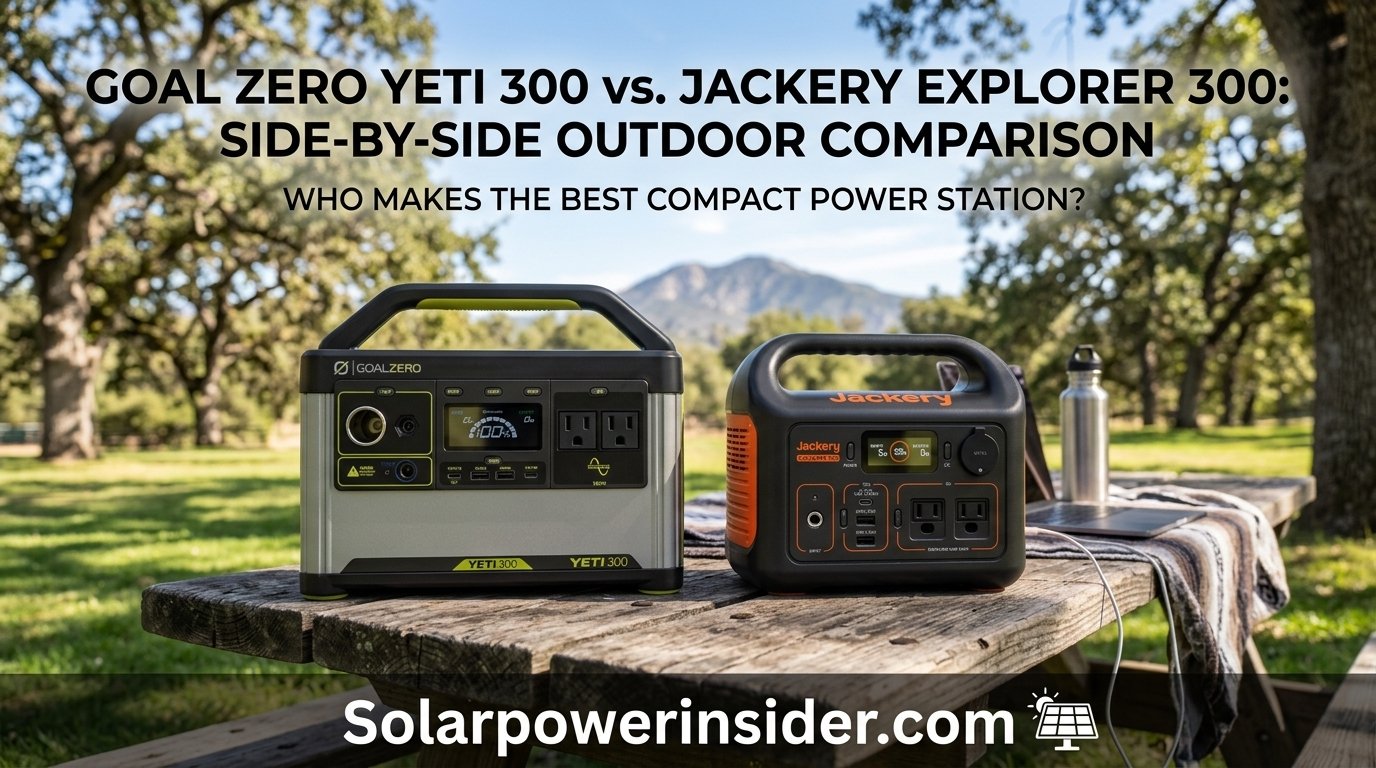
Goal Zero vs Jackery: Which Portable Power Station Actually Wins?
A deep, honest, feature-by-feature comparison of two of the biggest names in portable solar power — so you can stop guessing and pick the right one for your home, van, or next camping trip.
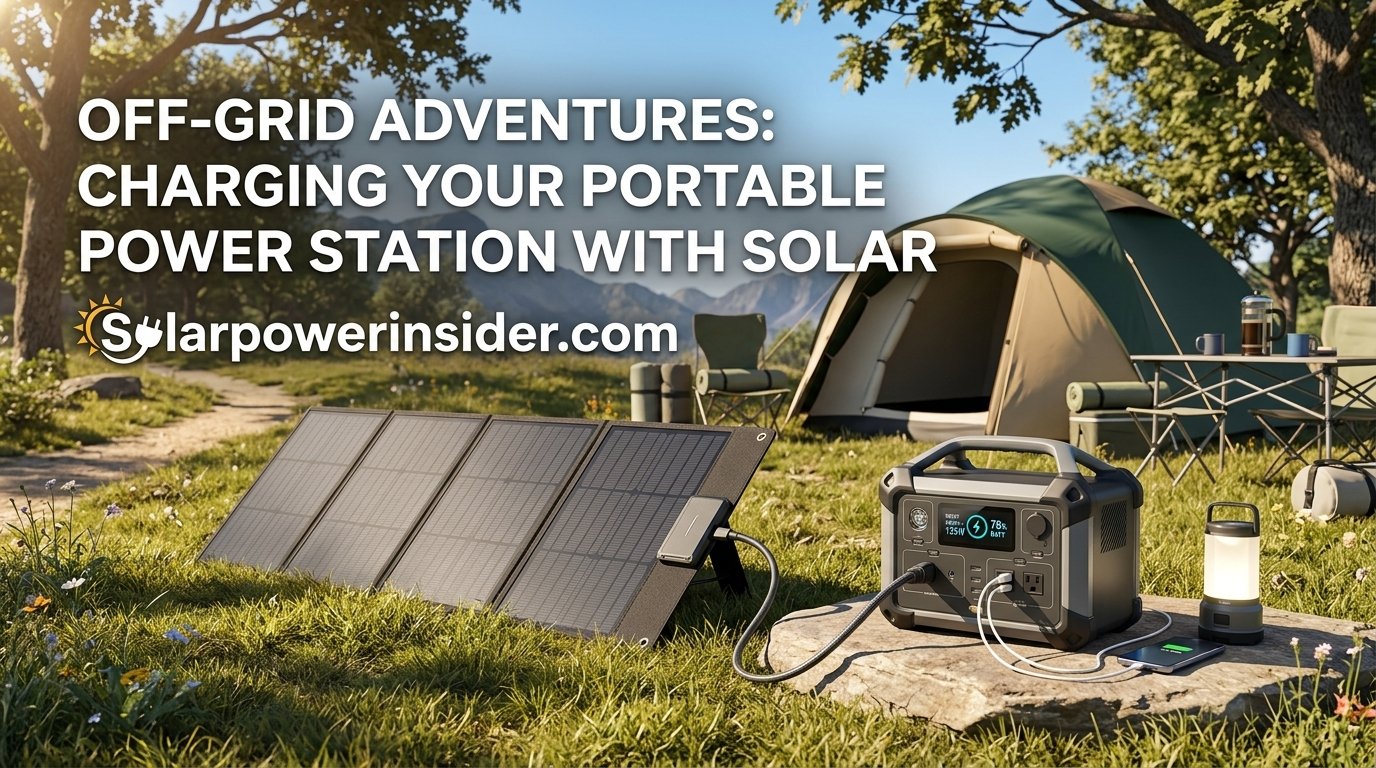
If you’ve spent any time researching portable power stations, you already know the conversation eventually narrows down to two names: Goal Zero and Jackery. Both brands built their reputations on the same promise — reliable, portable, solar-friendly power you can take anywhere — but they’ve taken noticeably different paths to get there. One leans into rugged, expedition-grade engineering with a premium price tag. The other leans into affordability, fast charging, and mass-market convenience without sacrificing much in the way of performance.
This guide breaks the two brands down piece by piece: the batteries inside their units, how they perform in the sun, how they feel in your hands, what they cost over the long run, and — most importantly — which one actually deserves a spot in your garage, RV, or bug-out bag. We’ll also pull in comparisons against other major players like EcoFlow and Bluetti where it’s genuinely useful context, because no buying decision happens in a vacuum.
Whether you’re outfitting a home for backup power, prepping a van build, or just want a reliable way to keep your phone and cooler running on a weekend trip, by the end of this article you’ll know exactly which brand fits your situation — and why.

See Goal Zero Prices → See Jackery Prices →
1. Goal Zero vs Jackery: The Quick Verdict
If you only read one section, read this one. Here’s the short version before we go deep: Goal Zero is the brand for people who want expedition-grade durability, a modular ecosystem of add-on batteries, and don’t mind paying a premium for it. Jackery is the brand for people who want fast charging, a lighter footprint, a friendlier price point, and a proven track record with millions of units sold to everyday campers, van-lifers, and homeowners.
| Category | Goal Zero | Jackery |
|---|---|---|
| Best for | Off-grid durability, modular expansion | Fast charging, value, everyday use |
| Typical price per Wh | Higher | Lower |
| Battery chemistry | Mostly Li-ion (some LiFePO4 in newer lines) | Mostly LiFePO4 in current lineup |
| Charge speed | Moderate | Fast (some models under 2 hours AC) |
| Weight-to-capacity ratio | Heavier | Lighter |
| App & smart features | Basic-to-moderate | Strong, frequently updated |
| Warranty | 2 years standard, 5 with registration on some units | 2–5 years depending on model |
Neither brand is objectively “bad” — this really is a case of different priorities. Keep reading, because the right answer depends heavily on how you actually plan to use the unit.

2. Company Backgrounds & Philosophy
Understanding where each brand came from helps explain why their products feel so different in your hands.
Goal Zero’s Roots
Goal Zero grew out of a humanitarian mission — the idea that reliable off-grid power shouldn’t be a luxury reserved for people with access to the electrical grid. That mission shaped the brand’s early hardware: rugged, simple, and built to survive rough handling in remote environments. Over time, Goal Zero shifted toward the outdoor recreation and overlanding markets, but the “built like a tank” philosophy never really left. Their Yeti line in particular still feels like it was designed by engineers who expected it to get dropped, rained on, and dragged through gravel.
Jackery’s Roots
Jackery’s founders came out of the lithium battery and portable electronics industry, and the company’s early identity was built around solving a much more mainstream problem: giving everyday campers, road-trippers, and homeowners an affordable way to keep devices charged without hauling a gas generator. That consumer-first mindset shows up everywhere in Jackery’s current lineup — sleek designs, fast charge times, app integration, and pricing that undercuts most premium competitors while still using solid components.
Neither philosophy is inherently superior. It’s the difference between buying gear designed for professional expedition use versus gear designed for the 95% of people who just want dependable backup power without overpaying for capability they’ll never touch.
How Company History Shows Up in Product Decisions
It’s worth spending a moment on why this history actually matters to you as a buyer, rather than treating it as trivia. Goal Zero’s early years were spent solving power problems in places where a broken product wasn’t an inconvenience — it was a real setback for someone relying on that power for light, communication, or medical equipment. That context bred a design culture obsessed with fault tolerance: simple mechanical parts, fewer points of failure, and hardware that could be repaired or serviced without specialized tools. You can still see that DNA in the way Goal Zero approaches its port layout, its handle construction, and even its packaging, which tends to be more heavy-duty than what you’d expect from a typical consumer electronics box.
Jackery’s consumer electronics background shows up just as clearly, but in a different direction. Because the company’s early growth was tied to smaller lithium battery packs for phones and laptops, Jackery came into the portable power station market already fluent in fast iteration, tight manufacturing tolerances, and aggressive cost engineering. That’s a big part of why Jackery has historically been quicker to adopt new battery chemistries, new charging standards, and new app features across its lineup — the company’s manufacturing pipeline was built for rapid product cycles from day one, rather than adapted to it later.
Market Positioning Over Time
It’s also worth noting how each brand’s market positioning has shifted as the portable power category has exploded in popularity. A few years ago, Goal Zero was arguably the default name in portable solar power — the brand most likely to show up in outdoor magazines, expedition sponsorships, and survivalist gear guides. As competitors like Jackery, EcoFlow, and Bluetti scaled up manufacturing and dropped prices aggressively, Goal Zero’s market share in the budget-to-midrange segment shrank, and the brand increasingly leaned into its premium, durability-focused identity rather than trying to win a price war it wasn’t built to win.
Jackery, meanwhile, rode the wave of increased outdoor recreation demand hard, expanding rapidly into new capacity tiers, new accessory categories, and new retail partnerships. That expansion is a big part of why Jackery’s product catalog today feels more extensive and more frequently refreshed than Goal Zero’s — it’s not necessarily that Jackery’s engineers are inherently better, it’s that the company scaled its release cadence to match a fast-moving, price-sensitive market.
3. Build Quality & Design
Pick up a Goal Zero Yeti and a Jackery Explorer side by side and the difference is immediately obvious. The Yeti units tend to use thicker plastic shells, larger carrying handles, and a more industrial aesthetic — squared edges, exposed ports behind rubber flaps, and a general “this thing can take a hit” feel. Jackery units, by contrast, lean into a rounded, consumer-electronics look: smooth curves, integrated handles that fold flush, and a lighter overall shell that prioritizes portability over raw ruggedness.
This isn’t to say Jackery units are fragile — they’re not — but if you’re the kind of user who tosses gear in the back of a truck bed without much care, Goal Zero’s shells generally hold up better to abuse over years of use. If you’re mostly moving your unit between a car trunk, a tent, and a garage shelf, Jackery’s lighter build won’t cost you anything in practical durability.
Goal Zero Build Strengths
- Thicker outer shells rated for rougher handling
- Reinforced carry handles on larger Yeti models
- Port covers to protect against dust and moisture
- Consistent design language across the modular ecosystem
Goal Zero Build Weaknesses
- Heavier per watt-hour than most competitors
- Bulkier footprint, harder to tuck into tight storage
- Some older models feel dated compared to newer competitors
Jackery Build Strengths
- Lightweight shells that are easy to carry one-handed
- Compact footprint that fits in tighter storage spaces
- Modern, clean aesthetic that fits home use as well as outdoor use
Jackery Build Weaknesses
- Thinner shells feel less rugged under heavy abuse
- Fewer weatherproofing features on base models
Material Choices and Long-Term Wear
Beyond the general “feel” of each brand’s shells, it’s worth looking specifically at the materials used and how they age. Goal Zero’s larger Yeti units typically use a thicker-gauge ABS or polycarbonate blend for the outer shell, which resists cracking under impact better than thinner plastics but does add weight. Over years of outdoor use, this shows up as fewer hairline cracks around stress points like corners and port openings, particularly in units that get tossed around in truck beds or dragged across gravel campsites.
Jackery’s shells, while lighter, still hold up reasonably well under normal use — the wear pattern you’re more likely to see over time is cosmetic scuffing and scratching on the smoother, glossier surfaces rather than structural cracking. For most owners who treat their power station with a baseline level of care (not tossing it around like camping cookware), this difference in long-term wear is unlikely to be a dealbreaker either way. It matters most for buyers who genuinely subject their gear to rough handling on a regular basis — think overlanders driving unpaved trails for days at a time, not weekend car campers.
Port Layout and Physical Ergonomics
Port placement is another underrated build-quality factor. Goal Zero tends to cluster most of its output ports on a single angled face, often protected by a rubberized flap that folds down when not in use — a small but genuinely useful detail if you’re setting the unit down in dusty or wet conditions. Jackery’s port layout varies more by model, with some units placing ports on the front face and others splitting them across the front and side, which can make cable management slightly more awkward in tight spaces like a van cabinet or RV storage bay.
Button and dial quality is a smaller detail but one that frequent users notice quickly. Goal Zero’s physical buttons on larger units tend to have a more tactile, “clicky” feel that’s easy to operate with gloves on — a small nod to the brand’s outdoor-expedition roots. Jackery’s touch-sensitive controls on newer models look sleeker and integrate well with the on-unit display, but can be marginally harder to operate accurately with thick gloves in cold weather.
4. Battery Chemistry Compared
This is one of the most important — and most overlooked — differences between the two brands. Battery chemistry determines lifespan, safety margin, weight, and how the unit performs in extreme temperatures.
Lithium-ion (NMC) vs LiFePO4
Older Goal Zero units, and some current models, rely on standard lithium-ion (NMC) chemistry. NMC batteries pack more energy into a smaller, lighter cell, which is part of why some Goal Zero units feel more compact for their capacity than you’d expect. The tradeoff is a shorter cycle life — typically in the 500–800 full-charge-cycle range before capacity starts noticeably degrading — and a slightly higher sensitivity to heat over time.
Jackery’s current generation of Explorer units has largely shifted to LiFePO4 (lithium iron phosphate) chemistry, which trades a bit of energy density for a dramatically longer lifespan — often rated for 2,000 to 4,000 cycles — and a better safety margin against thermal runaway. Goal Zero has also introduced LiFePO4 in some of its newer releases, so this gap is narrowing, but it’s still worth checking the spec sheet on the exact model you’re considering rather than assuming based on brand alone.
| Chemistry | Cycle Life | Energy Density | Heat Tolerance |
|---|---|---|---|
| Lithium-ion (NMC) | ~500–800 cycles | Higher | Moderate |
| LiFePO4 | ~2,000–4,000 cycles | Slightly lower | High |
In practical terms: if you plan to use your power station daily for years — say, as a home backup or full-time van power source — LiFePO4 will save you money over the long haul because you won’t be shopping for a replacement unit in three years. If you’re an occasional camper who charges the unit a dozen times a year, cycle life matters far less, and either chemistry will comfortably outlast your interest in the hobby.
How Degradation Actually Plays Out Over Time
It helps to understand what “cycle life” really means in practice, because the numbers on a spec sheet can be misleading if you don’t know how to translate them into real-world expectations. A “cycle” is generally defined as one full discharge-and-recharge, not necessarily one single day of use — plenty of owners partially discharge and recharge a unit multiple times before that counts as a full cycle. That means a LiFePO4 unit rated for 3,000 cycles could realistically last well over a decade for an owner who uses it a few times a week, while an NMC lithium-ion unit rated for 600 cycles might start showing meaningfully reduced capacity after three to four years of similarly frequent use.
Degradation itself is gradual rather than a sudden cliff. Most owners won’t notice much difference in the first year or two of ownership regardless of chemistry. The differences become apparent later — an NMC battery nearing the end of its rated cycle life might only hold 70-80% of its original capacity, meaning a unit that once ran your refrigerator for 24 hours might only manage 18-19 hours at the same load. LiFePO4 cells tend to degrade more slowly and more predictably, holding a higher percentage of original capacity for a much longer stretch of their usable life.
Temperature Sensitivity and Climate Considerations
Chemistry also affects how each unit performs in extreme temperatures, which matters more than most buyers initially realize. NMC lithium-ion cells, as used in some older Goal Zero units, tend to lose usable capacity more noticeably in cold weather and can be more sensitive to prolonged heat exposure — leaving a unit in a hot car trunk for extended periods isn’t ideal for any lithium battery, but it’s a bigger long-term concern for NMC chemistry specifically. LiFePO4 cells, common in Jackery’s current lineup, generally tolerate a wider temperature range with less impact on both performance and long-term degradation, though extreme cold (well below freezing) will still temporarily reduce output on any lithium battery regardless of chemistry.
If you’re storing or using your power station in a climate with genuinely harsh summers or winters — desert heat, high-altitude cold, or a non-climate-controlled garage in a northern state — this is a legitimate factor to weigh beyond just cycle-life numbers. Both brands publish operating and storage temperature ranges for each model, and it’s worth checking those specs directly rather than assuming based on chemistry alone, since battery management system (BMS) design also plays a meaningful role in real-world temperature tolerance.
Safety Margins and Thermal Runaway Risk
LiFePO4’s chemical structure is inherently more stable than NMC lithium-ion, which translates to a lower risk of thermal runaway — the rare but serious failure mode where a battery cell overheats uncontrollably. This is part of why LiFePO4 has become the preferred chemistry across the broader portable power industry, not just for Jackery. Both Goal Zero and Jackery build in multiple layers of protection regardless of chemistry — overcurrent protection, temperature monitoring, and cell-balancing circuitry are standard on nearly every unit sold by either brand today — so the real-world safety difference for a well-made unit from either company is smaller than the chemistry difference alone might suggest. Still, all else being equal, LiFePO4 offers a wider safety margin, which is one more reason it’s becoming the industry default.

5. Capacity & Output Lineup
Both brands offer a full range of capacities, from small phone-and-laptop chargers to massive whole-home backup units. Here’s a general breakdown of where each brand tends to sit.
| Segment | Goal Zero Example | Jackery Example | Typical Capacity |
|---|---|---|---|
| Entry / Compact | Sherpa / smaller Yeti models | Explorer 300 / 500 | 150–500Wh |
| Mid-Range | Yeti 700 / 1000 | Explorer 1000 | 700–1,200Wh |
| High-Capacity | Yeti 1500X | Explorer 2000 Plus | 1,500–2,200Wh |
| Home Backup / Expandable | Yeti 3000+ / modular tanks | Explorer 2000 Plus w/ expansion batteries | 3,000Wh+ |
Jackery’s expandable models — like the Explorer 2000 Plus — are particularly worth noting because they let you snap on additional battery packs to scale capacity well beyond the base unit, which puts real competitive pressure on Goal Zero’s traditionally strong modular ecosystem. We covered that specific unit in detail in our Jackery Explorer 2000 Plus review if you want the full breakdown.
On the output side, both brands now offer pure sine wave AC inverters across most of their lineup, multiple USB-A and USB-C (including PD fast-charge) ports, 12V car outlets, and higher-wattage models that can run power tools, space heaters, and full-size refrigerators for extended periods. If you’re wondering whether your specific appliances are supported, our guide on whether a solar generator can run a refrigerator walks through the math you need.
Matching Capacity to Real Appliances
Spec sheets list watt-hours and peak wattage, but translating those numbers into “how long will this actually run my stuff” takes a bit of arithmetic that’s worth walking through directly. A typical mini-fridge might draw somewhere in the 40-100 watt range continuously (with brief higher-wattage spikes on compressor startup), which means a 1,000Wh unit from either brand could theoretically run it for roughly 10-20 hours depending on the specific fridge and ambient temperature. A CPAP machine typically draws far less — often under 60 watts — making even a compact 300Wh unit a reasonable overnight option for either brand.
Where the math gets more interesting is with higher-draw devices like space heaters, which can pull 1,000-1,500 watts continuously. At that draw, even a large 2,000Wh unit from either brand is only good for roughly 1.5-2 hours of continuous heater use — a useful reminder that “big battery” doesn’t automatically mean “runs everything for a long time.” Power tools present a different challenge entirely: their continuous draw might be modest, but starting torque on tools like circular saws or compressors can create brief power spikes well above their rated wattage, which is why checking a unit’s peak (surge) wattage rating matters just as much as its continuous rating when you’re planning to run anything with a motor.
Expansion Ecosystems Compared
Both brands have built out genuine expansion ecosystems rather than treating their flagship units as fixed-capacity boxes. Goal Zero’s modular approach traditionally centers on linking additional “Tank” style battery packs to a base Yeti unit, letting long-term owners scale capacity as their needs grow without replacing the core unit and inverter. This has real appeal for buyers who want to start smaller and invest incrementally rather than committing to a huge unit upfront.
Jackery’s expansion approach, most visible in the Explorer 2000 Plus and similar models, works similarly — snap-on battery packs that plug directly into the base unit to multiply total capacity, sometimes scaling all the way up to multi-kilowatt-hour home backup territory. The practical difference buyers report most often is that Jackery’s expansion packs tend to be somewhat easier to source and slightly cheaper per additional watt-hour, while Goal Zero’s expansion tanks are generally seen as more rugged for buyers who plan to move their setup frequently between vehicles, campsites, or job sites.
Input Charging Flexibility
Both brands support multiple simultaneous charging inputs on most higher-capacity models — meaning you can often charge via AC wall power and solar input at the same time to speed up total recharge time, which matters a lot if you’re trying to top off a large unit overnight before a trip. Car charging via a 12V outlet is universally supported but is by far the slowest option on both brands for anything beyond a small-capacity unit, so it’s best treated as a trickle-charge backup option rather than a primary charging method for larger units.
6. Solar Charging Performance
Both brands market themselves heavily around solar compatibility, but there are real differences in how efficiently each system converts sunlight into stored power.
Panel Compatibility
Goal Zero has historically used proprietary connectors on some of its solar panels and units, which can be a hassle if you want to mix and match with third-party panels. Jackery has moved more aggressively toward standard connectors and higher maximum solar input wattages on newer models, which generally means faster recharge times when the sun is out.
Real-World Recharge Speeds
In good sun conditions with an appropriately sized panel, most mid-to-high-capacity Jackery units can fully recharge from empty in roughly 4–8 hours. Comparable Goal Zero units, particularly older Yeti models, often take noticeably longer under identical conditions due to lower maximum solar input limits. This has improved with newer Goal Zero releases, but it’s a gap that’s persisted across generations.
| Metric | Goal Zero | Jackery |
|---|---|---|
| Max solar input (typical high-capacity model) | Moderate | Higher on newer models |
| Connector standard | Some proprietary connectors | Increasingly standardized |
| Full recharge (good sun, mid-capacity unit) | ~6–10 hours | ~4–8 hours |
If solar recharging is your primary use case — say, for a van build or off-grid cabin — this is one of the areas where Jackery’s more modern engineering tends to pull ahead. For a broader explanation of how the underlying solar-to-battery process actually works, see our guide on how a solar-powered generator works.
MPPT Charge Controllers and Efficiency
Nearly every current model from both brands uses an MPPT (Maximum Power Point Tracking) charge controller rather than the older, less efficient PWM controllers found on cheaper generic solar setups. MPPT controllers continuously adjust to draw the optimal amount of power from a connected solar panel as sunlight conditions change throughout the day, which meaningfully improves real-world charging efficiency compared to older technology — often by 20-30% depending on conditions. This is one area where both Goal Zero and Jackery are on equal footing at the component level; the practical differences in recharge speed come down more to maximum rated solar input and connector/cable quality than to the charge controller technology itself.
Sizing a Solar Panel Setup Correctly
A common mistake buyers make with either brand is pairing an undersized solar panel with a large-capacity power station and then being disappointed by slow recharge times. As a rough rule of thumb, matching a panel’s rated wattage closely to a unit’s maximum solar input rating (rather than significantly undershooting it) gets you closer to the fastest realistic recharge time under good sun. For example, a unit rated for up to 200W of solar input will recharge meaningfully faster with a 200W panel setup than with a single 100W panel, even though the 100W panel will still work — just more slowly.
Cloud cover, panel angle, and time of day all affect real-world solar input more than most first-time buyers expect. A panel that’s rated for its stated wattage under direct, perpendicular sunlight might only deliver 40-60% of that rating on a hazy day or when angled incorrectly relative to the sun. Both brands’ panels perform similarly in these non-ideal conditions since the underlying physics is the same regardless of manufacturer — the brand differences show up more in maximum rated input and connector compatibility than in how each brand’s panels handle suboptimal sunlight.
Combining Solar With Wall and Car Charging
For users who want the fastest possible full recharge regardless of weather, both brands support combining solar input with AC wall charging simultaneously on most higher-capacity models, which is particularly useful when you’re trying to top off a unit before a storm or before heading out on a trip with limited sun in the forecast. This dual-input approach is one of the more underrated features on modern units from either brand, and it’s worth checking the specific model’s charging documentation to confirm which input combinations are supported before you buy, since not every model in either lineup allows every possible charging combination at once.

7. App, Display & Smart Features
Jackery has invested heavily in its companion app over recent generations, adding remote monitoring, firmware updates, scheduling, and detailed usage statistics that sync in real time over Bluetooth or Wi-Fi depending on the model. The on-unit displays are typically bright, easy to read, and show clear input/output wattage breakdowns.
Goal Zero’s app and display features have historically lagged slightly behind, with simpler screens and fewer smart-home style integrations. Newer Yeti models have closed some of this gap with improved LCD displays and app connectivity, but Jackery still generally holds an edge in software polish and update frequency.
For most casual users this won’t be a deciding factor, but if you like being able to check your power station’s status from your phone while you’re away from camp — or want detailed data logging for a solar setup — Jackery’s software ecosystem is currently the stronger option.
8. Portability & Ergonomics
Weight-to-capacity ratio is where Jackery’s lighter shells and battery chemistry choices really show up. A Jackery unit will typically weigh noticeably less than a Goal Zero unit of comparable capacity, which matters a lot if you’re hiking a unit into a campsite, loading it in and out of a vehicle repeatedly, or trying to keep total gear weight down for a van build.
Handle design also differs: Jackery favors a single top-mounted fold-flat handle on most models, while Goal Zero’s larger Yeti units often use a two-handed carry design better suited to heavier loads but less convenient for one-person transport. If you’re regularly moving the unit solo, that ergonomic difference adds up over a season of use.
9. Pricing & Value for Money
Dollar-for-dollar, Jackery consistently comes in cheaper per watt-hour of capacity than Goal Zero across nearly every comparable tier. Part of this comes down to manufacturing scale — Jackery sells in far higher volumes — and part comes down to Goal Zero’s premium positioning and heavier-duty componentry.
| Consideration | Goal Zero | Jackery |
|---|---|---|
| Upfront cost | Higher | Lower |
| Discount frequency | Occasional | Frequent sales events |
| Cost per cycle (LiFePO4 models) | Competitive on newer units | Strong |
| Resale value | Moderate-to-good (durability reputation) | Moderate (fast product refresh cycle) |
If budget is your primary constraint, Jackery almost always wins on raw value. If you’re weighing cost against expected lifespan under heavy daily use, run the numbers on cycle life and chemistry rather than sticker price alone — a slightly more expensive LiFePO4 unit can easily be the cheaper option over a five-year ownership window. Our broader breakdown on whether a solar generator is worth it covers this math in more depth.

10. Warranty & Customer Support
Goal Zero typically offers a standard warranty in the 1–2 year range on most units, with some higher-end models eligible for extended coverage through product registration. Jackery has pushed warranty terms further on several current models, with some units covered for up to 5 years — a meaningful signal of confidence in their LiFePO4 cell longevity.
Customer support experiences are mixed for both brands depending on region and retailer, so it’s worth checking recent reviews for the specific model you’re considering rather than assuming brand-wide consistency. Buying through a major retailer with its own return policy (rather than a third-party marketplace seller) is generally the safer path for both brands.
11. Best Use Cases for Each Brand
Choose Goal Zero If You…
- Want a rugged unit built to survive rough overlanding or expedition conditions
- Are already invested in Goal Zero’s modular ecosystem and accessories
- Don’t mind paying a premium for perceived durability and brand reputation
- Are comparing against the Goal Zero Yeti 1500X review and specifically want that model’s expansion options
Choose Jackery If You…
- Want the best value per watt-hour on the market right now
- Need fast AC recharge times for quick turnaround between uses
- Prefer a lighter unit that’s easier to carry solo
- Want strong app integration and a longer LiFePO4 lifespan
- Are deciding between the Jackery Explorer 1000 review and the larger 2000 Plus for a mid-size home backup setup
Consider a Third Option If You…
Neither brand exists in a vacuum. If capacity-per-dollar and rapid charging are your top priorities, it’s worth cross-shopping against our EcoFlow Delta 2 review and our Bluetti AC200 Max review, both of which compete aggressively in the same mid-to-high capacity tiers. Budget shoppers should also look at compact options like the Bluetti EB3A review, and anyone comparing across all four major brands at once will get more value from our dedicated Bluetti vs Jackery vs EcoFlow comparison.
11b. Noise, Ventilation & Long-Term Cost of Ownership
Fan Noise and Cooling Behavior
One detail rarely mentioned in spec sheets but noticed constantly by real owners is fan noise under load. Both Goal Zero and Jackery use internal cooling fans on their higher-wattage units to manage heat during heavy AC output or fast charging. Generally speaking, larger units from both brands will spin up their fans audibly when running space heaters, power tools, or other high-draw devices, and this is completely normal rather than a sign of malfunction. Owners consistently report that fan noise scales with load rather than brand — a Jackery unit running near its max continuous output will be roughly as audible as a similarly loaded Goal Zero unit of comparable capacity. Where brand differences do show up slightly is in fan behavior at idle: some Goal Zero units run their fans intermittently even at low loads as a conservative thermal management approach, while several current Jackery models are tuned to stay silent until load or internal temperature actually requires active cooling.
If you plan to use your power station inside a bedroom, tent, or small camper cabin overnight — say, to run a CPAP machine or a mini-fridge — this is worth factoring in. Lower-draw use cases won’t trigger meaningful fan noise on either brand, but it’s still worth reading recent owner reviews for the specific model and wattage range you’re considering, since fan tuning can vary between product generations even within the same brand.
Ventilation and Placement Considerations
Both brands recommend keeping intake and exhaust vents unobstructed, and neither is designed to be fully sealed inside airtight storage during heavy use. Goal Zero’s larger Yeti units tend to vent from the rear and sides, which makes wall or shelf placement slightly more forgiving as long as there’s a small air gap. Jackery’s venting layout varies more by model generation, and newer units have generally improved airflow design compared to earlier releases, but it’s still good practice to leave a few inches of clearance around any unit from either brand when it’s actively charging or discharging at higher wattages, particularly in an enclosed van cabinet or RV storage bay.
Calculating True Total Cost of Ownership
Sticker price alone is a misleading way to compare these two brands, because it ignores how differently their batteries age. A more useful comparison looks at cost per cycle — dividing the unit’s price by its rated cycle life to get a rough sense of what each charge-and-discharge cycle actually costs you over the unit’s lifespan.
| Scenario | Approx. Price | Rated Cycles | Rough Cost per Cycle |
|---|---|---|---|
| Goal Zero unit (NMC lithium-ion, mid-capacity) | Higher upfront | ~500-800 | Higher per-cycle cost |
| Goal Zero unit (newer LiFePO4 release) | Higher upfront | ~2,000-3,000+ | Competitive per-cycle cost |
| Jackery unit (current LiFePO4 lineup) | Lower upfront | ~2,000-4,000 | Lowest per-cycle cost |
This is a rough, directional comparison rather than an exact formula, since real-world cycle life depends heavily on depth of discharge, temperature, and how the unit is maintained — but it illustrates an important point: the cheaper unit up front isn’t automatically the cheaper unit over a five-year ownership window, and the more expensive unit isn’t automatically the better long-term value either. The chemistry and rated cycle life of the specific model you’re buying matter more than the brand name on the shell.
Accessory and Replacement Part Costs
It’s also worth budgeting for accessories and eventual replacement parts, which differ meaningfully between the two ecosystems. Goal Zero’s proprietary connectors on some solar panels and expansion tanks mean you’re more likely to be locked into buying Goal Zero-branded accessories at Goal Zero pricing, whereas Jackery’s move toward more standardized connectors on newer models opens the door to compatible third-party cables and adapters in some cases, potentially saving money over time. Neither brand currently offers a particularly robust individual-cell replacement program for aging batteries — in most cases, once a unit’s battery has degraded significantly, replacing the entire unit (rather than just the battery) is the practical path for the average consumer with either brand.
12. Final Verdict
There’s no single universal winner here — and that’s actually good news, because it means the “right” choice is really just a matter of matching the brand to your specific needs.
| Priority | Winner |
|---|---|
| Ruggedness & durability | Goal Zero |
| Value for money | Jackery |
| Charging speed | Jackery |
| Battery longevity (current lineups) | Jackery (edge, narrowing) |
| Modular expansion ecosystem | Tie — both brands offer strong options |
| App & smart features | Jackery |
| Brand heritage / mission-driven design | Goal Zero |
For most everyday buyers — campers, RV owners, and homeowners looking for backup power — Jackery’s combination of price, charging speed, and battery longevity makes it the safer default recommendation. Goal Zero remains a strong choice specifically for buyers who prioritize rugged build quality and are willing to pay for it, or who are already invested in the brand’s ecosystem of accessories.
Before you decide on a specific unit, take a step back and figure out your actual power needs — our guide to sizing a solar generator will help you avoid buying more (or less) capacity than you actually need, and our piece on how long a solar generator lasts is worth a read if long-term value is a major factor in your decision.
Bottom Line
Both Goal Zero and Jackery make genuinely good portable power stations — this isn’t a case of one brand being a trap to avoid. If you want maximum ruggedness and don’t mind paying for it, Goal Zero earns its premium. If you want the best all-around value with fast charging and a longer battery lifespan, Jackery is the smarter buy for most people right now.
Shop Goal Zero → Shop Jackery →Frequently Asked Questions
Is Goal Zero or Jackery better overall?
Jackery generally offers better value, faster charging, and longer battery lifespan on current LiFePO4 models. Goal Zero holds an edge in rugged build quality and long-standing brand reputation for durability in harsh conditions.
Which brand has a longer battery lifespan?
Jackery’s current lineup, which is largely built on LiFePO4 chemistry, typically offers a longer cycle life than Goal Zero’s older lithium-ion models. Newer Goal Zero releases have started closing this gap.
Can I use third-party solar panels with either brand?
In most cases yes, though some Goal Zero units use proprietary connectors that may require an adapter. Jackery has moved toward more standardized connectors on recent models, making third-party panel compatibility easier.
Which brand charges faster from a wall outlet?
Jackery’s newer high-wattage AC charging models tend to recharge faster from empty than comparable Goal Zero units, in some cases in under two hours for mid-capacity models.
Are Goal Zero units more durable than Jackery units?
Generally speaking, yes — Goal Zero’s shells and handles are built with heavier-duty materials aimed at rugged outdoor and expedition use, while Jackery prioritizes a lighter, more portable design.
Which brand is better for home backup power?
Both brands offer high-capacity, expandable options suitable for home backup. The better choice often comes down to your budget and how much you value Goal Zero’s ruggedness versus Jackery’s value and charging speed.
Does Jackery or Goal Zero have a better app?
Jackery’s companion app is generally considered more polished, with more frequent updates and better real-time monitoring features compared to Goal Zero’s app offerings.
Which brand is cheaper?
Jackery is typically cheaper per watt-hour of capacity across most comparable tiers, thanks in part to higher manufacturing volume and a more consumer-focused pricing strategy.
Can either brand run a refrigerator?
Yes, mid-to-high-capacity units from both brands can run a standard refrigerator for extended periods. The exact runtime depends on the unit’s capacity and the refrigerator’s power draw — see our dedicated guide for the specific math.
Which brand offers a longer warranty?
Some current Jackery models offer warranties as long as 5 years, which is generally longer than Goal Zero’s standard coverage, though Goal Zero does offer extended warranties on certain units through registration.
Is it worth paying more for Goal Zero over Jackery?
It depends on your use case. If you need a unit that can survive rough handling in extreme outdoor conditions and you value Goal Zero’s ecosystem and reputation, the premium can be worth it. For most everyday users, Jackery offers comparable performance at a lower price.
Which brand is better for van life or overlanding?
Goal Zero’s rugged build quality appeals to overlanders who expect rough handling, while Jackery’s lighter weight and faster solar recharge times make it a strong choice for van-lifers who prioritize efficiency and ease of use.
Will either brand’s power station be noisy when running high-draw devices?
Both brands use internal cooling fans on higher-wattage units that become audible under heavy load, such as running a space heater or power tool. Fan noise scales with load rather than brand, so a heavily loaded unit from either company will sound similar. At idle or low draw, some current Jackery models stay quieter than certain Goal Zero units.
Is the cheaper unit always the better value long-term?
Not necessarily. A cheaper unit with a shorter rated cycle life can end up costing more per charge cycle over a multi-year ownership period than a pricier unit built on longer-lasting LiFePO4 chemistry. It’s worth calculating rough cost-per-cycle rather than comparing sticker prices alone.
Can I mix accessories between Goal Zero and Jackery ecosystems?
Generally no. Both brands use largely proprietary connectors for their expansion batteries and many of their solar panels, so accessories are not typically interchangeable between the two ecosystems without third-party adapters, and even then compatibility isn’t guaranteed.