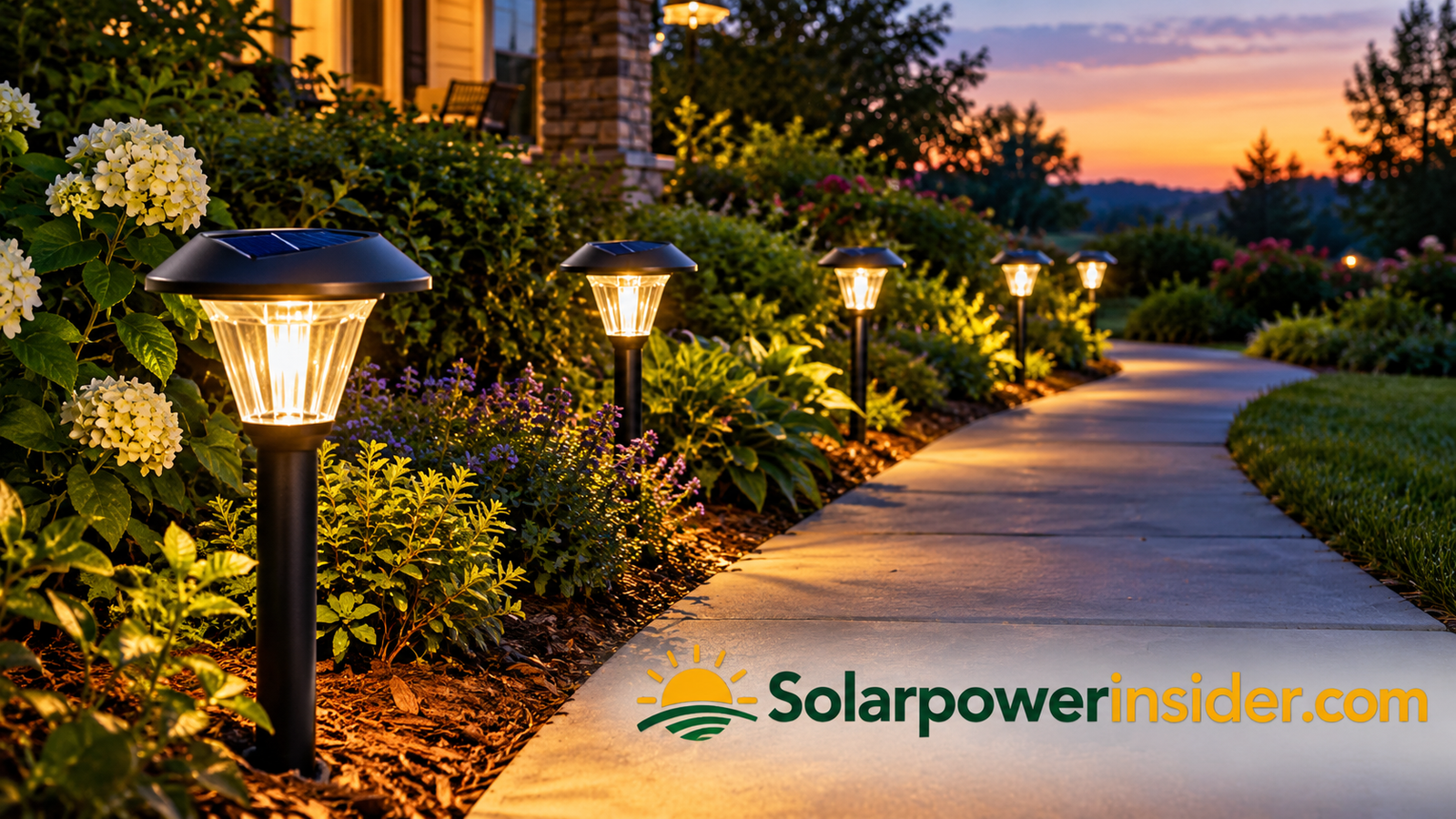
How Long Do Solar Lights Last? The Honest Answer for Every Part
Batteries, panels, LEDs and housings all age on different clocks. Here is what to expect from each, and how to stretch every one.
1. The Short Answer: How Long Do Solar Lights Last?
A decent set of solar lights lasts about two to five years before you notice real decline, and a well-built one can run a decade or more if you replace the battery along the way. Bargain stake lights often quit in a single season. The spread is huge, and it comes down to which component fails first.
Think of a solar light as four parts working as a team: a panel that collects sunlight, a rechargeable battery that stores it, an LED that spends it, and a housing that keeps water out. The panel and LED are the tough ones. The battery is the weak link. The housing decides whether the others ever get a fair chance.
What “lasts” really means
People use the word differently. For some, a light has lasted as long as it turns on. For others, it has failed the moment it cannot stay lit until sunrise. The second standard is stricter and more useful, because a light that glows for two hours is functionally broken even if it technically works.
A fair way to measure is by performance retention. A healthy light should still deliver most of its original runtime after a few seasons. When runtime drops below half of what it once was, you are looking at the end of the useful life, regardless of whether the LED still comes on.
A realistic timeline
In year one, a quality light performs as advertised. By year two or three, a gradual drop in battery capacity appears, shaving an hour or two off the night. Around year three to five, the battery usually needs replacing. After that, a refreshed light can keep going for several more years if the housing and panel are still sound. Cheap lights compress this entire arc into a season or two, which is why buyers often feel that solar lights “never last.”
Understanding this arc turns a frustrating purchase into a predictable one. You can budget for a small battery swap the way you budget for a new bulb or filter, rather than treating each failure as a surprise.
Want lights built for longevity? Browse popular solar lights with replaceable batteries.
Shop Solar Lights on Amazon2. Why One Lifespan Number Is Misleading
When a box claims “up to ten years,” it is usually quoting the LED rating, which is the part least likely to fail. Real-world lifespan is set by the first component to give out, and that is rarely the LED.
Two identical lights can age very differently. One sits in a dry, sunny yard in mild weather. The other sits under a tree in a freezing, rainy climate. Same product, completely different outcome. That is why you should judge a light by its battery, seals and panel rather than the headline claim.
If you want to understand the mechanics behind these parts, our explainer on how solar lights work walks through the full charge and discharge cycle.
The weakest link principle
A solar light behaves like a chain. The panel might last fifteen years, the LED twenty, and the battery two. The chain breaks at the weakest link, so the practical lifespan equals the battery’s, unless you replace it. That single idea explains why spec sheets can promise a decade while the real light is gone in a year.
What manufacturers do not always say
Brands often advertise the LED rating or the panel efficiency because those numbers look impressive. They are less eager to list battery chemistry, cycle count or capacity in milliamp hours. If those details are missing from the listing, treat that as a clue. Transparent makers publish the battery type, capacity, and whether it can be replaced.
How to read a product listing
Look for four things: the battery type and size, the panel material, the IP rating, and the stated runtime on a full charge. Add in real customer reviews that mention how the light performed after a year, not just on day one. Reviews written within a week of purchase tell you almost nothing about durability. Search for comments that mention the second winter, because that is where weak lights reveal themselves.
Spending ten minutes on these details before buying saves far more time and money than you will lose to a weak set later.
Compare highly rated outdoor solar lights side by side.
See Outdoor Solar Lights3. Battery Lifespan: The Part That Usually Fails First
Almost every solar light stores energy in a small rechargeable cell. Which chemistry it uses matters a great deal.
| Battery type | Typical life | Notes |
|---|---|---|
| NiCd | 1–2 years | Cheapest. Fades quickly and contains toxic cadmium. |
| NiMH | 2–4 years | The common middle ground. Replaceable AA or AAA cells. |
| Lithium-ion | 3–5 years | Higher capacity, but sensitive to heat and deep drain. |
| LiFePO4 | 5–8+ years | Long cycle life and safer. Found in better fixtures. |
Batteries age by charge cycles and by heat. A light that charges and drains every day racks up roughly 365 cycles a year, so a cell rated for around 500 to 1,000 cycles lasts about one to three years. That math explains most “my lights just stopped” complaints.
If your lights dim long before their time, our guide on why solar lights stop working covers the most common culprits.
How capacity fade works
Every rechargeable battery loses a small amount of capacity with each charge and discharge cycle. In a solar light, that cycle happens once a day, all year. After a few hundred cycles, the cell holds noticeably less energy, so the light runs for fewer hours. This fade is gradual, which is why many owners do not notice until the lights suddenly seem to quit early.
The role of depth of discharge
Batteries last longer when they are not drained to empty every night. A light with a generously sized battery uses only part of its capacity, which puts less stress on the cell. A tiny battery that is fully drained and fully refilled daily wears out much faster. That is one reason a bigger battery tends to outlast a smaller one even when the chemistry is the same.
Choosing a replacement
Match the voltage first. Most garden lights use a single 1.2V NiMH cell, so a 1.5V alkaline is the wrong choice. Then match the size, such as AA or AAA, and pick a capacity equal to or a little above the original. A higher milliamp-hour rating gives longer runtime, though the panel must be able to recharge it in a day. Choose reputable brands, since inexpensive cells often fall far short of their printed capacity.
Why heat is the silent killer
The battery sits inside a small sealed housing that bakes in the sun. Sustained internal heat accelerates chemical aging far more than people expect. Lights in full summer sun with dark housings often wear out sooner than those with lighter colors or better ventilation. A shaded, well-ventilated position for the battery, where possible, is worth real extra years.
Swapping the battery is the cheapest fix. Pick up rechargeable NiMH cells.
Find Replacement Batteries4. Solar Panel Lifespan: Slow Fade, Not Sudden Death
Large rooftop panels are rated for 25 years or more. The tiny panels on garden lights are a different story. Many use thin amorphous silicon or are covered by a cheap plastic lens that yellows and clouds in a few years.
Monocrystalline and polycrystalline panels under tempered glass or tough resin last far longer, often ten years or beyond. The cell itself rarely dies. What happens is gradual: the surface scratches, fogs or gets coated in grime, and less sunlight reaches the cells.
What shortens panel life
UV exposure that clouds plastic covers, moisture creeping behind the lens, hairline cracks from impact, and persistent shade or dirt. All of these reduce charging, which in turn makes the battery look worse than it really is.
Amorphous, polycrystalline and monocrystalline
Garden lights use a few panel types. Amorphous silicon is the thin, cheap, often brownish panel; it works in weak light but degrades faster and is less efficient. Polycrystalline panels, with their blue speckled look, offer a good balance. Monocrystalline panels, dark and uniform, are the most efficient and typically the longest lasting. If you want a light that will still charge well in year eight, monocrystalline under glass is the safest bet.
The lens problem
The most common reason a small panel fails is not the cell but the cover. Cheap plastic yellows in sunlight, picks up scratches, and traps moisture. The cells underneath may be fine, but they receive far less light. If a light has a clouded cover and everything else works, a gentle polish with a plastic-safe cleaner can bring back a surprising amount of performance.
Cleaning without damage
Avoid abrasive pads and harsh solvents, which scratch the surface and hasten clouding. A soft cloth, lukewarm water and a drop of mild dish soap are enough for nearly all dirt. For stubborn residue, let the damp cloth sit on the spot for a minute before wiping.
Because the panel is the part that feeds everything else, even a modest improvement here can add months to the effective life of the battery, since a fuller daily charge means less strain.
Look for glass or high-grade resin panels for the longest service.
Shop Quality Panels5. LED Lifespan: The Tough One
LEDs are rated for 25,000 to 50,000 hours. At eight to ten hours of nightly use, that works out to well over a decade. In practice the LED survives almost every fixture it lives in.
LEDs rarely burn out. Instead they lose brightness slowly, a trait called lumen depreciation. Heat accelerates it, so cheap fixtures with poor heat dissipation dim sooner. If a light looks weak but the battery is fresh, the LED or its driver circuit may be worn, though water damage is a more common cause.
Why LEDs outlast everything
An LED has no filament to burn through. It is a semiconductor that produces light when current flows, and it ages slowly. This is why LED ratings of tens of thousands of hours are realistic. A single LED in a solar path light barely warms up, so it avoids the stress that kills traditional bulbs.
Lumen depreciation explained
Over thousands of hours an LED slowly loses brightness. The industry often defines end of life as the point where output falls to 70 percent of the original. Because solar lights run at modest power, they tend to reach this point late. Heat and over-driven current speed it up, so well-designed fixtures that keep the LED cool and run it conservatively keep their brightness longer.
When the LED really is the problem
True LED failure is usually caused by something else: a surge from a faulty driver, water damage, or a poor solder joint. If your light flashes, stays dim even with a fresh battery, or turns on and off unpredictably, inspect the contacts and the board before blaming the LED itself.
Color temperature and stability
Some cheap LEDs shift color as they age, moving from warm white toward a bluish or greenish tint. This is a sign of low-grade components. Mid-range and premium lights keep a steady tone over the years, which matters if you light a patio and want everything to match.
Brighter, longer-lasting LED designs are worth the small premium.
Browse Bright LED Solar Lights6. Housing and Weatherproofing: The Quiet Deciding Factor
Water is the number one killer of solar lights. A cracked housing, a loose battery door or a dried-out gasket lets moisture reach the circuit board. Corrosion follows, and the light fails within weeks.
Check the IP rating. IP44 handles splashes, IP65 handles jets of water, and IP67 survives temporary submersion. For ground-level lights that sit in sprinkler spray, IP65 is a sensible minimum. Housing material matters too: stainless steel, die-cast aluminum and UV-stabilized ABS outlast thin polypropylene by years.
Good signs
- Rubber gasket on the battery door
- IP65 rating or higher
- Metal or UV-stabilized plastic body
- Glass or thick resin lens
Red flags
- No IP rating listed
- Thin, brittle plastic
- Glued shut with no battery access
- Cloudy, soft lens material
Understanding IP ratings
The first digit of an IP rating describes dust protection and the second describes water protection. For a solar light, the second digit matters most. A rating of IP44 means splash resistance, which is the bare minimum for outdoor use. IP65 handles direct water jets, such as rain driven by wind or a sprinkler. IP67 survives brief submersion, which helps in areas that flood during storms.
Gaskets and screws
The tiny rubber ring around the battery door is the most important seal on the whole light. It dries out, cracks or goes missing over time. Replace or lubricate it with a thin film of silicone grease during battery swaps. Stainless steel screws resist the rust that stains and weakens plastic around fasteners.
Material choices
Stainless steel and aluminum tolerate sun and weather well. UV-stabilized ABS plastic is a good middle option. Basic polypropylene often becomes brittle and chalky after a couple of summers, then cracks at the stake or the neck. Resin and glass lenses stay clear far longer than thin acrylic.
Stakes and mounting
The stake is a common breaking point, especially in hard or frozen soil. A metal stake or a reinforced plastic one lasts far longer. When the ground is rock hard, loosen the soil first rather than hammering the light in, since impact cracks can let in water long before you notice.
Shop weatherproof lights with a clearly listed IP rating.
Shop IP65 Solar Lights7. Lifespan by Type of Solar Light
| Light type | Realistic lifespan | Common failure |
|---|---|---|
| Budget stake lights | 6 months – 2 years | Battery and seal failure |
| Quality path lights | 3–6 years | Battery fade |
| Spotlights and floodlights | 4–8 years | Battery, panel dirt |
| String and fairy lights | 1–3 years | Wire damage, small battery |
| Motion security lights | 3–7 years | Sensor and battery |
| Lanterns and deck lights | 2–5 years | Moisture, UV clouding |
Premium smart path lights tend to sit at the top of these ranges. For a look at a well-reviewed example, see our Ring Solar Pathlight review. If you are planning a whole yard, our roundup of the best solar lights for the garden helps you match types to spaces.
Why type changes the math
Different lights are built for different jobs, and each job places different stress on the parts. A spotlight draws more power and runs hotter than a decorative stake, while string lights suffer from thin wires that flex, snag and corrode.
String lights and lanterns
String lights are the most fragile in the family. The wire connection to the panel is exposed, the bulbs are tiny, and the battery is small. Expect fewer years from them, and consider buying a set with replaceable cells. Lanterns hang in the open and take weather directly, so their lifespan hinges on seal quality.
Spotlights, floodlights and security lights
These units are usually larger, with bigger panels and bigger batteries, which gives them an edge in endurance. Motion-activated models add a sensor that can fail or become oversensitive. When they work, though, a larger battery fed by a larger panel is working less hard per cycle, which is gentler on the cell.
Path and garden lights
Path lights live low to the ground, where they catch sprinklers, mowers and snow. Their lifespan depends heavily on placement. Keep them clear of spray and off turf edges where trimmers can reach, and the average set will far outlive one placed carelessly.
Pick the right type for your space and budget.
Shop Solar Path Lights8. Budget vs Mid-Range vs Premium: What You Actually Get
Price is a reasonable shortcut for lifespan, with some caveats. A very cheap set costs little per light but you may replace it every season. A mid-range set often delivers three to five years. Premium fixtures add better cells, glass panels and metal bodies, which push life toward a decade.
| Tier | Battery | Panel | Typical life |
|---|---|---|---|
| Budget | Small NiCd/NiMH, sealed | Plastic-covered amorphous | 1–2 years |
| Mid-range | NiMH or Li-ion, replaceable | Polycrystalline | 3–5 years |
| Premium | LiFePO4 or large Li-ion | Monocrystalline under glass | 6–10+ years |
The real cost is price divided by years. A light costing double that lasts four times longer is the cheaper one.
Where the money goes
Higher prices buy better cells, better seals and better panels. They also pay for design details that rarely appear in marketing: thicker gaskets, larger batteries, a charge controller that prevents overcharging, and a housing that vents heat. These features cost little to add yet extend lifespan substantially.
The hidden cost of cheap
A twelve-pack of budget lights looks like a bargain until the first winter. If half fail by spring, you have paid for the set, replaced it, and thrown away plastic and batteries. Over several years the cheap route often costs more in money and effort than a smaller set of solid lights.
When budget makes sense
Not every location needs a premium light. For a temporary event, a rental property, or decoration you plan to swap seasonally, cheap lights may be perfectly fine. Reserve the higher spend for permanent, hard-to-reach or safety-critical spots such as steps, gates and walkways.
A smart buying strategy
Mix tiers by importance. Put dependable lights where reliability counts and cheaper accents where failure is harmless. Always keep the receipt and check the warranty; reputable brands back their lights for one to three years, which tells you something about their confidence.
See mid-range and premium sets with strong ratings.
Compare Top-Rated Sets9. Climate and Placement: Where You Put Them Matters
Sun hours drive everything. Lights need roughly six to eight hours of direct sun for a full charge. Under a canopy or the north side of a wall, the battery never fills, then cycles shallowly and ages faster.
Heat and cold
Batteries dislike extremes. Sustained heat above about 95°F speeds chemical wear, and freezing temperatures reduce capacity sharply, with lithium-ion especially unhappy charging below freezing. Lights in a cold climate may look dim all winter and recover in spring, which is normal.
Moisture and salt
Coastal homes face salt spray that corrodes contacts. Choose stainless steel and good seals, and rinse fixtures with fresh water periodically.
Placement tips
Keep panels angled toward the sun, away from porch lights and streetlamps that trick the light sensor into staying off, and clear of sprinkler heads.
Reading your sun exposure
Spend a day watching where sunlight falls on your yard. Spots that get direct sun from mid-morning through mid-afternoon are ideal. Areas that see only dappled light under trees will keep the battery partly charged at best, which shortens runtime and strains the cell.
Seasonal sun changes
The sun’s arc changes through the year. A spot that gets plenty of sun in summer may sit in shadow in winter when the sun is low. Trees that drop leaves help in winter but shade heavily in summer. Place lights with both seasons in mind.
Light pollution and sensors
Solar lights decide when to switch on by sensing darkness through the panel. A nearby porch light, a streetlamp or a bright window can fool the sensor into thinking it is still daytime, so the light stays off. Moving the light a few feet often fixes it without any repair.
Wind, snow and ice
Heavy snow blankets panels and blocks charging for days. Brush it off gently when you can. Ice expands in cracks, so a tiny gap in a housing can become a big one after a few freeze cycles. In severe winters, lifting lights out of the ground and storing them is the surest way to protect them.
Need extra reach? Lights with a separate remote panel handle shady spots.
Shop Remote-Panel Lights10. Signs Your Solar Lights Are Reaching the End
- Shorter run time. Lights used to last all night and now fade within a few hours. This points to battery wear.
- Dim or flickering output. Often a weak battery, though moisture can cause flicker too.
- Failure to turn on. Check the switch, sensor and battery contacts before giving up.
- Visible corrosion. White or green crust in the battery bay means water got in.
- Cloudy panel. Yellowed or foggy covers cut charging dramatically.
- Condensation inside the lens. A failed seal that will worsen over time.
Not every symptom means the end. A fresh battery and a cleaned panel often revive a light that seemed finished.
Early warnings versus final failure
Most lights give notice before they die. Spotting the early signs lets you act while a cheap fix is still possible. If runtime shrinks gradually, think battery. If the light never comes on at all, think switch, sensor or corrosion. If it works on a bench but not outside, think placement or light pollution.
A simple diagnostic routine
First, clean the panel and check that the on/off switch is in the correct position. Second, open the battery bay and look for corrosion or moisture. Third, replace the battery with a known good rechargeable. Fourth, leave the light in full sun for a day, then test it in a dark room by covering the panel. If it still fails, the board or LED is probably damaged.
When the problem is not the light
Sometimes a perfectly healthy light looks dead because of its surroundings: shade, dirt, a nearby lamp, or a cold snap. Rule these out before replacing anything. A few minutes of checking can save the price of a new set.
For a deeper troubleshooting walk-through, our article on why solar lights stop working goes step by step through each failure mode.
Keep a spare set of rechargeable batteries on hand.
Get Spare Batteries11. Maintenance That Actually Extends Lifespan
Clean the panel monthly
Wipe with a soft damp cloth. Dust, pollen and bird droppings quietly cut charging by a fifth or more.
Replace batteries on schedule
Use the same chemistry and voltage as the original, ideally a quality rechargeable with equal or slightly higher capacity. Never use standard alkaline cells, which can leak.
Use the off switch in winter
If the lights get little sun for weeks, switch them off to let the battery build a charge, or bring them indoors to a bright windowsill.
Check seals and contacts
Wipe corrosion with white vinegar and a cotton swab, dry thoroughly, and reseat the gasket.
Store them properly
If you remove lights for winter, charge them first, switch them off and keep them somewhere cool and dry.
A yearly care calendar
Spring is the time to inspect and clean. Wipe panels, check seals, replace any batteries that held up poorly the previous season, and straighten leaning stakes. Summer needs little more than occasional cleaning and a check that plants have not grown over the panels. Autumn is the moment to clear fallen leaves, which cover panels quickly. Winter calls for snow removal and, in severe climates, indoor storage.
Trim around your lights
Plants grow. A path light that had open sky in April may be buried in foliage by July. A quick trim keeps panels in the sun and prevents leaves from holding moisture against the housing.
Protect from irrigation
Sprinklers throw mineral-rich water that leaves white scale on panels. Over time that film blocks light and is hard to remove. Adjust sprinkler heads or move the light a short distance to keep it dry.
Keep a small kit
A few spare rechargeable batteries, a soft cloth, a tube of silicone grease and a small screwdriver cover almost every repair. Having them ready turns a dead light into a five-minute job instead of a trip to the store.
Panel cleaning kits and microfiber cloths keep charging at its best.
Shop Cleaning Supplies12. Repair or Replace? A Simple Decision Guide
Repair if the light has a replaceable battery, the housing is intact, and the panel is clear. A two-dollar cell can add years.
Replace if the housing is cracked, the unit is glued shut, the circuit board is corroded, or the panel is cloudy beyond cleaning. Chasing a cheap fixture past that point costs more time than it is worth.
Worth repairing
- Dim but dry interior
- Replaceable battery
- Quality metal body
Better to replace
- Corroded board
- Cracked housing
- Sealed, non-serviceable unit
Thinking bigger than lighting? Our guide on how long a solar generator lasts applies the same battery logic to portable power.
The cost-per-year test
Divide the price of the light by the number of years you expect it to run. A cheap light that lasts one year at ten dollars costs ten dollars per year. A solid light at thirty dollars that lasts five years costs six dollars per year, plus a small battery swap. Repair almost always beats replacement for any light with a removable battery and a healthy housing.
Handling old batteries responsibly
Never throw rechargeable batteries into household trash. Many stores and municipal programs accept them for recycling. Cadmium and lithium cells are especially important to dispose of correctly, since they can leak or ignite if crushed.
Upgrading smartly
When replacing a failed set, learn from it. If the old lights died from moisture, step up to a higher IP rating. If they dimmed early, choose a larger battery. If shade was the issue, buy lights with a remote panel. Each failure is information about what your yard needs.
Think beyond small lights
If your outdoor power needs are growing, from lighting to tools or appliances, a portable power station may make sense. Our guide to the best solar powered generators is a good starting point for that bigger step.
Final thoughts on getting your money’s worth
Solar lights reward a little attention. The owners who get the longest life are not the ones who spend the most, but the ones who choose a light with a replaceable battery, give it a sunny spot, wipe the panel now and then, and swap the cell when runtime starts to slip. Those four habits cost almost nothing and routinely double the useful life of an ordinary fixture.
It also helps to keep expectations honest. Solar lights are small, outdoor, battery-powered devices exposed to sun, rain, frost and lawn equipment every day. A few years of steady service is a good result, and anything beyond that is a bonus you can earn through simple care.
Ready to upgrade? Start with lights that offer replaceable batteries.
Upgrade Your Solar LightsFrequently Asked Questions
How long do solar lights last on average?
Most last two to five years, with batteries needing replacement every one to three years. Premium units can run a decade or longer.
How long do solar light batteries last?
NiMH cells typically last two to four years, while LiFePO4 can reach five to eight years or more.
How long do solar lights stay on at night?
Most run six to twelve hours on a full charge, depending on battery size and brightness mode.
Do solar lights wear out over time?
Yes. Batteries lose capacity, panels cloud, and seals degrade. The LED itself lasts longest.
Can I replace the battery in my solar light?
On most mid-range and premium models, yes. Many budget units are sealed, which shortens their useful life.
Do solar lights work in winter?
They work, but with fewer sun hours and cold-reduced battery capacity, run time shortens. They usually recover in spring.
Why do my solar lights die after one year?
Usually a low-grade battery or a failed seal letting in moisture. Cheap stake lights are especially prone to this.
Do solar lights need direct sunlight?
Direct sun is best. Indirect light charges slowly, and deep shade often leaves the battery under-filled.
Can I use regular batteries in solar lights?
No. Use rechargeable cells matching the original chemistry. Alkaline batteries cannot recharge and may leak.
Should I leave solar lights outside in winter?
You can in mild climates. In harsh freezes, bringing them in protects batteries and seals.
How can I make my solar lights last longer?
Clean the panel, place them in full sun, replace batteries on schedule, and buy units with good IP ratings.
Are expensive solar lights worth it?
Often yes. Better batteries, glass panels and sturdy housings usually lower the cost per year of use.
Conclusion: Plan Around the Battery
So, how long do solar lights last? The fixture can last many years, but the battery sets the schedule. Expect two to five years from a decent set, longer from premium builds, and budget for a cheap battery swap along the way. Keep panels clean, pick weatherproof housings, and place lights where they get real sun.
Do that and your lights will keep glowing long after the cheap ones have gone dark.
Ready to light up your yard for the long haul?
Shop Solar Lights on Amazon