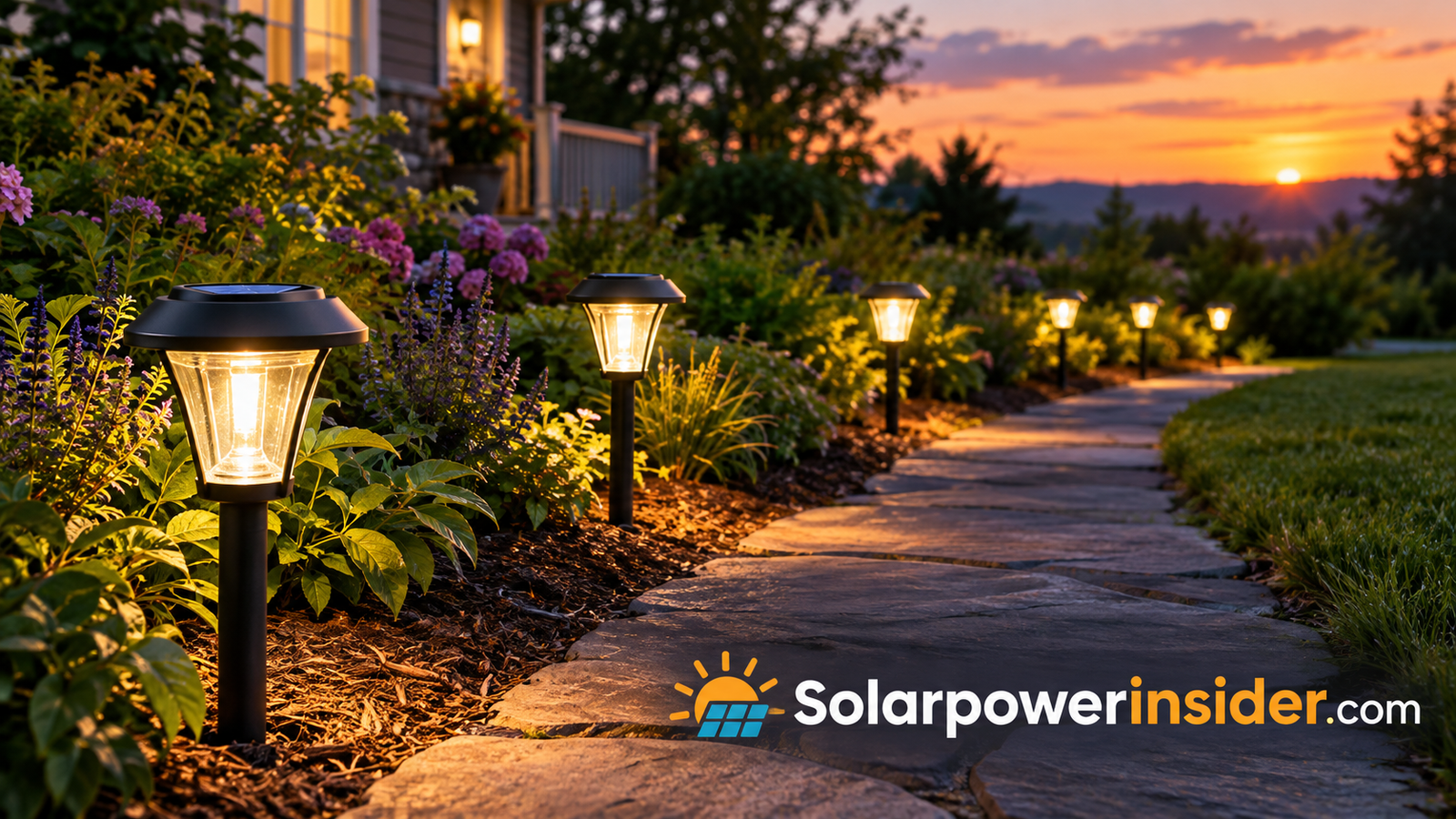
How Do Solar Lights Work? The Complete Plain-English Guide
From sunlight on a small panel to a warm glow in your garden after dark: here is exactly what happens inside a solar light, why it sometimes fails, and how to choose ones that keep working.
You push a little plastic stake into the lawn, walk away, and a few hours later the path is softly lit. No wiring, no switch, no electricity bill. It feels like a small bit of magic, and it is easy to take for granted until one night the light stays dark and you start wondering what actually goes on inside that tiny housing.
The good news is that solar lights are built on a handful of simple ideas that fit together very neatly. Once you understand those ideas, you can pick better lights, place them where they thrive, fix them when they misbehave, and avoid the cheap ones that fail within a season. This guide walks through the whole system, piece by piece, in plain language.
The Short Answer: Sunlight Becomes Stored Energy, Then Light
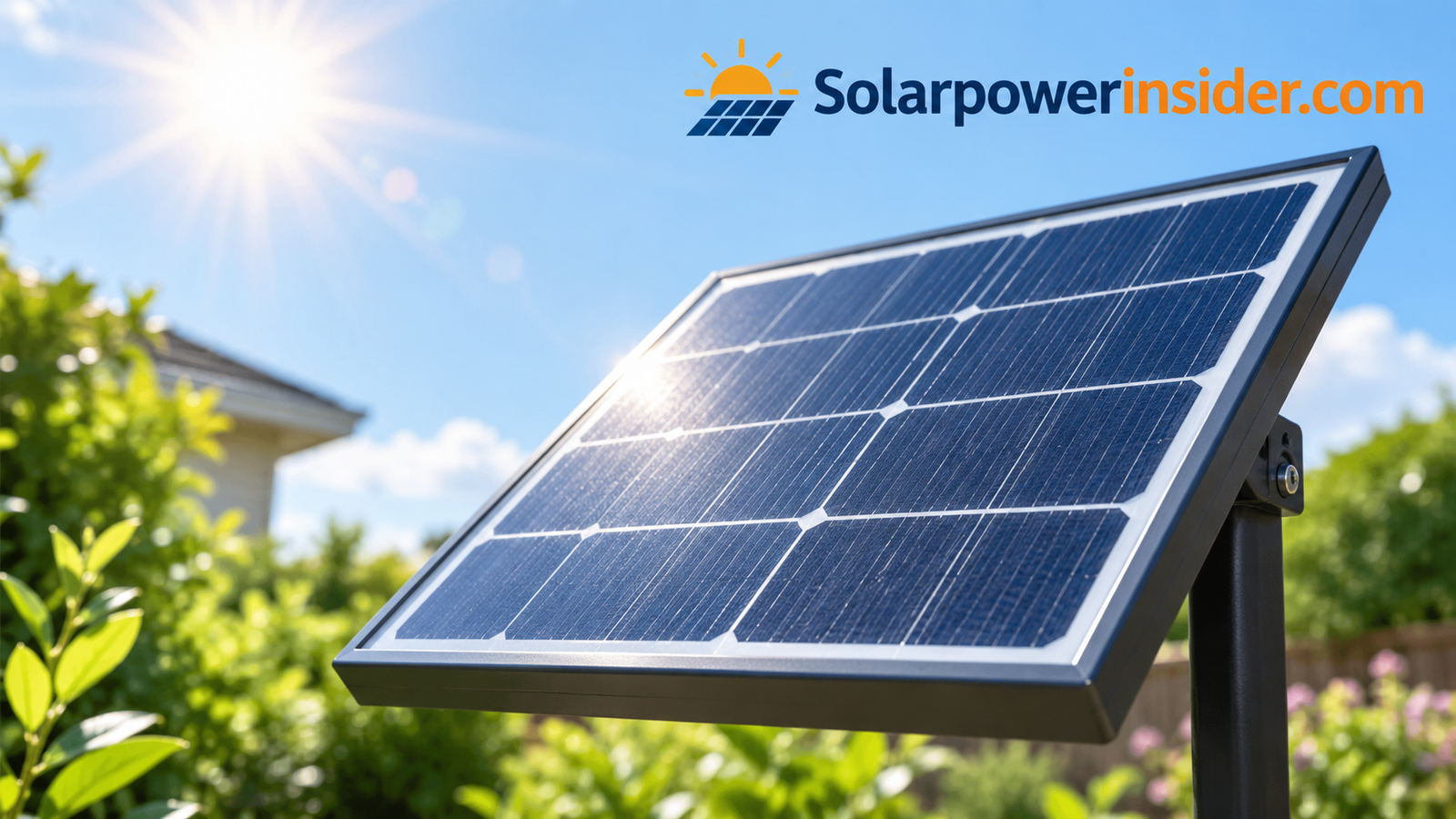
A solar light does three jobs in a loop. During the day, a solar panel turns sunlight into a small electrical current. That current charges a rechargeable battery. When the sun goes down, a sensor notices the darkness and tells a tiny circuit to release the stored energy into an LED, which gives you light until the battery runs low or the sun comes back.
That is the entire concept. Everything else, including the different shapes, brightness levels, motion detection and color modes, is a variation on this theme. The panel is the collector, the battery is the storage tank, the sensor is the on/off decision maker, and the LED is the output.
What makes the whole thing clever is that it needs no human involvement. There is no timer to program and no switch to flip. The light itself decides when it is dark enough to turn on, which is why the sensor is just as important as the panel even though it is far less talked about.
Why Solar Lights Are Different From Plug-In Lights
A wired light draws a steady supply of power from your home, so it can be as bright as the bulb allows for as long as you leave it on. A solar light lives on a strict energy budget. Every bit of brightness, every extra hour of runtime and every special mode has to be paid for by the sunshine collected that same day. That budget is the reason designers make so many trade-offs, such as dimming after a few hours, using efficient LEDs and adding motion sensors. It also explains why two lights that look nearly identical can perform so differently: the one with the better panel, battery and circuit simply has a bigger and better managed budget.
Thinking in terms of a daily energy budget also helps you set realistic expectations. A decorative light was never meant to light a driveway, and a security flood light was never meant to run at full power until morning on a gray winter day. Match the light to the job and the system works beautifully.
If you are still deciding which lights deserve a spot in your yard, our roundup of the best solar lights for the garden is a handy companion to this guide, because it shows how these internal parts translate into real-world performance.
Want to see the basics in action? Browse popular solar garden lights and compare real owner feedback.
Shop Solar Garden LightsWhat Is Inside a Solar Light
Pop open almost any solar light and you will find the same short list of components, regardless of whether it costs a few dollars or several dozen. Understanding what each piece does makes everything else in this article easier to follow.
| Component | What It Does | Analogy |
|---|---|---|
| Solar panel (photovoltaic cell) | Converts sunlight into direct current electricity | The rain-catching roof |
| Rechargeable battery | Stores the energy collected during the day | The storage barrel |
| Light sensor (photoresistor) | Detects daylight versus darkness | The eyes |
| Control circuit | Decides when to charge, when to light, and protects the battery | The brain |
| LED | Turns electricity into efficient light | The tap and lamp |
| Housing and lens | Protects the parts and shapes the light | The shell |
Notice what is missing: there is no bulb filament, no mains connection and no moving parts. That absence is exactly why solar lights are so easy to install and so safe to use around children, pets and wet gardens. The voltage involved is tiny, typically around one to three volts.
The diagram above shows how the pieces connect. Energy flows left to right, while the control circuit sits underneath supervising the whole process. Without that supervising circuit, the battery could overcharge in strong sun or drain completely at night, and the LED would burn constantly instead of only after dark.
Curious how a complete, well-built unit looks? Check out solar pathway lights with sealed housings.
See Solar Pathway LightsThe Solar Panel: Turning Sunlight Into Electricity
The panel on top of your light is a miniature version of the large panels you see on rooftops. Both rely on the photovoltaic effect, a phenomenon where light striking certain materials knocks electrons loose and pushes them in a single direction. That flow of electrons is an electric current.
How the Photovoltaic Effect Works
Most solar lights use silicon cells. Silicon is treated so that one layer has a slight surplus of electrons and the layer beneath it has a slight shortage. Where the two layers meet, an electric field forms. When photons, the particles that make up sunlight, hit the cell, they give electrons enough energy to break free. The electric field then nudges those free electrons toward a metal contact, and when you connect a wire, they flow around as current.
You do not need to remember the physics. The practical takeaway is that more light means more current, and the cell responds to light, not heat. In fact, solar cells are slightly less efficient when they get very hot, which is why a cool, bright spring day can be better for charging than a scorching summer afternoon.
Monocrystalline, Polycrystalline and Amorphous Panels
Not all panels are created equal, and the type of silicon used affects how well your light charges.
| Panel Type | Typical Look | Efficiency | Best For |
|---|---|---|---|
| Monocrystalline | Uniform dark blue or black, rounded corners | Highest | Cloudy regions and premium lights |
| Polycrystalline | Speckled blue with a mosaic pattern | Good | Everyday garden lights with plenty of sun |
| Amorphous (thin film) | Smooth, dark brown or black, often flat | Lower | Budget decorative lights and small accents |
Better panels simply squeeze more electricity from the same amount of light, which means a full battery in less time and a better chance of a full night of glow even after a gray day. When two lights look similar, check which panel type is used. It is one of the strongest hints about quality.
Why Panel Size Matters
A larger panel collects more light, but there is a catch: a big panel paired with a tiny battery is wasted, and a tiny panel paired with a huge battery will never fill it. Good designers match the two. As a rule of thumb, if a light advertises a large battery capacity but shows a thumbnail-sized panel, be skeptical. The marketing numbers may not reflect what it can really collect in a normal day.
Many solar lights also use a plastic or epoxy cover over the cell. That cover is a quiet culprit behind failures. Cheap plastic can cloud or yellow within months, cutting the light that reaches the cell. Higher quality lights use tougher coatings or glass-like covers that stay clear much longer.
Looking for lights with a bigger, better panel? Compare high-efficiency solar lights.
Compare High-Efficiency LightsThe Rechargeable Battery: Where the Energy Waits
Sunlight is only available during the day, but you want light at night. The battery bridges that gap. It is the part that stores the electricity from the panel and releases it later when the LED needs it.
Common Battery Types in Solar Lights
Most solar lights use one of a few familiar rechargeable chemistries, usually in an AA or AAA size, or a small built-in cell.
| Battery Type | Strengths | Weaknesses |
|---|---|---|
| NiMH (nickel metal hydride) | Affordable, safe, easy to replace, handles many charge cycles | Slowly self-discharges, loses capacity over time |
| NiCd (nickel cadmium) | Cheap, tolerant of rough use | Lower capacity, contains toxic cadmium, mostly outdated |
| Lithium-ion / LiFePO4 | High capacity, long life, works well in cold | Needs a good protection circuit, usually not user-replaceable |
Most budget lights rely on NiMH or NiCd. Better and brighter lights increasingly use lithium-based cells because they hold more energy in the same space and last through more charge cycles.
Capacity, Volts and What They Mean
Battery capacity is usually printed in milliamp hours, abbreviated mAh. A higher number means more stored energy. A solar path light might ship with a battery rated at a few hundred mAh, while a bright flood light may carry a battery ten or twenty times larger. Capacity matters because it controls how long the light can stay on after dark, assuming it is fully charged.
Voltage is the other number. Most small solar lights use a single cell around one point two volts for NiMH or about three point seven volts for lithium. The circuit steps that voltage up when needed, because an LED often needs a slightly higher voltage than a single NiMH cell can provide on its own.
Why Batteries Are the Most Common Failure Point
Every rechargeable battery has a finite number of charge cycles. A solar light uses one cycle per day, so even a durable battery wears out after a couple of seasons of daily use. When a light slowly dims or runs for shorter periods, a tired battery is the most likely cause. The good news is that on many lights it is a cheap and simple swap. If you want a deeper look at how long these batteries and whole fixtures realistically last, see our guide on how long solar lights last.
Is your light running dim? A fresh set of rechargeable batteries is often the cheapest fix.
Find Replacement Solar BatteriesThe LED and Driver Circuit: Making the Light
LED stands for light emitting diode. It is a tiny semiconductor that gives off light when current passes through it. LEDs are the reason solar lighting became practical. Older incandescent bulbs wasted most of their energy as heat, which would have drained a small battery in minutes. An LED turns a far larger share of its energy into light, so a small battery can run it for hours.
Why LEDs Are the Perfect Match
An LED is efficient, durable, instant on, and not bothered by vibration or cold. It has no filament to break. A good LED can last tens of thousands of hours, which is far longer than the rest of the light is likely to survive outdoors. That mismatch is why the LED almost never fails first. The battery, the panel cover or the seals usually give up long before.
The Driver: A Small Circuit With a Big Job
Between the battery and the LED sits a driver circuit. Its job is to deliver the right current to the LED. Too little and the light is faint, too much and the LED overheats. Many solar lights use a tiny component called an inductor along with a small chip to boost a low battery voltage up to the level the LED requires. This is sometimes called a joule thief style boost converter, and it lets a single one point two volt cell power a bright LED.
The same circuit often handles charge control. It prevents the battery from overcharging when the sun is strong and stops it from draining below a safe level. Better lights add features like low-battery cutoff, which protects the cell and extends its life.
Color Temperature and Brightness
LED light comes in different color temperatures. Warm white is soft and yellowish, great for patios and garden paths. Cool white is bluer and crisper, often chosen for security lights and driveways. Many modern lights also offer color-changing modes for holiday and party use.
Brightness is measured in lumens. Decorative stake lights produce only a few lumens, enough to mark an edge. Path lights typically range from about ten to fifty. Security and flood lights can reach several hundred or more. More lumens mean a faster battery drain, so manufacturers often include a dimmer mode that reduces output after a set time to stretch the night.
| Purpose | Rough Lumen Range | Typical Light Style |
|---|---|---|
| Accent and decoration | 1 to 10 | Stake lights, lanterns, string lights |
| Pathway and steps | 10 to 50 | Path lights, deck lights |
| Spotlighting plants or walls | 100 to 300 | Spotlights |
| Security and large areas | 300 to 1000+ | Motion flood lights |
Need more punch after dark? Browse brighter solar spotlights and flood lights.
Shop Bright Solar SpotlightsThe Light Sensor: How a Solar Light Knows It Is Night
This is the part that feels most like magic. How does a small plastic stake know when to switch itself on? The answer is a component called a photoresistor, sometimes called a light dependent resistor, or in some designs a photodiode.
The Photoresistor Explained
A photoresistor is a material whose electrical resistance changes with the amount of light hitting it. In bright light, its resistance is low. In darkness, its resistance becomes very high. The control circuit constantly watches that resistance. When it climbs past a certain threshold, the circuit interprets that as dusk and connects the battery to the LED.
Many lights skip a separate sensor and use the solar panel itself as the detector. When the panel stops producing voltage because the sun is gone, the circuit notices the drop and flips the LED on. This saves cost and is why you rarely see an extra little window on cheaper lights.
Why Streetlights and Porch Lamps Confuse Solar Lights
Because the light is driven by sensing brightness, any other light source nearby can fool it. A porch lamp, a streetlamp or even a bright window shining on the panel can make the light think it is still daytime. The result is a solar light that never comes on, or one that flickers or turns off randomly when headlights sweep past.
If one light in a row stays dark while the others work, check whether something illuminates it after sunset. Moving it just a few feet into shadow often solves the issue immediately.
Motion Sensors and Smart Controls
Security-style solar lights add a passive infrared sensor, abbreviated PIR. It detects the heat signature of a person or animal moving across its field of view. These lights usually sit in a dim standby mode, then jump to full brightness when motion is detected. That behavior saves a great deal of battery while still giving you light exactly when it matters.
Some premium models connect to an app, allowing you to schedule brightness, change colors or integrate with other devices. These extras add convenience, but they all depend on the same core cycle of charge by day and light by night.
Want lights that only switch on when needed? See motion-activated solar lights.
Shop Motion Sensor Solar LightsA Full Day, Step by Step
Now that you know the parts, let us put them together and follow one complete day in the life of a solar light.
- Sunrise. Light reaches the panel and the sensor registers daytime. The control circuit turns the LED off and opens the path from panel to battery.
- Morning and midday. The panel produces current in proportion to the brightness. The circuit feeds that current into the battery, topping it up. Direct, high sun charges fastest.
- Afternoon. The battery approaches full. A good control circuit tapers or stops charging to prevent overcharge and heat damage.
- Dusk. As sunlight fades, the panel output drops and the photoresistor resistance climbs. The circuit crosses its threshold and decides it is night.
- Night. The circuit connects the battery to the LED through the driver. The LED glows steadily or follows a dimming schedule until the battery drains to its safe limit.
- Pre-dawn. The battery may already be empty, which is normal for budget lights. Better lights will still have some charge left, particularly in the shorter nights of summer.
Notice the pattern: charge, rest, discharge, repeat. Every one of those cycles slightly ages the battery, which is why even a well-built solar light is a consumable item, albeit a long-lasting one.
Ready to put the cycle to work? Pick up a multi-pack of solar lights for your yard.
Shop Solar Light MultipacksTypes of Solar Lights and How They Differ
All solar lights follow the same cycle, but design choices change how they look, how bright they are and what they are best at. Here is a tour of the main categories.
Path and Stake Lights
The classic. These are short lights with a stake you push into soil. They offer gentle illumination to guide footsteps. They are inexpensive and easy to install, but also the most likely to be knocked, mowed over or damaged. Our reviewers dug into a standout model in the Ring Solar Pathlight review, which shows how a well-engineered path light differs from a bargain bin one.
Spotlights and Floodlights
Spotlights aim a tighter, brighter beam at a tree, flag, sign or wall. Floodlights spread more light across a broader area, such as a driveway or yard. Both use larger panels and batteries, and many offer motion sensing. The panel is often a separate piece on a cable so it can sit in full sun while the light itself is mounted in a more convenient spot.
String and Fairy Lights
Decorative strings of small LEDs powered by a single panel and battery pack. They are lovely on fences, pergolas and trees. Output per bulb is low, so these are about ambience rather than visibility.
Lanterns and Decorative Lights
Hanging lanterns, glowing orbs, flickering flame effects and solar lamp posts fall in this group. They prioritize looks over lumens. Many use a flickering LED circuit that mimics a candle.
Wall, Deck and Step Lights
Small, low-profile lights that mount to surfaces for safety. They are excellent for stairs, railings and gate posts and often have a lower profile so the panel is hidden or integrated into the top.
| Type | Brightness | Best Use | Typical Weakness |
|---|---|---|---|
| Path / stake | Low to medium | Walkways, borders | Fragile and easily shaded |
| Spotlight | Medium to high | Trees, signs, features | Needs a good aim and sun |
| Floodlight | High | Security, driveways | Larger and pricier |
| String lights | Very low | Ambience, parties | Not for visibility |
| Lanterns | Low | Patios, decor | Short runtime |
| Deck / step lights | Low | Safety on stairs | Small panel |
If you want to see how different categories compare in the field, the best solar lights for garden use guide breaks down winners in each style.
Not sure which style fits? Explore solar string lights for fences and patios.
Browse Solar String LightsWhat Affects How Well Solar Lights Work
Two identical lights can behave very differently depending on where and when they are used. These are the biggest variables.
Direct Sunlight Hours
The single largest factor is how many hours of direct sun reach the panel. Most solar lights are designed around six to eight hours of good sunlight for a full charge. A spot that sits in shade from noon onward will deliver a fraction of that and the light will not last long after dark.
Season and Latitude
Winter brings shorter days, lower sun angles and often more clouds. At the same time, nights are longer, so the demand on the battery is greater. That is why a light that runs all night in summer may only glow for a few hours in deep winter. Regions farther from the equator see a bigger seasonal swing.
Weather: Clouds, Rain, Snow and Heat
Solar panels still work under clouds, just less efficiently. A heavy overcast day may deliver only a fraction of the power of a clear one. Rain is actually helpful because it rinses dust off the panel. Snow can blanket the cell and stop charging entirely until you brush it off. Extreme heat can shorten battery life, while extreme cold temporarily reduces battery capacity.
Panel Angle and Direction
In the northern hemisphere, a panel facing south collects the most sun across the day. In the southern hemisphere, north is best. A panel tilted toward the sun collects more than one lying flat, and separate-panel lights let you optimize this independently of where the light itself shines.
Dirt, Pollen and Scratches
A dusty or pollen-coated panel can lose a noticeable share of its output. Over time, scratches and cloudy plastic make the problem permanent. Regular cleaning is the easiest performance upgrade there is.
| Factor | Effect on Charging | What You Can Do |
|---|---|---|
| Shade | Large drop | Move the light or use a remote panel |
| Winter | Moderate to large drop | Pick a larger battery and clear snow |
| Dirty panel | Small to moderate drop | Wipe with a damp cloth |
| Nearby artificial light | Sensor confusion | Reposition away from lamps |
| Old battery | Short runtime | Replace with the same type |
Stuck with a shady yard? Look at lights with a separate, extendable solar panel.
Shop Lights With Remote PanelsLifespan and Simple Maintenance
A solar light is easy to ignore, but a little care goes a long way. With sensible upkeep, a quality light can serve for several years rather than one or two seasons.
How Long Solar Lights Typically Last
The LED itself can last a very long time. The limiting factors are the battery, the seals and the panel cover. Batteries usually need replacing every one to three years. Housing seals can fail sooner in harsh climates, letting moisture in. Premium fixtures built with better materials often last considerably longer. For a full breakdown by component and price tier, read our deep dive on how long solar lights last.
A Simple Maintenance Routine
- Wipe the panel every month or two with a soft damp cloth. Avoid abrasive cleaners that scratch the surface.
- Check the switch. Many lights have an on/off switch, and it can get bumped to off.
- Replace batteries when runtime drops, using the same chemistry and voltage.
- Inspect contacts. Corrosion on battery contacts blocks current. A little contact cleaner or a pencil eraser can restore them.
- Trim plants that have grown to shade the panel.
- Bring them in or cover them in extreme winter if you want to extend battery life.
Getting More Out of the Lights You Already Own
You do not always need to buy new lights to see better results. Small changes often make a surprising difference. Start by walking your yard at midday and noticing which spots get true, unobstructed sun. Shifting a light just a few feet can add hours of charging. Next, look at the height of nearby shrubs and fences, because plants grow through the season and may quietly shade a panel that worked perfectly in spring.
It also helps to give new lights a proper first charge. Switch the light off, leave the panel in direct sun for a full day, then turn it on. Many manufacturers recommend this because it conditions the battery. Finally, if your lights offer more than one mode, choose the lower brightness or the dimming mode for everyday use and save the high mode for special occasions. A gentle glow that lasts until morning is usually more useful than a dazzling burst that fades after a couple of hours.
Storing Lights Over Winter
If you live somewhere with long, dark winters, you can remove the batteries and store both the batteries and lights in a cool, dry place. Charge the batteries fully before you put them away, then top them up again in spring. This avoids deep discharge, a leading cause of dead cells.
Here is a simple look at the overall trade-offs of using solar lights compared with wired alternatives.
Advantages
- No wiring or electricity costs
- Safe, low-voltage operation
- Easy to move and reposition
- Eco-friendly and renewable
- Works where no power outlet exists
Drawbacks
- Depends on weather and season
- Batteries wear out over time
- Often dimmer than wired lights
- Cheap models can be unreliable
- Shade or nearby lamps cause problems
Time for a fresh start? Browse durable, weather-resistant solar lights built to last.
Shop Weatherproof Solar LightsTroubleshooting: When Solar Lights Stop Working
Even good lights misbehave from time to time. The nice thing is that most problems trace back to a short list of causes, and you can diagnose them without tools. If your lights have gone dark entirely, the walkthrough in why do my solar lights stop working goes into far more detail, but here is the quick version.
The Light Never Turns On
- Make sure the power switch is set to on.
- Check that the panel is not shaded or covered with dirt.
- Confirm that no streetlamp or porch light is shining on it after dark.
- Open the battery compartment and look for corrosion or a missing battery tab.
The Light Is Dim
A dim light almost always points to a worn battery or too little charge. Move the light to a sunnier spot, clean the panel, and replace the battery if the problem persists after a few good days.
The Light Turns Off Early
This is typically a capacity problem. Either the battery has aged, the days have gotten shorter, or the panel is not collecting enough sun. Winter is a very common trigger. Try a larger battery if the light allows it.
The Light Flickers or Stays On in the Day
A flicker often means a loose contact, moisture inside the housing or a sensor that is receiving mixed signals. Dry out the unit, reseat the battery and check for stray lighting. If the light stays on during the day, the sensor window may be covered by a leaf or a cobweb, or the unit may have failed internally.
Water Inside the Housing
Moisture is the silent killer of cheap lights. If you see condensation or corrosion, open the unit, dry everything thoroughly and let it sit in the sun before reassembling. A thin bead of silicone sealant on the lid can help. Lights with a higher ingress protection rating, such as IP65 or IP67, are built to resist these problems far better.
Past the point of repair? Upgrade to sealed, higher-rated solar lights that resist moisture.
Shop Waterproof Solar LightsHow to Choose Solar Lights That Actually Perform
Now you know the mechanics, so you can read a product listing like an insider. Here is what to look for and what to be skeptical about.
Check the Panel and Battery Match
Look for a reasonably sized panel and a battery capacity that is sensible for it. Listings that brag about massive battery numbers while showing a tiny panel are often exaggerating. Reviews that mention actual hours of runtime after a normal day are more reliable than the spec sheet.
Look at the Lumen Rating
Brightness claims vary wildly. Compare lumens rather than vague terms like super bright. Match the number to the job: a handful of lumens for decoration, a few dozen for paths and several hundred for security.
Prioritize Weather Resistance
An ingress protection rating tells you how well a light handles water and dust. IP44 handles splashes, IP65 handles jets of water and IP67 survives temporary immersion. For exposed locations, choose IP65 or better.
Consider Replaceable Batteries
Lights with swappable batteries are easier to keep running for years. Sealed units look neat but become disposable when the cell fades.
Useful Extras
- On/off switch for storage and winter.
- Multiple lighting modes to stretch battery life.
- Motion sensor for security and efficiency.
- Separate panel for shady sites.
- Sturdy materials such as stainless steel or cast aluminum rather than thin plastic.
| Feature | Budget Light | Mid-Range Light | Premium Light |
|---|---|---|---|
| Panel | Small, often amorphous | Polycrystalline | Monocrystalline or larger |
| Battery | Low-capacity NiCd or NiMH | NiMH, larger capacity | Lithium-based, higher capacity |
| Water rating | Splash resistant at best | IP44 to IP65 | IP65 to IP67 |
| Materials | Thin plastic | Thicker plastic or metal | Metal, tempered glass |
| Expected life | One to two seasons | Two to four years | Several years |
If you are drawn to the idea of powering more than a few lights with the sun, it is worth understanding how larger systems scale up. Our explainer on how a solar powered generator works shows how the same panel, battery and controller idea grows into something that can run appliances, and our picks for the best solar powered generator are a good next step for backup power.
Ready to choose? See top-rated solar lights ranked by buyers.
See Top-Rated Solar LightsConclusion: Simple Parts, Smart Design
Solar lights look simple because they are. A panel turns sunlight into current, a battery stores it, a sensor notices the dark, and an LED turns the stored energy into a gentle glow. Each part is small and inexpensive, but together they create a self-running lighting system that needs no wiring and no electric bill.
Knowing how they work gives you real advantages. You will place lights where they get plenty of sun, keep them away from competing light sources, clean the panel before blaming the battery, and choose models with sensible panel and battery pairings and decent weather ratings. When one stops working, you will have a good idea where to start looking rather than tossing it in the trash.
The next time you walk out at dusk and see your path lit with no effort at all, you will know exactly what is happening behind the glow. And if you are ready to light up your own space, there has never been a better time to try it.
Light up your yard the easy way. Explore our favorite solar lights and start saving on electricity today.
Shop Solar Outdoor LightsFrequently Asked Questions
How do solar lights work at night?
During the day the panel charges a rechargeable battery. At night a light sensor detects the darkness and the control circuit lets the battery feed the LED, which glows until the battery runs low or sunrise returns.
Do solar lights work on cloudy days?
Yes, but with reduced charging. Panels still collect diffuse light through clouds, just less of it. Expect a shorter runtime after a few overcast days, especially with budget lights.
Do solar lights need direct sunlight?
Direct sun is best. Most lights are designed for six to eight hours of good light. They will charge in partial shade, but the glow after dark will be dimmer and shorter.
Do solar lights work in winter?
They do, but days are shorter and the sun is lower, so charging is weaker while nights are longer. Clear snow off the panel, choose lights with larger batteries, and expect shorter runtimes.
What kind of battery do solar lights use?
Most use rechargeable NiMH batteries, with some older or cheaper models using NiCd. Higher-end lights increasingly use lithium-based cells. Always replace with the same type and voltage.
Can I use regular batteries in a solar light?
No. Disposable alkaline batteries cannot be safely recharged by the circuit and may leak or fail. Use rechargeable batteries of the correct chemistry.
How long do solar lights stay on at night?
A fully charged light typically runs from around six to twelve hours, depending on battery size, brightness and mode. Weak charging or old batteries shorten that time.
How long do solar lights last overall?
The LED can last for many years, but batteries usually need replacing every one to three years. A well-built light can last several years with basic care.
Why is my solar light not turning on?
Common causes include the switch being off, a dirty or shaded panel, a worn or corroded battery, or stray artificial light fooling the sensor. Work through those checks before replacing the light.
Do solar lights work indoors?
Not well. Indoor light is far weaker than sunlight, and window glass reduces it further. A solar light can charge in a sunny window, but it is not a reliable setup.
Can I charge solar lights with a regular lamp?
A bright lamp will give a tiny amount of charge, but it is very inefficient compared with sunlight. It can help test whether a light works but will not replace the sun.
Are solar lights worth buying?
For paths, gardens, decoration and many security uses, yes. They remove wiring and running costs. For very bright or critical lighting, wired or higher-capacity systems may suit better. Choosing quality models makes a big difference.
Pingback: Do Solar Attic Fans Really Work? Honest Answer